Web development
fromSpeckyboy Design Magazine
1 day agoWhat AI Can Teach Web Developers About WordPress - Speckyboy
AI enhances understanding and troubleshooting of WordPress code, offering detailed insights into functions and snippets.
React Native v0.85 introduces a new Shared Animation backend, enhancing the animation capabilities of applications. Upcoming features like <ViewTransition> and Skia Graphite promise to further improve user experiences.
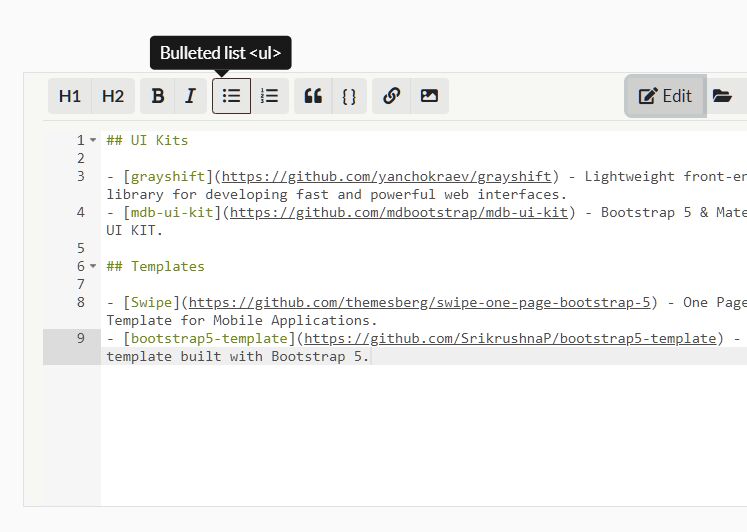
When you paste your perfectly formatted article and what happens? The headers show literal ## symbols. Bold text keeps the asterisks. Code blocks lose all formatting. Tables? They just break completely.
Google credits security researcher Shaheen Fazim with reporting the exploit to Google. The dude's LinkedIn says he's a professional bug hunter, and I'd say he deserves the highest possible bug bounty for finding something that a government agency is saying "in CSS in Google Chrome before 145.0.7632.75 allowed a remote attacker to execute arbitrary code inside a sandbox via a crafted HTML page."
Using such a resolution in the web browser would render a tiny illegible desktop site. To avoid that, CSS pixels add a layer of abstraction. Initially the amount of actual pixels compared to CSS pixels was simply a 2x or 3x conversion, but these days fractional scaling is also common.
Dear JS ecosystem, I love you, but you have a dependency management problem when it comes to the Web, and the time has come for an intervention. No, this is not another rant about npm's security issues. Abstraction is the cornerstone of modern software engineering. Reusing logic and building higher-level solutions from lower-level building blocks is what makes all the technological wonders around us possible. Imagine if every time anyone wrote a calculator they also had to reinvent floating-point arithmetic and string encoding!
Ana proposed the following: Is this enough in 2026? As an occasional purveyor of the visually-hidden class myself, the question wriggled its way into my brain. I felt compelled to investigate the whole ordeal. Spoiler: I do not have a satisfactory yes-or-no answer, but I do have a wall of text!
Browser cache - Sometimes the browser is still loading the old CSS file. A hard refresh (Ctrl + F5) usually fixes it. Wrong file linked - Double-check if your HTML is actually linked to the correct CSS file. Specificity issues - Another CSS rule might be overriding your changes.
By how much? Well, that would depend on the value of the <length> argument provided. Thomas Walichiewicz, who proposed :near(), suggests that it works like this: button:near(3rem) { /* Pointer is within 3rem of the button */ } For those wondering, yes, we can use the Pythagorean theorem to measure the straight-line distance between two elements using JavaScript ("Euclidean distance" is the mathematical term), so I imagine that's what would be used behind the scenes here.
WCAG is not normatively stating focus must be trapped within a dialog. Rather, the normative WCAG spec makes zero mention of requirements for focus behavior in a dialog. The informative 2.4.3 focus order understanding doc does talk about limiting focus behavior within a dialog - but again, this is in the context of a scripted custom dialog and was written long before inert or <dialog> were widely available.
Can you formulate the css code to apply the glassmorphism (GM) effect b/g to the tasks below: Glassmorphism code snippet background: rgba(255, 255, 255, 0.2); backdrop-filter: blur(5px); border: 1px solid rgba(255, 255, 255, 0.1); 1.1 Apply the GM effect to the Share B/G, Gallery B/G & Vid B/G icons during onmouseout. 1.2 Apply the GM effect to the Social icons pop-up panel B/G during onmousehover on the Share icon.
Everything you need to know in development & design this week, rounded up for you (Week 4, 2026). You'll find the most essential things right now: JavaScript & CSS libraries, useful code snippets, crucial web dev news & resources, curated AI tools, free design assets, and plenty of other good stuff we found! Highlights: 2026 Tech Stack Refresh! Dive into updated "Top 10" lists for Off-canvas menus, responsive dropdowns, fullscreen navs, and more to get your projects ready for the year ahead.
As a contracting front-end developer and Design Systems consultant, I don't always get to work on new things. Sometimes I work within codebases. Sometimes alongside them. Sometimes these codebases are years and years old. When you dive into these projects, you're not just reading code, you're excavating years of decisions, technological limitations, and creative workarounds from days gone by. Over the last decade, I've called this Front-End Archaeology.
Welcome to The CSS Selection 2026! In this article we're having a look at how CSS is used at scale on over 100,000 websites. We'll look at what things are common on most websites and discover interesting outliers. This is the first edition of what I hope to be many, so this is meant as a baseline for future editions, setting up the first numbers to compare with in coming years.