#graphics-enhancements
#graphics-enhancements
[ follow ]
#user-experience #design-systems #ai-tools #product-design #design #ai #technology #productivity #creativity #figma
fromYanko Design - Modern Industrial Design News
1 day agoYour Phone Has 12 Calendar Apps. None of Them Look Like This - Yanko Design
The 1970s were a sweet spot in product design, especially in France, where makers were beginning to marry natural materials like wood with the new optimism of plastic.
Design
#ai-agents
Artificial intelligence
fromMedium
2 weeks agoDesigners, your next user won't be human
Every SaaS company will transform into agentic-as-a-service platforms, requiring designers to solve fundamental problems in agent interaction, behavior, and user experience as AI agents become central to enterprise software.
fromItsnicethat
6 days agoElisava's Master's in Graphic Design is about what design can do for others, and what you can do for design
Elisava's Master's in Graphic Design is ingrained with societal, cultural and critical contributions to the creative industry, going beyond its aesthetic output while fostering self-awareness in creatives.
Barcelona
Graphic design
fromdesignboom | architecture & design magazine
4 days agohiggsfield brings art-directed quality to AI image generation at production scale
Higgsfield's Soul 2.0 revolutionizes AI photo generation for the creative industry, enhancing visual quality and efficiency in producing artistic imagery.
fromGame Informer
in 3 weeksInvincible VS Art Director Talks Creating The Game's Visual Style, Toughest Fighter To Design, And Working With The Series Creators
Whenever you're working with an existing IP, there's always the question of how you're going to translate and adapt, right? Because it's not a one-to-one sort of interpretation.
Graphic design
Online learning
fromeLearning
3 weeks agoBuilding Realistic Software Simulations with Enhanced Shapes in Adobe Captivate - eLearning
Adobe Captivate records software actions and converts them into interactive eLearning courses with three modes: Demo for viewing, Training for practicing, and Assessment for testing.
Apple
fromFast Company
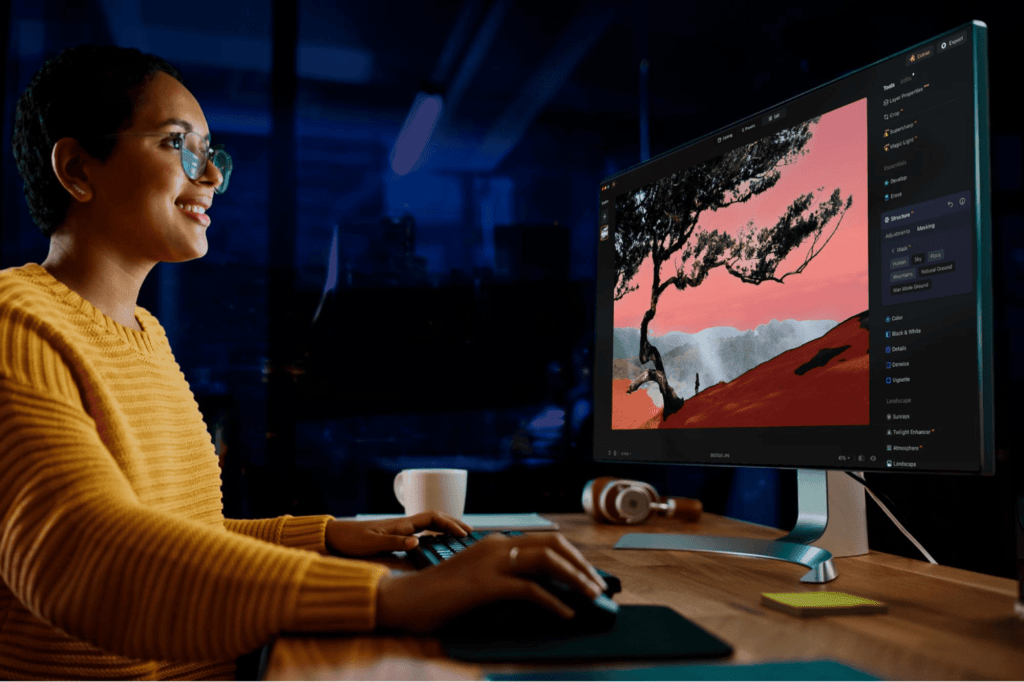
4 weeks agoPhotoshop's new AI assistant makes it easer than ever to edit images
Adobe launches an AI assistant for Photoshop Web and Mobile that enables intuitive photo editing through prompts, voice commands, and touch navigation, with results integrable into full Adobe creative workflows.
Web design
fromThe Verge
4 weeks agoYou can now ask Photoshop's AI assistant to edit images for you
Adobe launches agentic AI features across Creative Cloud apps, enabling users to edit images and documents through conversational chatbot interfaces in Photoshop, Acrobat, and Express, with integration into Microsoft Copilot and ChatGPT.
Graphic design
fromTechCrunch
3 weeks agoGamma adds AI image generation tools in bid to take on Canva and Adobe | TechCrunch
Gamma launches Gamma Imagine, an AI image-generation product for creating brand-specific marketing assets, positioning itself between professional design tools and legacy presentation software.

Artificial intelligence
fromBusiness
1 month agoImage to Image AI: A Smarter Way to Transform and Enhance Visual Content - Business
Image to Image AI transforms existing photos into enhanced or stylized versions using artificial intelligence, eliminating the need for manual editing skills or complex tools.
fromItsnicethat
3 weeks agoHow Procreate Dreams 2 is making animated storytelling more expressive than ever
Each layered element is independent, all housed within one object on your timeline. Multiple elements can be combined into a Flipbook by using the multi-select function. This allows for users to shift, organise, and retime frames.
Graphic design
Graphic design
fromTechCrunch
4 weeks agoAdobe is debuting an AI assistant for Photoshop | TechCrunch
Adobe launches AI assistant for Photoshop in beta across web and mobile, enabling object removal, color changes, and lighting adjustments through natural language prompts, while expanding Firefly with generative editing tools.
fromMedium
2 months agoDesign tokens with confidence
Design tokens are all your design decisions, that define a design system's aesthetic properties, everything from colors and font sizes to spacing units and border radii. They are the modern evolution of hard-coded values. They are stored in a central, platform-agnostic repository, establishing a single source of truth for your entire digital product suite. This central management allows teams to consume the exact same design values across all platforms (web, native apps, documentation).
Design


Photography
fromdesignyoutrust.com
1 month agoIncredible Behindthescenes Reels Where A Loose Doodle Evolves Into A Polished Illustration Packed With Personality And Story
A diverse collection of contemporary visual art, advertising, and inventive photography highlights creative reinterpretations, surreal manipulations, and socially aware installations across global artists and campaigns.
fromEngadget
2 months agoAdobe Photoshop upgrades its Firefly-powered generative-AI editing tools
Adobe has improved the tools for Generative Fill, Generative Expand and Remove that are powered by its Firefly generative AI platform. Using these tools for image editing should now produce results in 2K resolution with fewer artifacts and increased detail all while delivering better matches for the provided prompts.
Photography
fromMedium
3 months agoA Practical Prompting Guide for Figma Make
One skill separates good designers: the ability to clearly articulate their intention. No matter what tool you use, whether it's a traditional UI design tool like Figma or Sketch or AI tools like Figma Make, your ability to explain what you want to see accounts for 50% of your design success. The other 50% comes from your hard and soft skills. When it comes to AI-powered design, your ability to write decent prompts will have a direct impact on the quality of your design. In this guide, I want to share some specific tips and tricks that you can use for Figma Make to maximize the output.
UX design
fromMedium
1 month agoThe Design Vibeshift
Something's been slowly shifting in the design zeitgeist. I've been watching my feed on X and the vibe has changed. More and more, I see designers sharing finished experiments or prototypes they coded themselves, rather than static Figma files. Moving from working on a canvas to talking to an LLM. The conversation isn't "here's a design I made" anymore... it's "here's something I shipped this afternoon."
UX design
[ Load more ]