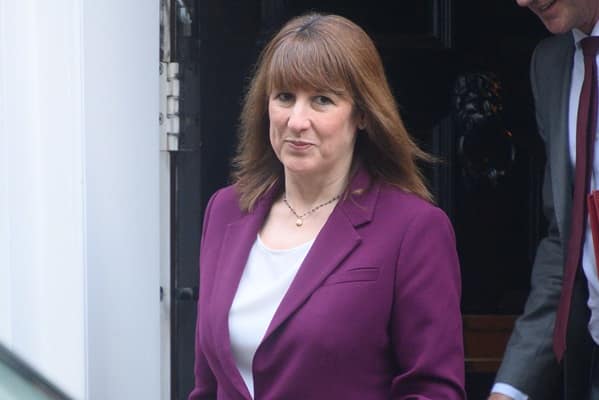
When Rachel Reeves urged Labour MPs at a half-empty private meeting on Monday night to back her high stakes budget, she told them that while they might not like everything in it, she was convinced that overall it was fair. After weeks of anxiety on the backbenches over manifesto breaches and speculation over Keir Starmer's leadership, she was determined to reassure them that her plans were Labour through and through and would give them plenty to offer voters on the doorstep.
There is one narrow, perilous route by which Rachel Reeves can successfully deliver her 26 November budget, and it runs right through government bond markets. But the current outbreak of Labour infighting driven by a flurry of pugilistic briefings from inside No 10 risks cutting that route off with two weeks still to go before budget day. Before news broke of an abortive leadership challenge, the chancellor had been carefully laying the groundwork for a tough statement, likely to include busting Labour's manifesto pledges
Solomon said people he talks to are worried about not just the debt, but how it's "accelerated" over the last five years, "and it doesn't seem like we have the ability to pull it back." He argued that aggressive fiscal stimulus has become "kind of embedded" in how democratic economies operate. The debt has ballooned significantly since the financial crisis, he noted, and federal figures do show it increasing from roughly $10 trillion in 2008 to its current level, over three times as large.
The employment rate came in at 75.0% in the three months to September, versus 75.1% in August. Unemployment came in at 5.0%, in September, versus 4.8% in August and market expectations of 4.9% and economic Inactivity in the three months to September came in at 21.0%. Annual total earnings growth came in at 4.8%, versus 5.0% in the previous three-month period, and market expectations of 4.9%.
The group, which ranges from the rightwing Adam Smith Institute to the leftwing New Economics Foundation, published proposals for sweeping pro-growth reforms the chancellor could introduce to tax all income from work equally. A separate report on Wednesday from the National Institute of Economic and Social Research (NIESR) urged Reeves to make brave choices and look for an extraordinary 50bn of spending cuts and tax rises to triple the size of her fiscal buffer.
There will never be enough taxes to make up for what the Mercury News says will be a $223 million federal cut. The county politicians have done nothing to reduce expenditures, and they've been negligent in not telling us the truth. It's obscene that County Executive James Williams would have asked for more in Measure A had there not been legal limits.
From reproductive rights to climate change to Big Tech, The Independent is on the ground when the story is developing. Whether it's investigating the financials of Elon Musk's pro-Trump PAC or producing our latest documentary, 'The A Word', which shines a light on the American women fighting for reproductive rights, we know how important it is to parse out the facts from the messaging.
In a boost for the chancellor, the yield in effect the interest rate on 10-year UK government bonds has fallen by about 0.15 percentage points this week, after briefly dipping below 4.5% early on Friday for the first time in three months. Government bond yields have tumbled across advanced economies, as investors scrambled to buy safe-haven assets amid fears over US-China trade tensions and signs of stress in the US banking system.
Rumour has it that Rachel Reeves is limbering up for November with a Budget that will make the taxman's quill squeak like a stuck pig. Property, pensions, profits, pasties - all grist to the Exchequer's mill. The Treasury is leaving no stone unturned, no pocket unpicked, no cupboard unopened. The only thing, one suspects, that remains miraculously safe from her fiscal scythe is Larry the Cat's supper.
Ireland's fiscal policy looks pro-cyclical right now, which creates immediate risks such as overheating, and longer term risks such as the need to continue with a pro-cyclical fiscal stance in any downturn, thereby magnifying the downturn,
The board, which will meet weekly, is designed to ensure closer coordination between No 10 and the Treasury after criticism of Chancellor Rachel Reeves's first Budget, which drew backlash from business groups over steep tax rises. The new structure will be co-chaired by Torsten Bell, pensions minister and former director of the Resolution Foundation, and Minouche Shafik, Starmer's recently appointed chief economic adviser.