#cannibalism-reveal

[ follow ]
Social justice
fromSan Jose Spotlight
2 days ago

Report details missing, murdered Indigenous people in San Jose - San Jose Spotlight

Generational trauma from colonization and violence against Indigenous people in the U.S. is quantified in a report on Bay Area Native communities.
Digital life
fromMatt Strom-Awn
5 days ago

Expansion artifacts

Compression technology enables efficient data storage and transmission by discarding imperceptible information, crucial for platforms like YouTube and Spotify.
#native-american-history
History
fromwww.theguardian.com
2 weeks ago

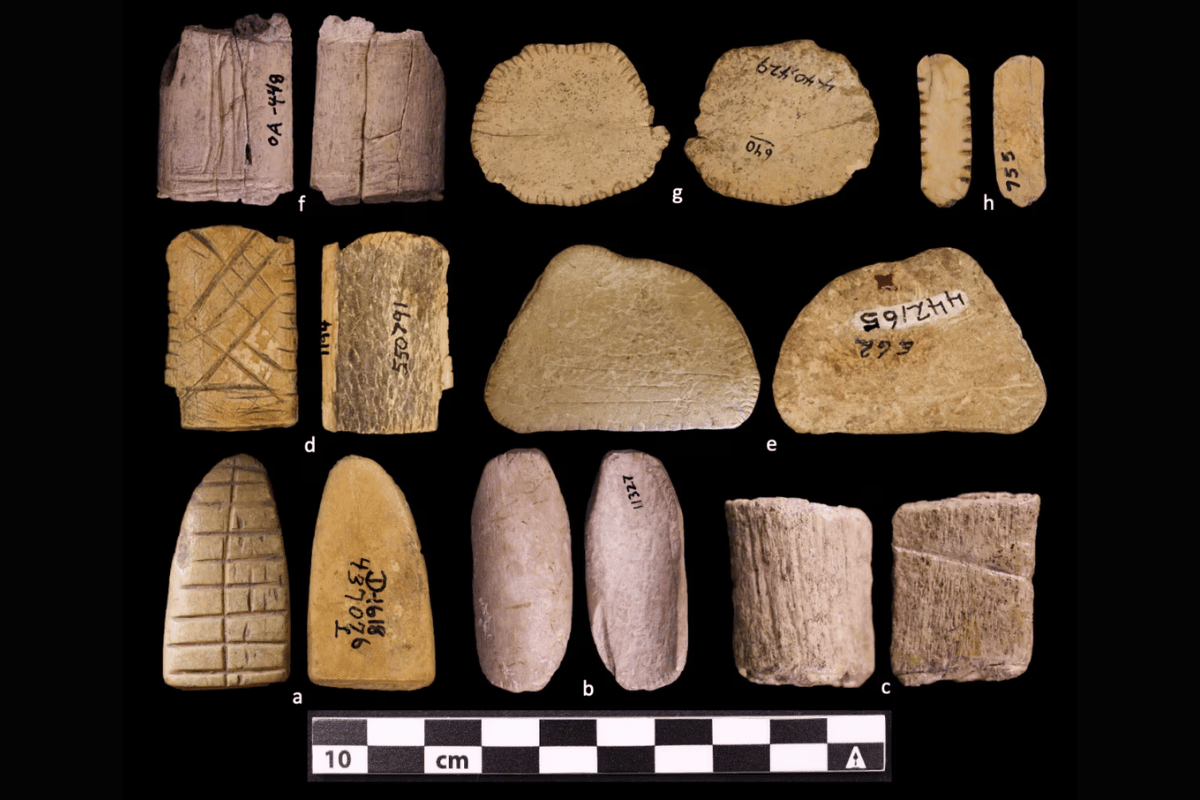
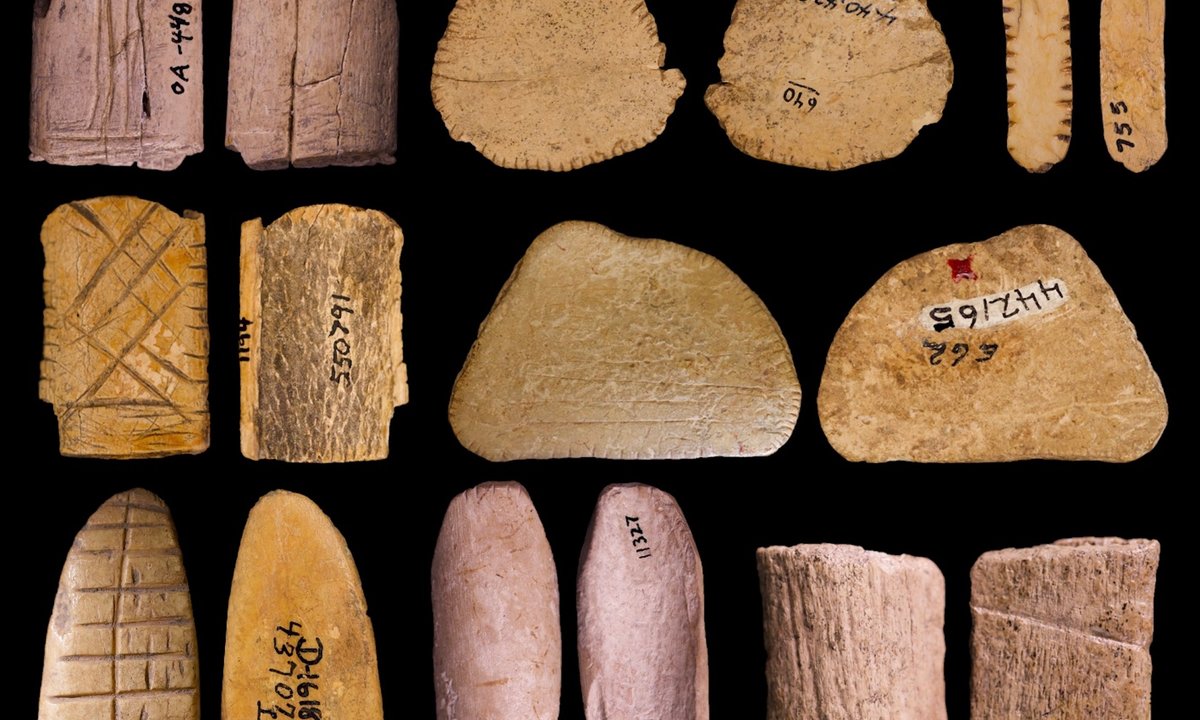
Native Americans were gambling with dice 6,000 years earlier than anyone else, study says

Native American hunter-gatherers used dice for gaming over 12,000 years ago, predating similar practices in other cultures by thousands of years.
History
fromArs Technica
3 weeks ago

Ice Age dice show early Native Americans may have understood probability

Native Americans used dice for games of chance over 12,000 years ago, predating Old World dice by millennia.
History
fromwww.theguardian.com
2 weeks ago

Native Americans were gambling with dice 6,000 years earlier than anyone else, study says

Native American hunter-gatherers used dice for gaming over 12,000 years ago, predating similar practices in other cultures by thousands of years.
History
fromArs Technica
3 weeks ago

Ice Age dice show early Native Americans may have understood probability

Native Americans used dice for games of chance over 12,000 years ago, predating Old World dice by millennia.
#archaeology
#native-american-culture
History
fromwww.nytimes.com
1 month ago

Humans Had Dogs Before They Had Farming, Ancient DNA Confirms

Dogs were domesticated by hunter-gatherer societies in Europe around 14,000 years ago, predating agriculture.
fromwww.scientificamerican.com
3 weeks ago

Humans have been gambling since the Ice Age

Madden combed through this sparse record, confirming the oldest-known dice and establishing an unbroken, previously hidden lineage of chance-based games dating back at least 12,000 years, 6,000 before any counterpart in the Old World.
History
Roam Research
fromArs Technica
1 month ago

Study pinpoints when bow and arrow came to North America

North Americans adopted the bow and arrow about 1,400 years ago, replacing the atlatl and dart, with rapid adoption in the south and gradual replacement in the north.
Philosophy
fromBig Think
1 month ago

Aztec philosophy: How lucky you are to not be in prison right now

Moral luck describes how identical actions result in vastly different moral and legal consequences based on uncontrollable circumstances beyond the actor's intent.
Alternative medicine
fromArs Technica
1 month ago

Never mind Band-Aids, Neanderthals had antiseptic birch tar

Neanderthals likely used birch tar for medicinal purposes, including treating infections and insect bites, beyond its known use as a weapon adhesive.
History
fromMedievalists.net
3 weeks ago

Medieval "Giant" with Trepanned Skull Discovered in Mass Grave - Medievalists.net

A 9th-century mass grave in England reveals remains of young men, suggesting violent conflict during the Viking conquest of East Anglia.
fromwww.thehistoryblog.com
4 weeks ago

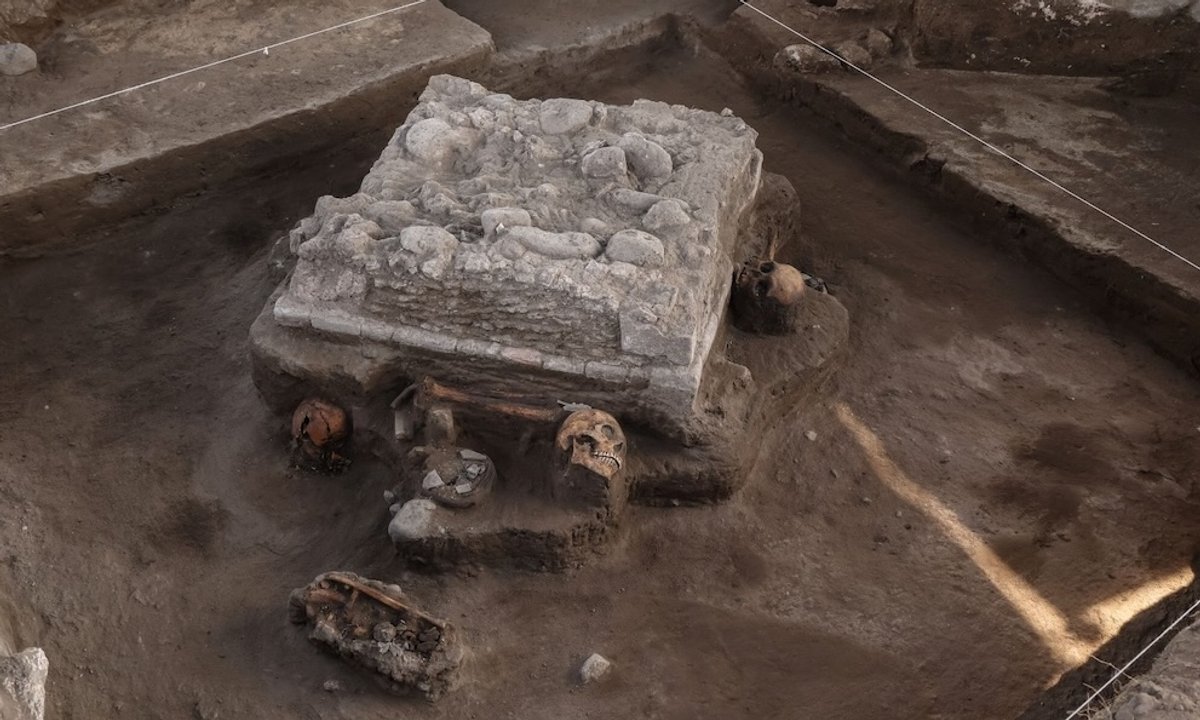
Toltec human sacrifice altar found in Mexico

The momoztli altar measures about one meter square and consists of three sections: a base of andesite quarry stone, a second section of larger slabs, and a top section of river stones and basalt.
History
Madrid food
fromTasting Table
1 month ago

The Biggest Myth About Mexican Food You Need To Unlearn - Tasting Table

Mexican cuisine is unfairly labeled unhealthy due to confusion between authentic regional Mexican food and Tex-Mex adaptations that use processed ingredients and deep-frying.
fromThe Art Newspaper - International art news and events
1 month ago

Mummies and other human remains held in UK museums raise serious ethical questions, warn scholars

The significant number of ancestors held in UK museums is extremely distressing and symbolic of the colonial origins of these collections. We hope that the responses gathered by The Guardian will be shared with the relevant communities to support them in bringing their ancestors home.
London
Business
fromFast Company
2 months ago

Navigating the ghosts of cultures past

Organizational culture constantly changes; leaders must discern which legacy cultural elements to retain and which to remove while balancing enduring beliefs with adaptive practices.
fromwww.npr.org
1 month ago

Humans' pull toward alcohol may have ancient origins (according to chimp pee)

Chimpanzees consume 10 pounds of fruit pulp per day on average - African star apple. It's delicious, too. I tried some. And when fruits like this ripen, they can ferment, producing alcohol. In primates, it could be that when you smell alcohol, that means that's where the sugars are.
Wine
fromBuzzFeed
2 months ago

15 Adults Reveal The Bizarre Family Traditions That Left Other People Completely Stunned

Letting our dogs lick the dishes before we put them in the dishwasher!
Relationships
fromKqed
5 months ago

These 5 Creatures Make a Living Off of Death: A Halloween Compilation | KQED

A passerby discovers it first - and lets out a piercing call. Within seconds, everyone in earshot rushes to the scene. It's mayhem... or so it seems. Crows are intelligent, and super chatty. They watch out for one another within tight-knit groups. As adults it's pretty rare for crows to be killed. So when one dies the others notice. Are they just scared? Or is something deeper going on.
Science
fromPsychology Today
2 months ago

What Is Meat? It's Probably Not What You Thought

I'm thrilled I did, and my learning curve was vertical in this page-turning work that "offers a hopeful and rigorously researched exploration of how science, policy, and industry can work together to satisfy the world's soaring demand for meat, while building a healthier and more sustainable world." There is nothing "radical" about what likely will become a classic, one that is already endorsed by experts in global hunger, global health, climate change, and food security.
Food & drink
OMG science
fromwww.scientificamerican.com
1 month ago

Where did magic mushrooms come from? Scientists just got closer to an answer

Scientists discovered Psilocybe ochraceocentrata, a new magic mushroom species in Africa that shared a common ancestor with Psilocybe cubensis approximately 1.5 million years ago.
Agriculture
fromArs Technica
1 month ago

Re-creating the complex cuisine of prehistoric Europeans

Hunter-gatherer-fishers across Eastern Europe combined specific regional foods into distinct preparations, mixing fish with berries, legumes, grasses, and vegetables rather than relying on fish alone.
US politics
fromEmptywheel
2 months ago

Third Cave's a Charm

Republicans will block expiration of Bush tax cuts; Democrats could see a $3.6 trillion tax increase in 2012 if Obama does not act.
fromenglish.elpais.com
2 months ago

Mass graves in Concordia cast a pall over Mexico's famous Mazatlan carnival

At the entrance to La Clementina, a housing development in the municipality of Concordia, in the Mexican state of Sinaloa, there are five funeral wreaths and 12 votive candles. It is a floral offering in memory of the miners who were kidnapped at the end of January. The bodies of Jose Angel Hernandez Velez, Ignacio Aurelio Salazar Flores, Jose Manuel Castaneda Hernandez, Jose Antonio Jimenez, and Jesus Antonio de la O, all employees of the Canadian mining company Vizsla Silver, have been identified, while the whereabouts of five others remain unknown.
World news
fromOpen Culture
2 months ago

How the Incas Performed Skull Surgery More Successfully Than U.S. Civil War Doctors

Grant­ed access to a time machine, few of us would pre­sum­ably opt first for the expe­ri­ence of skull surgery by the Incas. Yet our chances of sur­vival would be bet­ter than if we under­went the same pro­ce­dure 400 years lat­er, at least if it took place on a Civ­il War bat­tle­field. In both fif­teenth-cen­tu­ry Peru and the nine­teenth-cen­tu­ry Unit­ed States, sur­geons were per­form­ing a lot of trepa­na­tion, or removal of a por­tion of the skull.
Medicine
Psychology
fromPsychology Today
1 month ago

Are We Hard-Wired to Be Xenophobic?

Out-group animosity stems from both upbringing and evolutionary survival pressures, but can be managed through conscious awareness and behavioral control.
fromAlternative Medicine Magazine
1 month ago

Connecting Culture and Nutrition to Fight Diabetes

I grew up in a Mexican household where food was our love language - but there was also stigma and very little guidance around diabetes. When my aunt, and later my mom, were diagnosed, it took time to understand what healthy eating could look like for them. That's why this partnership means so much to me. Our culture and our food are not the problem - they're part of the solution.
Alternative medicine
fromwww.scientificamerican.com
2 months ago

A foraging teenager was mauled by a bear 27,000 years ago, skeleton shows

We have little physical evidence of these interactions turning violent, however, because burials were rare and carnivores were more likely to finish off their prey. That's why the embellished burial site of a 15-year-old from 27,000 years ago is an important window into the past: the teenager's bones indicate he was mauled by a bear. The finding represents some of the first evidence of its kind.
Science
fromAeon
2 months ago

Orcas haven't changed, but our view of the killer whale has | Aeon Essays

'Orcas are psychos,' quipped a close friend recently. He wasn't joking, nor was he ill-informed. In fact, he is probably the world's leading historian of whales and people. He had just watched a BBC Earth clip, narrated by David Attenborough, in which three killer whales separate a male humpback calf from his mother in the waters of Western Australia. The video's closing footage, with two of the orcas escorting the naive youngster to his imminent death, resembles nothing so much as a kidnapping:
Philosophy
Science
fromwww.scientificamerican.com
1 month ago

The surprising scientific value of roadkill

Researchers use roadkill as a valuable scientific resource to study wildlife behavior, track species distribution, obtain specimens ethically, and discover new species across diverse research applications.
OMG science
fromwww.npr.org
1 month ago

Chimps' taste for fermented fruit hints at origins of human love of alcohol

Chimpanzees consume alcohol from fermenting fruit, suggesting humans' attraction to alcohol evolved from ancestral primates associating fermented fruit's scent with calorie-dense food sources.
Science
fromenglish.elpais.com
1 month ago

Neanderthal men chose Homo sapiens women: Genetics reveals the sex life of our ancestors

Neanderthal males interbred with modern human females approximately 50,000 years ago, explaining why Neanderthal DNA is nearly absent from the X chromosome in non-African humans today.
Science
fromwww.scientificamerican.com
2 months ago

This ancient South American kingdom ran on bird poop

A pre-Inca Peruvian civilization applied seabird guano to maize by at least 1250, boosting soil fertility, enabling larger harvests, population growth, and regional trade.
History
fromenglish.elpais.com
2 months ago

The underground odyssey that led archaeologists to a Zapotec burial site

Looting revealed a hidden Zapotec Tomb of the Owl near La Cantera, which took six years to locate and links to the ancient Zapotec civilization.
History
fromMail Online
1 month ago

The first non-binary person? Stone Age woman was buried like a MAN

Stone Age societies in Hungary practiced flexible gender roles, with some individuals buried according to non-traditional gender norms, indicating tolerance for complex identities 7,000 years ago.
fromMail Online
2 months ago

Mysterious symbols spanning the globe hint at a lost civilization

His investigation began after identifying recurring giant T-shapes, three-level indents, and step pyramids carved into ancient stones worldwide. 'These specific symbols that are built in different size proportions, and the symbols are found in ancient stones around the world, are not supposed to exist; no cultures are supposed to have any cross-platform,' LaCroix explained. The symbols appear in locations ranging from Turkey's Van region to South America and Cambodia.
History
History
fromwww.theguardian.com
2 months ago

Apocalypse no: how almost everything we thought we knew about the Maya is wrong

Classic Maya lowlands likely supported up to 16 million people during AD 600–900, implying unprecedented population density, complex agriculture, and advanced urban organization.
[ Load more ]