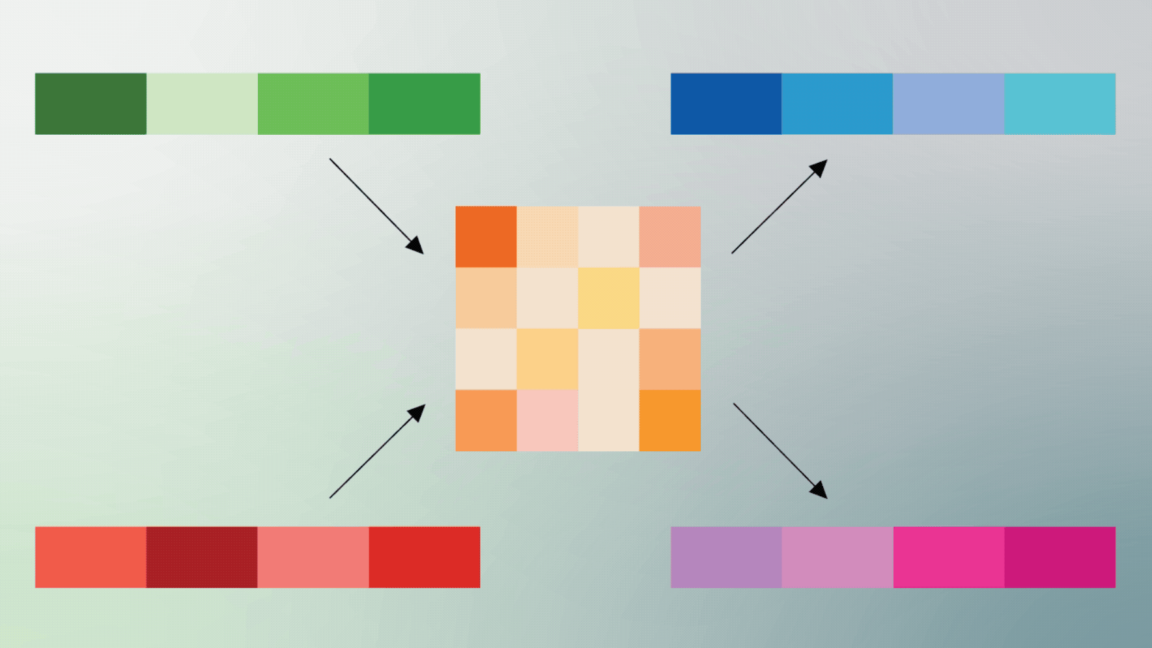
"PolarQuant is doing most of the compression, but the second step cleans up the rough spots. Google proposes smoothing that out with a technique called Quantized Johnson-Lindenstrauss (QJL)."
"TurboQuant apparently had perfect downstream results in all tests while reducing memory usage in the key-value cache by 6x. The algorithm can quantize the cache to just 3 bits with no additional training."
"Computing the attention score with 4-bit TurboQuant is also 8x faster compared to 32-bit unquantized keys on Nvidia H100 accelerators."
"If implemented, TurboQuant could make AI models less expensive to run and less hungry for memory, allowing for more complex models to be run."
PolarQuant serves as a high-efficiency compression bridge, transforming Cartesian coordinates into a compact Polar format for better storage and processing. This method reduces data size and eliminates costly normalization steps. Google introduces Quantized Johnson-Lindenstrauss (QJL) to address residual errors from PolarQuant, applying a 1-bit error-correction layer to maintain essential vector data. Testing shows TurboQuant achieves perfect results while reducing memory usage by 6x and speeding up attention score computation by 8x. This technology could lower AI operational costs and enhance model complexity, particularly benefiting mobile AI applications.
Read at Ars Technica
Unable to calculate read time
Collection
[
|
...
]