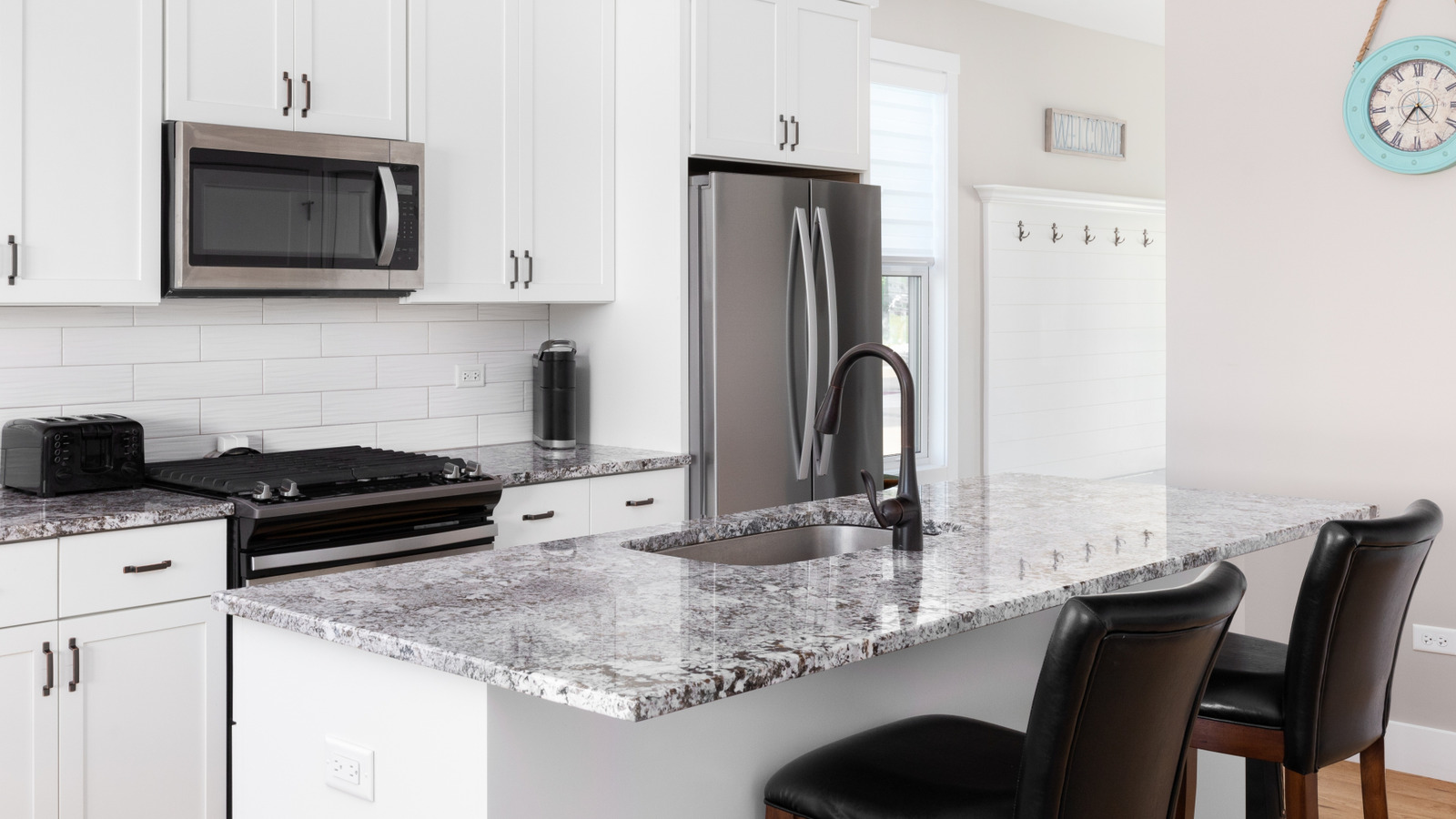
"This finish is first honed (meaning it doesn't have the same sheen as the polished granite that you may be used to), then textured with a diamond-shaped tool. The small dimples created by the bit add texture to the countertop and give it a more natural, matte, and sophisticated finish. The color is still natural and vivid, which works best with dark kitchens, and is extremely captivating to the eye."
"The process tightens the pores on the countertop, which means that water or spills can't seep in the way they can for a natural stone like marble. It's also heat-resistant, which means that you can put a hot pot on it - though it's still recommended to use a trivet or potholder to protect the seal and keep it looking better for longer."
Leathered granite finish is produced by honing the stone and then texturing the surface with a diamond-shaped tool, creating small dimples that add natural, matte texture. The finish preserves vivid, natural color and complements dark kitchens. Leathered granite is slightly more expensive than polished or honed options yet often serves as a low-maintenance alternative to glossier finishes because it hides smudges and fingerprints. Leathering tightens the stone's pores, increasing durability and spill resistance. The surface is heat-resistant, but using a trivet is still recommended to protect the seal. The textured surface can trap dust and is harder to clean than polished granite.
Read at Tasting Table
Unable to calculate read time
Collection
[
|
...
]