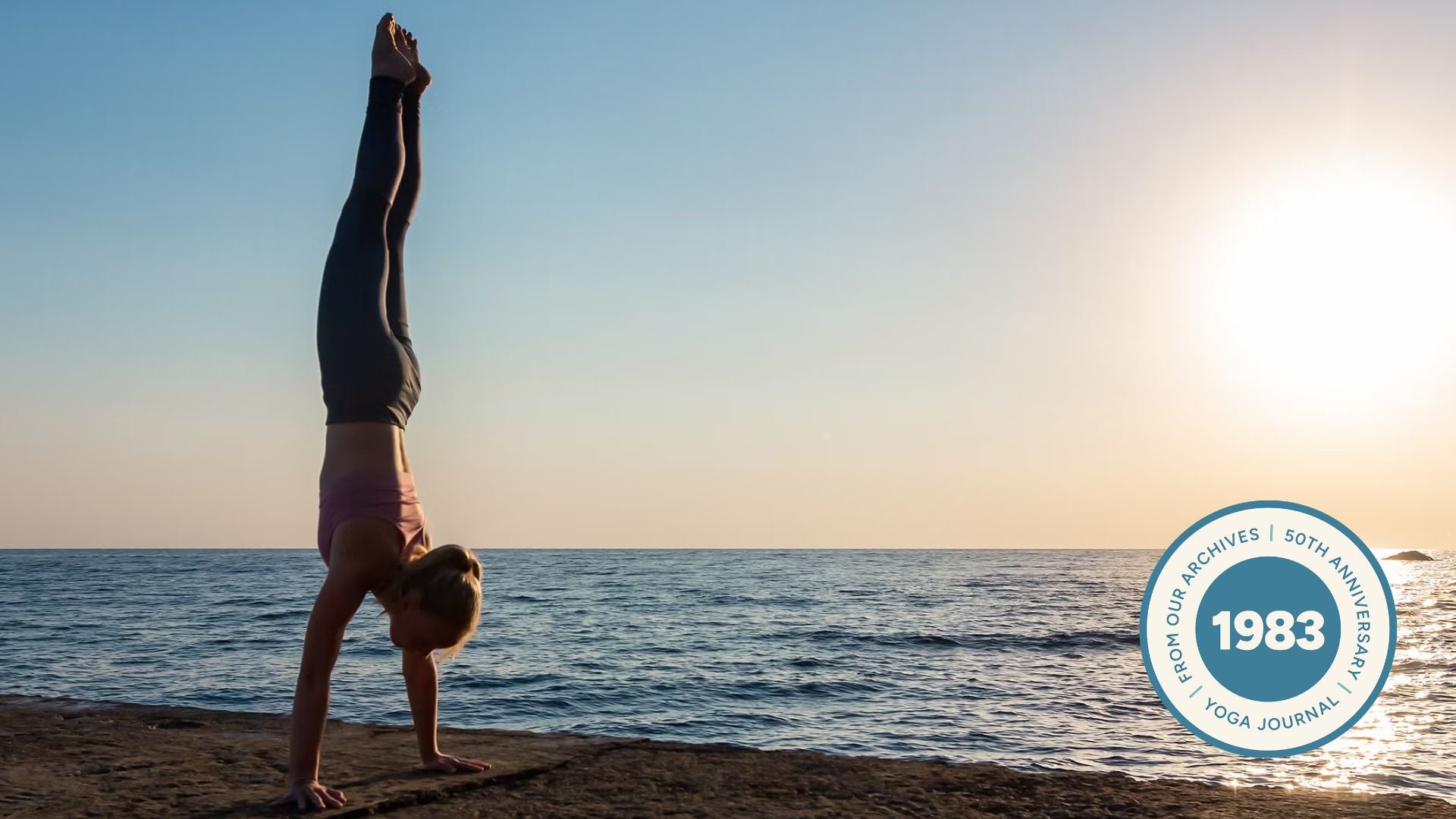
"This pose offers the benefits of inversions, such as increased circulation to the upper body. Like the other classical inverted poses of Sirsasana (Headstand) and Sarvangasana ( Shoulderstand), it also teaches the student poise. The nervous system controls movement through learned patterns in which groups of muscles and joints act habitually to produce desired results. In turn, this movement produces feedback, which informs the nervous system where one is in space in relation to gravity."
"Placing the body upside down requires concentration and awareness and teaches the student to maintain inner poise-the ability to remain in touch with one's inner equanimity in the midst of outer turmoil and in the midst of constant adjustment. For many, the practice of Adho Mukha Vrksasana creates an outer turmoil of insecurity and fear; it is the perfect opportunity to learn the value of maintaining one's connection with the inner life."
Handstand (Adho Mukha Vrksasana) is an advanced inversion that increases circulation to the upper body and cultivates physical poise. The Sanskrit name means "face down tree," suggesting the arms and shoulders function as supportive roots. Upside-down positions present novel sensory input to the nervous system, requiring constant adjustments to gravity to maintain the pose and prevent injury. The posture demands concentrated awareness and regulated breath to sustain inner equanimity. Practicing the pose can surface insecurity and fear, providing an opportunity to strengthen steadiness, focus, and a sustained connection with the inner life.
Read at Yoga Journal
Unable to calculate read time
Collection
[
|
...
]