"Samadhi is best understood as total absorption, meaning all of the elements of the yoga practice (Yamas, Niyamas, The Yoga Sutras, etc.) are weaved together to reach enlightenment, or total bliss. Julie describes it through the lens of Bhakti yoga as being fully devoted to the divine. All outer layers have been peeled back and melted away to reveal the soul or the true self. Nothing is clouded, there are no obstructions, the soul can see itself and is represented purely."
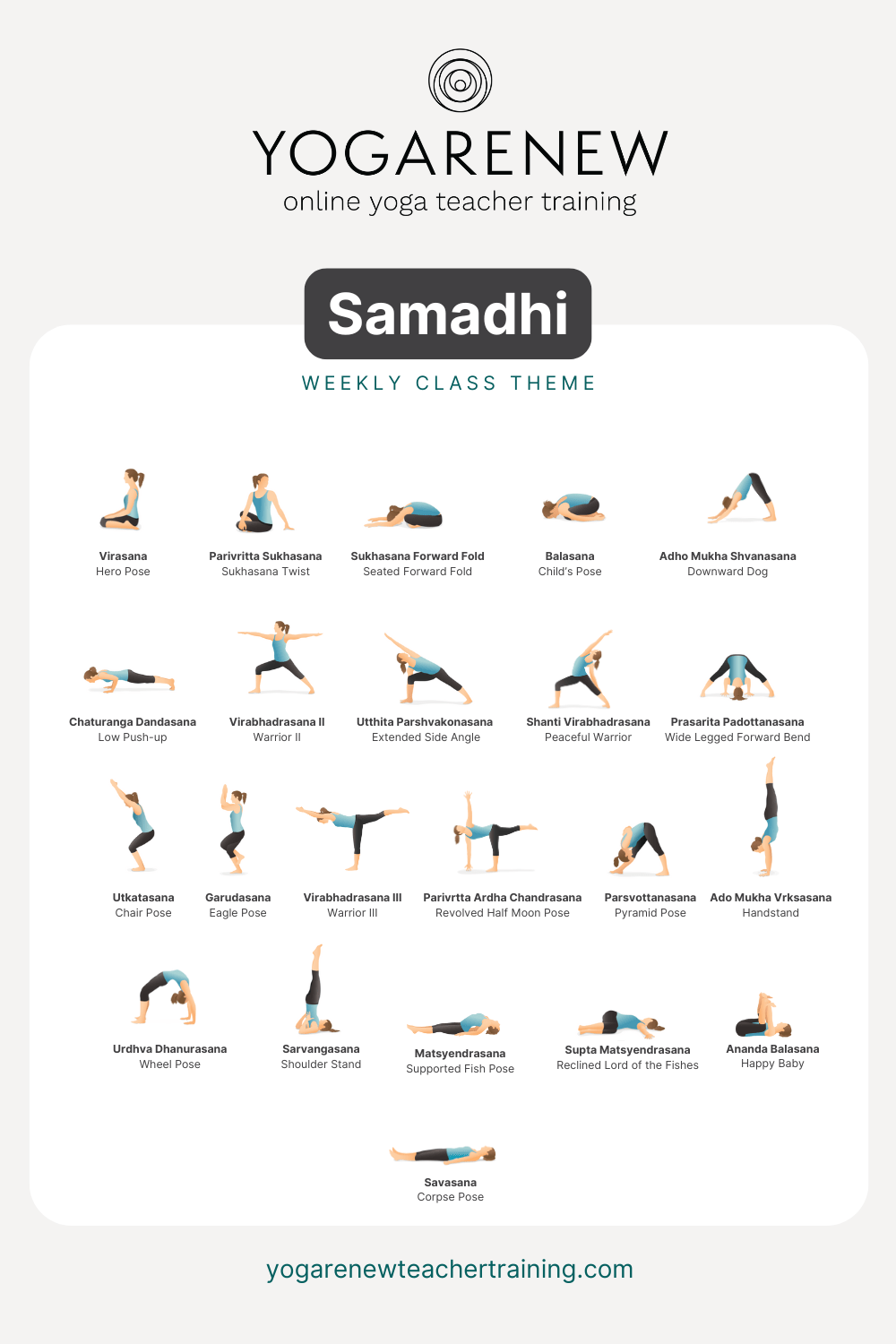
"In this week's class theme, we'll tie a physical yoga asana practice to the theme of Samadhi by incorporating poses that invigorate the mind, body and that also support the stillness of the mind. When thinking of the concept of Samadhi, we can look at active, vigorous poses like handstand, heart opening poses like Urdhva Dhanurasana (Wheel Pose), and calming and quieting poses like Sarvangasana (Shoulderstand)."
Samadhi is total absorption in which all elements of yoga practice—Yamas, Niyamas, the Yoga Sutras—are woven together to reach enlightenment and eternal bliss. Bhakti yoga frames Samadhi as full devotion to the divine, where outer layers dissolve and the true self is revealed without obstruction. Physical asana practice can support Samadhi by invigorating the body, calming the mind, and opening the heart. Combining vigorous poses (handstand), heart-opening backbends (Urdhva Dhanurasana), and calming inversions (Sarvangasana) within one class cultivates clarity, rejuvenation, and stillness. A balanced sequence spanning standing poses, balances, backbends, inversions, and restorative wind-downs fosters final absorption in Savasana.
Read at www.yogarenewteachertraining.com
Unable to calculate read time
Collection
[
|
...
]