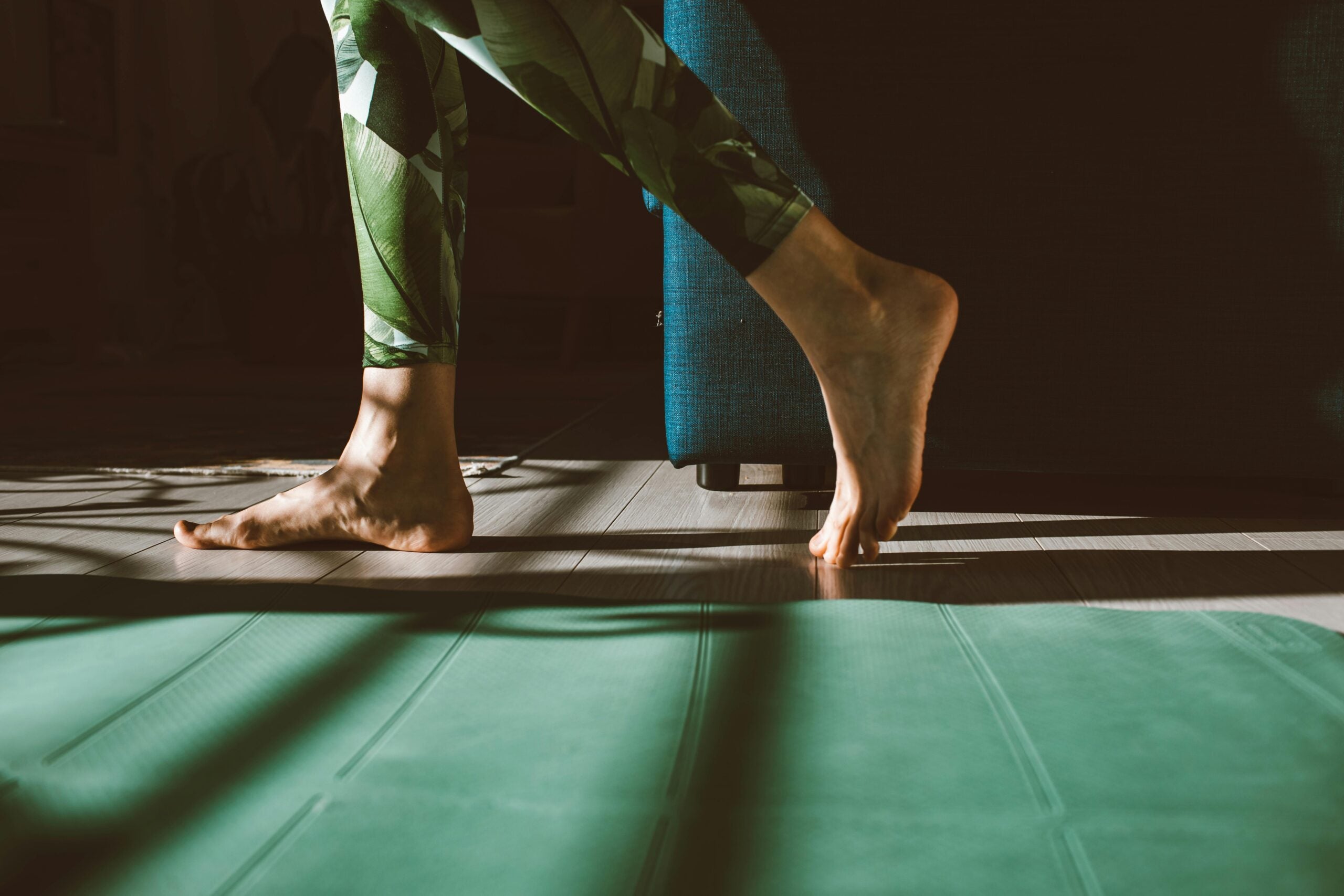
"We don't need an ankle injury or even that sharp twinge when we step-or misstep-off a curb to realize how important these small but complex joints are. They're our first line of connection with the ground, the foundation of our ability to walk, run, jump, and practice yoga, and powerful pumps for blood circulation, especially after long hours of sitting."
"The primary ankle joint, or the talocrural joint, allows dorsiflexion (drawing the toes toward the shin) and plantarflexion (pointing the toes). Just beneath it, the subtalar joint helps with inversion and eversion (rolling the sole of the foot inward and outward). Together, they determine how we absorb impact, find our balance, and push off the ground. When ankle mobility is limited-especially dorsiflexion-the body "borrow" strength from somewhere else in the body in maladjusted ways."
Ankles often show stiffness long before intense pain and function as the primary connection with the ground, enabling walking, running, jumping, and yoga while aiding circulation. The talocrural joint permits dorsiflexion and plantarflexion, and the subtalar joint allows inversion and eversion, together managing impact absorption, balance, and push-off. Limited ankle dorsiflexion causes the body to compensate, leading to inward-knee collapse, overactive hips, or lower-back overarch, which can produce knee discomfort, tight hips, or lower-back fatigue over time. Ankle instability increases wobbliness and sprain risk. Calf and ankle muscles act as a second heart, promoting blood and lymph flow.
Read at Yoga Journal
Unable to calculate read time
Collection
[
|
...
]