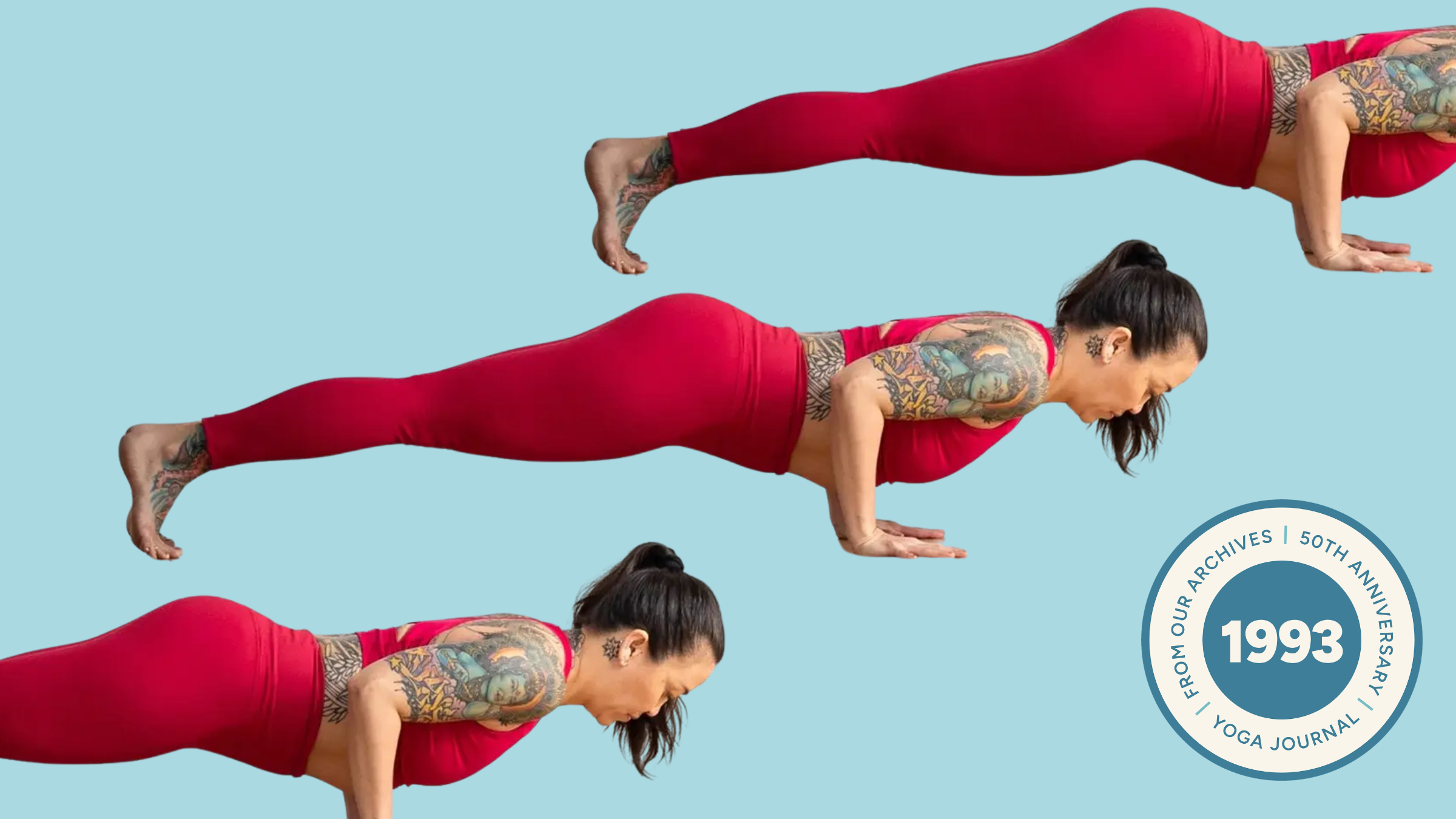
"Rather, this asana is about keeping everything in one piece: The hands and feet touch the ground while the body is suspended above the ground in one unit, as in the calisthenic push-up. The strength required to do Chaturanga Dandasana is not nearly as important as the ability to integrate and organize separate elements of the body so they function cooperatively."
"Physical integrity is the renewal or restoration of the body's original wholeness. This wholeness implies a coordination of movements, a communication between structures such as the legs and the spine. It also implies a balance of strength, flexibility, and relaxation that brings about a perfect tension between these three qualities."
"The integrating force through the length of the torso derives primarily from the support of the arms and the driving power of the legs pushing back. It also comes from the relationship between the soft frontal body (the throat, lungs, abdominal organs) and the firm back body (the spinal column, rib cage and pelvic girdle)."
Chaturanga Dandasana demonstrates that yoga emphasizes integration and strength rather than contortionism. The pose suspends the body above ground with hands and feet touching, similar to a push-up. Physical integrity, derived from the Latin integrare meaning to renew or restore, represents the body's original wholeness through coordinated movements and communication between structures. This requires perfect tension between strength, flexibility, and relaxation. The integrating force flows through the torso via arm support and leg drive, establishing a relationship between the soft frontal body and firm back body. Underlying muscle reflexes contribute to postural tone, working beneath voluntary muscle contraction to support proper alignment.
Read at Yoga Journal
Unable to calculate read time
Collection
[
|
...
]