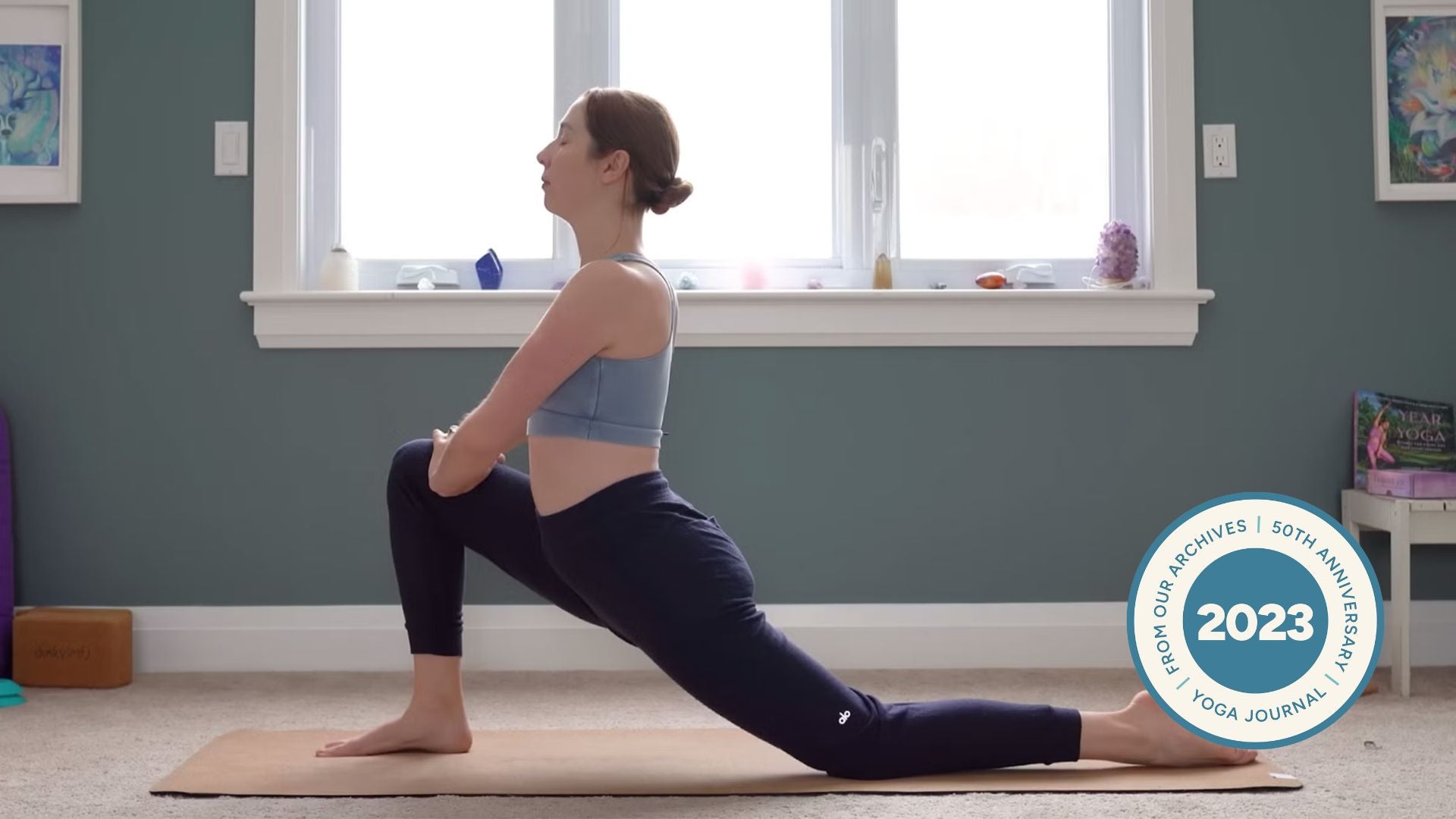
"It takes less time than you might expect to drastically alter your emotional state. And the following 15-minute yoga for stress relief practice helps you do exactly that. It doesn't ask you to do anything overly strenuous or complicated. It's a slow flow designed specifically to minimize effort and emphasize stress relief. Plus it's short enough so as not to add to your overwhelm but rather help you come back to yourself anytime you need it, even if you've never practiced yoga before."
"Instead of the traditional Savasana at the end, you'll transition into a seated meditation to further ground yourself without being tempted to fall asleep. This allows you to go back to your day with more focus and calm. Find a seated position that's comfortable for your hips and lower back, whether cross-legged or otherwise. Find a gentle lift along your spine as you roll your shoulders down and away from your ears."
"Keep your chin parallel to the mat as you close your eyes and start your practice with deep breaths, in and out through your nose. Take a moment to check in with how you're feeling in the present moment. Pay attention to any sensations in your body. If your mind is overactive, simply observe without criticism or the need to fix anything. Allow yourself to take in that information as you simultaneously create space within."
The practice is a 15-minute slow flow designed to minimize effort and prioritize stress relief. The sequence uses easy breathwork to soothe the nervous system and promote ease in body and mind. The ending shifts from a traditional Savasana into a seated meditation to prevent drowsiness and return to daily activities with more focus and calm. Seated posture guidance emphasizes comfort for hips and lower back, a gentle lift in the spine, relaxed shoulders, and breathing in and out through the nose. Attention to present-moment sensations and nonjudgmental observation supports emotional regulation and grounding.
Read at Yoga Journal
Unable to calculate read time
Collection
[
|
...
]