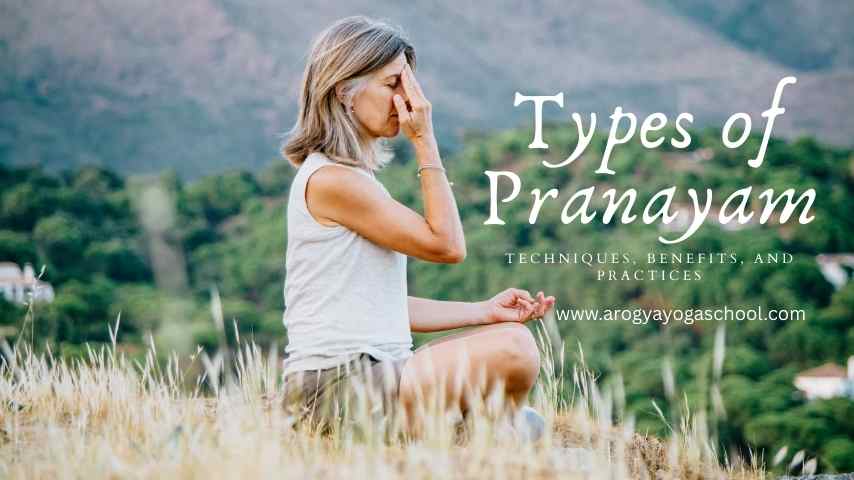
"Pranayama is a vital component of yoga. It is derived in two Sanskrit words: "Prana" is a reference to vital energy or life force as well as "Ayama", which means controlling or extension. Pranayama can be described as the process of controlling breathing to regulate the flow of prana through the body. According to yogic thought the proper control of breath is not just good for the body, but also helps to calm the mind, enhances focus, and aids in spiritual development."
"1. Anulom Vilom Pranayama (Alternate Nostril Breathing) Anulom Vilom pranayama technique Anulom Vilom is when you inhale through one nostril, while keeping the other one closed, and exhaling through the other nostril. The way to do it is in the following manner: Anulom Vilom Pranayama Benefits: Precautions: Avoid breathing too hard. Not recommended for people who suffer from severe nasal blockages or respiratory problems."
Pranayama combines the Sanskrit roots prana (life force) and ayama (control or extension) to mean breath control that regulates prana through the body. Multiple pranayama techniques exist with distinct methods and benefits for cleansing the lungs, improving digestion, relaxing the mind, increasing concentration, strengthening breathing, reducing stress, and boosting energy. Anulom Vilom uses alternate-nostril inhalation and exhalation with specific precautions. Kapalabhati emphasizes rapid, forceful exhalations and passive inhalations and requires caution for pregnancy, heart disease, hernias, or dizziness in beginners. Bhastrika is an energizing bellows-like breathing technique and should not be practiced on a full stomach.
Read at https://www.arogyayogaschool.com/blog
Unable to calculate read time
Collection
[
|
...
]