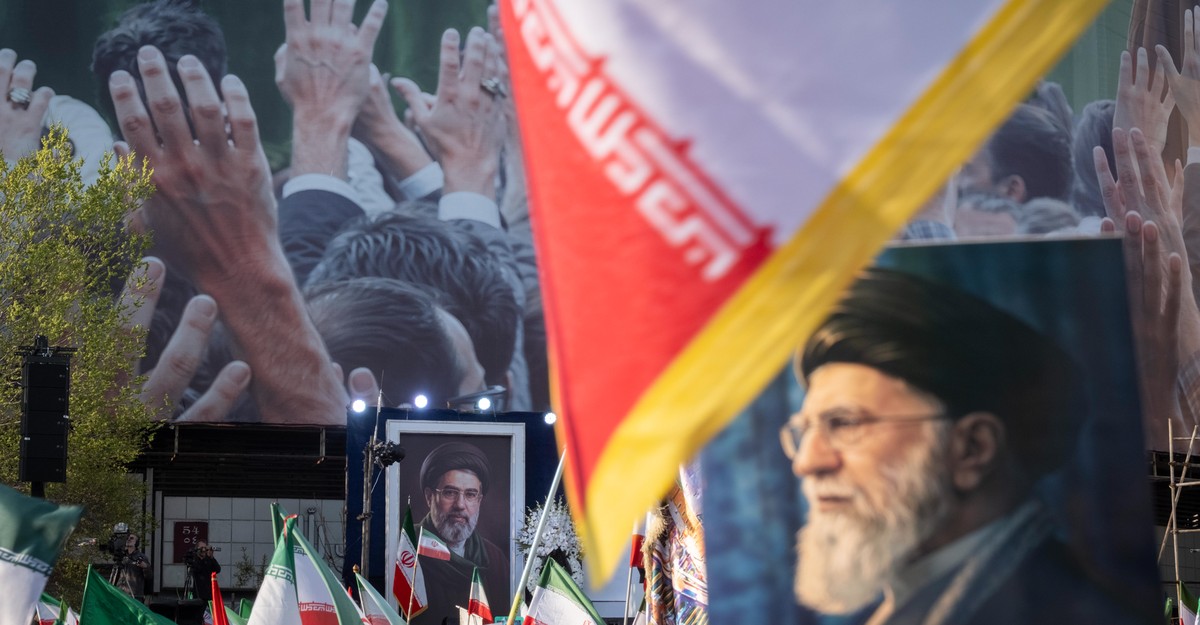
"Washington appears to have begun the conflict on the assumption that sustained military pressure would either collapse the Iranian regime or force its leadership to concede to fundamental political and strategic demands. But the Islamic Republic has demonstrated a remarkable capacity to survive crises. In fact, past crises have strengthened rather than weakened the regime's internal cohesion."
"The turning point came when Saddam Hussein's Iraq invaded Iran in 1980. That external threat, and the eight-year war that followed, consolidated Ayatollah Ruhollah Khomeini's domestic authority and dramatically expanded the role of the IRGC. In later decades, under Khomeini's successor, Ali Khamenei, the IRGC evolved into far more than a military force."
"Today the IRGC's influence extends across large portions of Iran's economy, including energy, infrastructure, and construction. Its commanders occupy key positions across the state apparatus. These institutional entanglements mean that the Islamic Republic is not simply a government that can be easily removed; it is a deeply embedded system of poli"
President Trump pursues contradictory approaches to Iran, demanding unconditional surrender while simultaneously considering abrupt withdrawal, neither addressing the regime's actual nature. The Islamic Republic has survived decades of crises, with external threats historically strengthening rather than weakening it. Born from the 1979 revolution, Iran consolidated power through the 1980-1988 war with Iraq, which expanded the Islamic Revolutionary Guard Corps' authority. The IRGC evolved beyond military functions into an economic network and political actor controlling energy, infrastructure, and construction sectors. Today, the IRGC's institutional entrenchment throughout Iran's government and economy makes the regime far more resilient than Washington's military pressure strategy assumes.
#iran-regime-resilience #irgc-institutional-power #trump-iran-strategy #military-pressure-limitations #iranian-political-consolidation
Read at The Atlantic
Unable to calculate read time
Collection
[
|
...
]