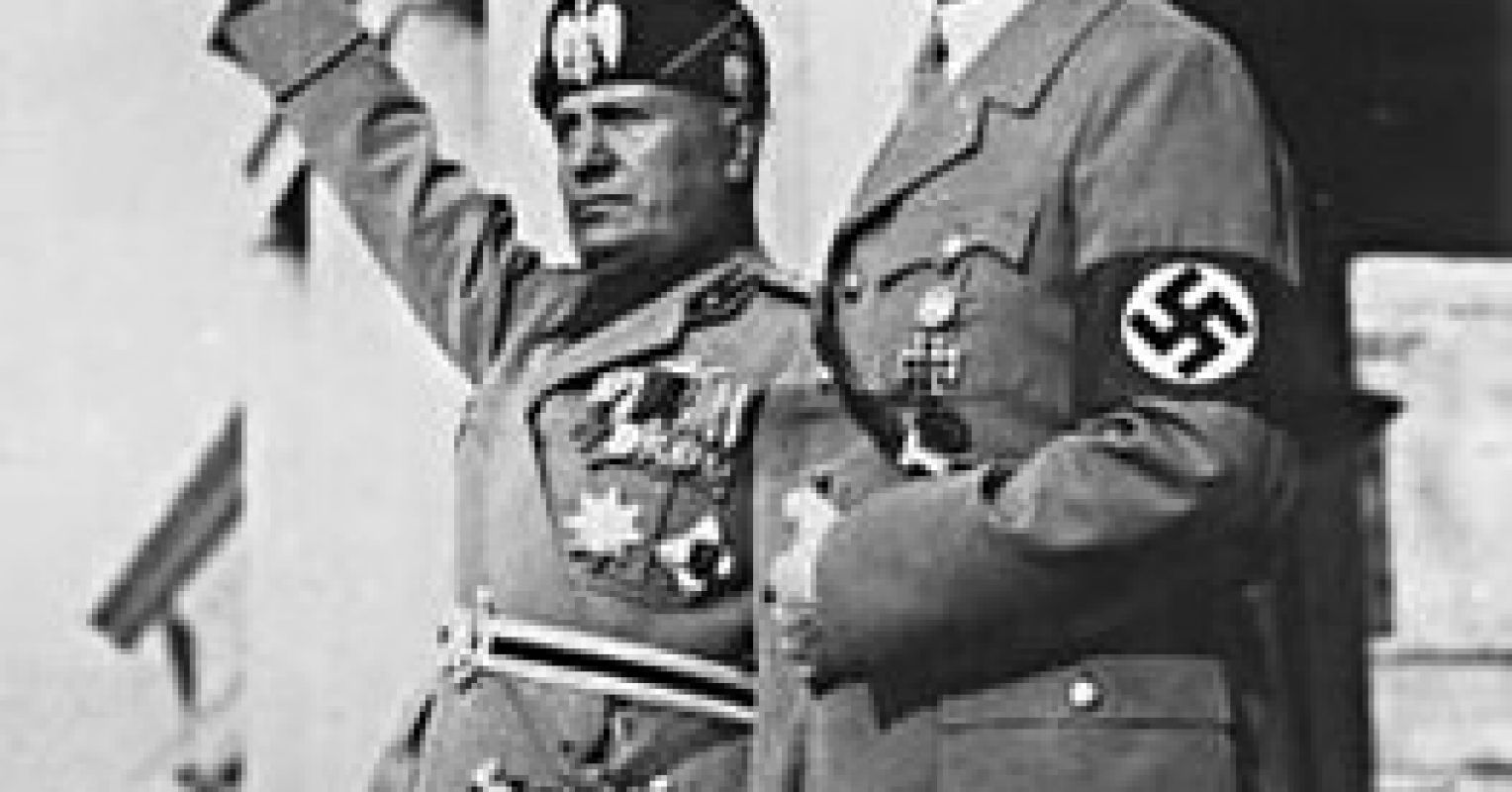
"Some political worldviews are based on a philosophy, or at least on certain economic or social principles. Communist governments try to enact the principles of state ownership and a classless society. Conservative governments adhere to the principles of individual ownership and minimal state interference. Fascism is the exception. It is not dictated by philosophy but by personality. More specifically, fascism is dictated by the personalities of strongmen, authoritarian leaders. Such figures are usually charismatic, projecting confidence and decisiveness."
"They are often highly narcissistic, craving adoration and intolerant of criticism. They show psychopathic traits too, mercilessly persecuting their perceived enemies and minority groups. Obvious historical examples are Hitler, Mussolini, and the Spanish dictator Franco. Other examples include many South American dictators who held power during the second half of the 20th century. The most enduring was Alfredo Stroessner of Paraguay, who held power for 35 years until 1989."
Fascism is driven by the personalities of authoritarian strongmen rather than coherent ideology. Such leaders tend to be charismatic, decisive, narcissistic, craving adoration and intolerant of criticism. They often display psychopathic traits, persecuting perceived enemies and minority groups and governing through revenge and pursuit of power. Unlike communism or conservatism, fascist regimes lack consistent philosophical foundations and instead reflect individual rulers' traits. Historical examples include Hitler, Mussolini, Franco, and numerous South American dictators. Alfredo Stroessner's 35-year rule in Paraguay exemplified personalist repression, with repeated states of siege, suspension of civil liberties, and suppression of the press.
Read at Psychology Today
Unable to calculate read time
Collection
[
|
...
]