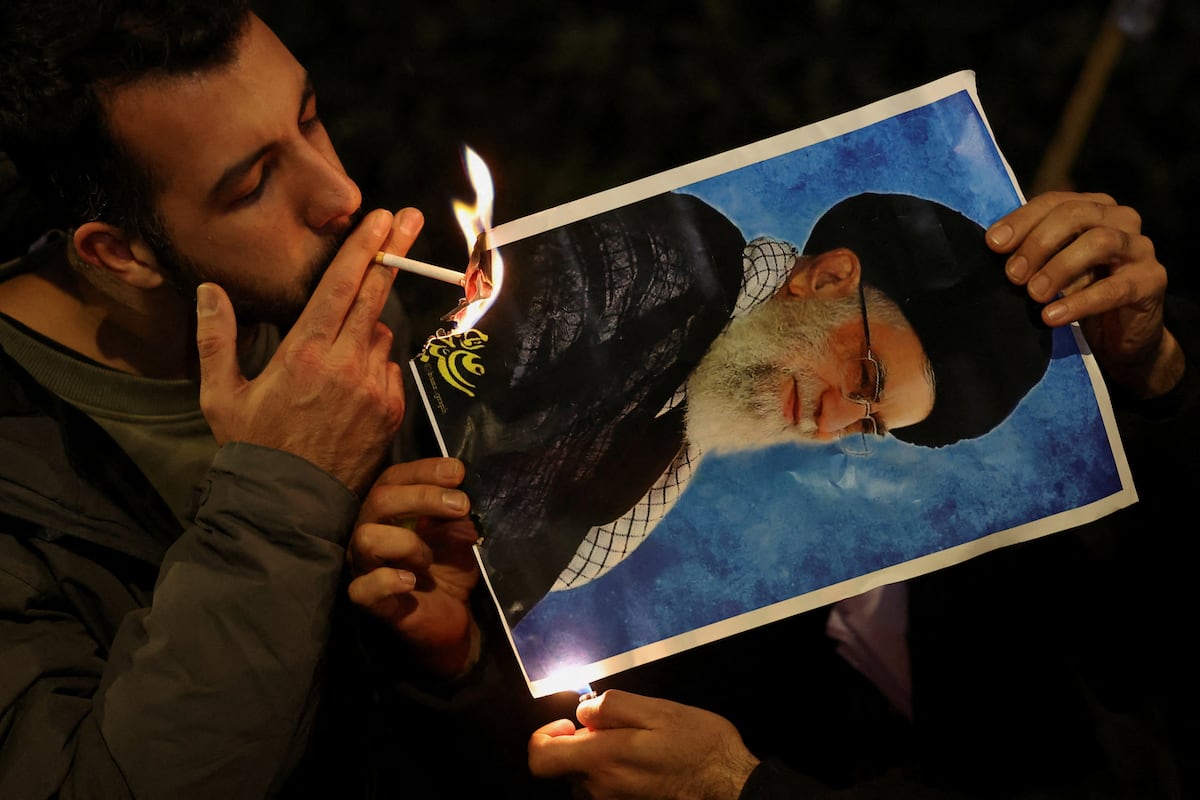
"On July 20, 1988, Ayatollah Ruhollah Khomeini, then Supreme Leader and founder of the Islamic Republic of Iran, appeared on national radio to announce the end of the war with Iraq. He did so by comparing the decision to drinking from a poisoned chalice. Khomeini knew that, after eight years of war and more than 200,000 soldiers killed, the survival of his regime depended on draining that cup to the dregs. That phrase, deeply ingrained in the collective memory of Iranians, could well be applied to the Islamic Republic now, as former head of the Iran branch of Israeli defense intelligence Danny Citrinowicz pointed out on Monday on X."
"A regime facing demonstrations that it claimed to have under control on Monday through repression and facing the threat of a new attack from the United States, must either undertake a change in policy the poisoned chalice 2.0, as the analyst calls it or face its demise, if not as a result of these protests, then in others to come, as predicted by Citrinowicz and other experts."
"One of those changes could concern the Iranian nuclear program, which the West fears is aimed at acquiring atomic weapons, something Tehran denies. On Monday, during a meeting with diplomats, Iranian Foreign Minister Abbas Araghchi declared that his country is open to negotiations with the United States, as reported by the Qatari channel Al Jazeera. A day earlier, Donald Trump, aboard Air Force One, had stated that he had received an offer from Iranian authorities to negotiate about the program. The U.S. president did not rule out very strong military or other options against Tehran, he said, even if this potential dialogue materializes."
Ayatollah Khomeini compared ending the Iran–Iraq war to drinking from a poisoned chalice, linking regime survival to enduring hardship. Iran now confronts mass demonstrations that officials claim to have subdued through repression while also facing the threat of U.S. military action. The regime must choose between substantive policy shifts or eventual collapse under continuing unrest. One possible shift involves the nuclear program, with Iranian officials declaring openness to U.S. negotiations while U.S. leadership says offers were received but that strong military options remain on the table. Regional diplomacy has intensified as mediators visited Tehran amid the crisis.
Read at english.elpais.com
Unable to calculate read time
Collection
[
|
...
]