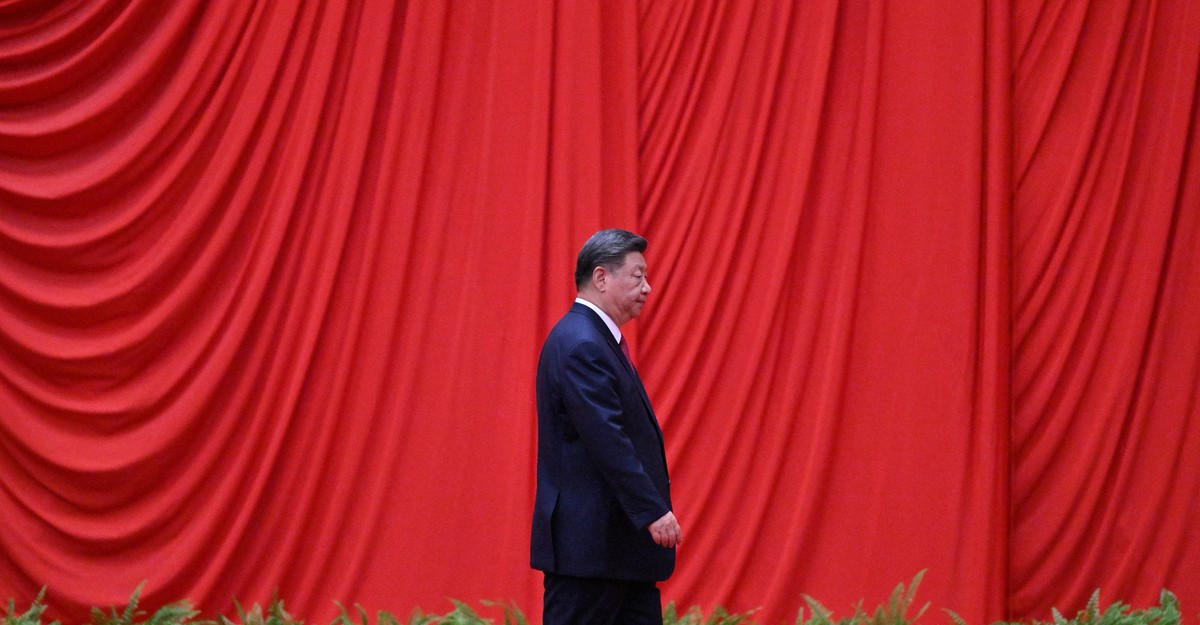
"China's restraint should not be seen as a sign of weakness. Instead, the country is biding its time, positioning itself as the ready choice to fill a leadership vacuum when the United States flames out. China's leaders are working to shape a world in which their dominance emerges not as a climactic victory over Western interests but as a fact on the ground."
"Instead of confronting the United States by defending Iran, a longtime strategic partner in the region, China has provided only indirect support and has largely stayed on the sidelines. Yet Beijing has avoided capitalizing on these conflicts with a strong public position."
"In private conversations and public writings, China's leaders and their advisers often describe America as "declining but dangerous"-a late-stage power prone to bursts of aggression in the hopes of arresting its slide. As early as the 1990s, the height of the United States' unipolar power, Chinese thinkers were already theorizing about America's decline."
"Wang Huning, then a little-known academic, was moved by his travels through the U.S. to write the book America Against America, in which he described a nation beset by social fragmentation, inequality, and political dysfunction. Shocked by the country's problems of homelessness, drug addiction, racial violence, social divisions, and low education standards, Wang concluded that America contained the seeds of its own destruction."
China has not taken a strong public stance amid U.S. internal political turmoil, strained alliances, and renewed conflict in the Persian Gulf. Instead of directly defending Iran, a long-term regional strategic partner, China has offered mostly indirect support and stayed largely on the sidelines. This restraint is framed as strategic patience rather than weakness. Chinese leaders are preparing to fill a leadership vacuum after the United States weakens. They describe America as declining but dangerous, expecting bursts of aggression as it tries to halt its decline. Chinese thinkers have theorized U.S. decline since the 1990s, citing social fragmentation, inequality, political dysfunction, homelessness, drug addiction, racial violence, social divisions, and low education standards as seeds of self-destruction.
Read at The Atlantic
Unable to calculate read time
Collection
[
|
...
]