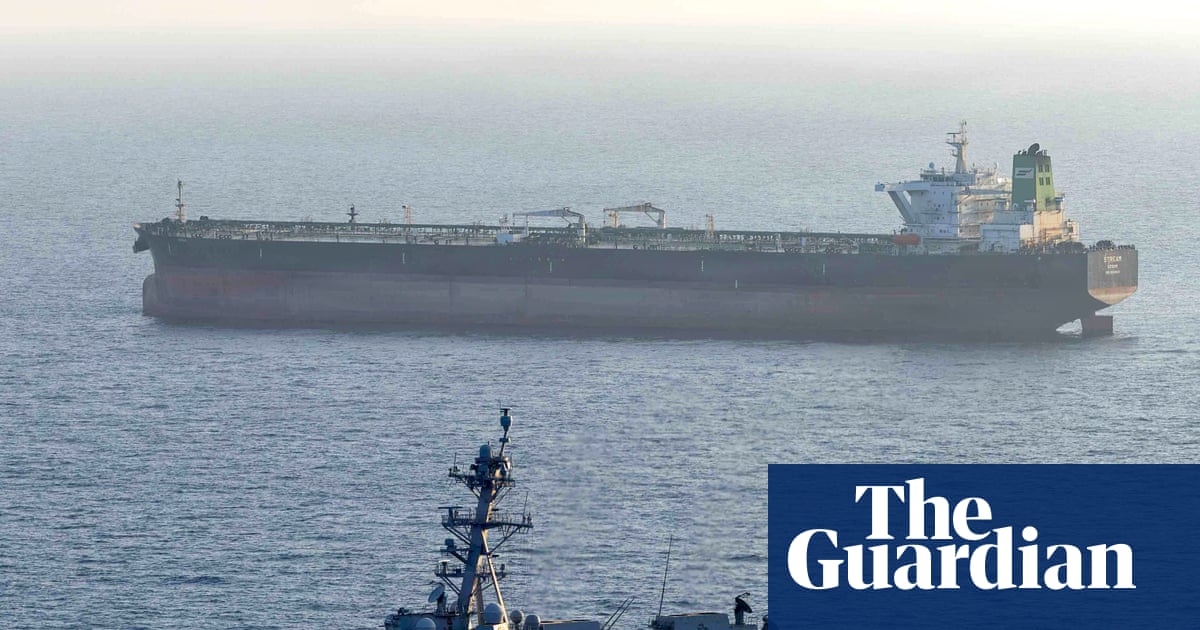
"Exchanges of fire between Iran and the US demonstrate the serious instability of the situation in the Middle East. Though the US strikes late on Thursday were just a love tap, according to the US president, Donald Trump, the reality is that neither side can continue the high-stakes standoff in the strait of Hormuz indefinitely. The US and its ally Israel demonstrated a comprehensive military superiority over Iran taking minimal casualties in the 38-day war but Washington has both failed to translate that into strategic dominance and allowed Iran to take control of the strait, driving up the oil price."
"The most significant development this week was the collapse of Trump's Project Freedom on Tuesday after just 50 hours. The unilateral US proposal had sought to create a safe zone for merchant shipping on the southern, Omani side of the strait using more than 100 fighter jets and several naval destroyers. Two merchant vessels took advantage. It ended amid objections from the Saudis, who were not consulted before the launch."
"Riyadh refused to allow US access to its airspace and bases, concerned Project Freedom could end up restarting the full-scale war. It was also not discussed with major shipping companies and it was unclear whether it would be effective. Richard Meade, the editor of Lloyd's List, a specialist shipping industry title, said this week: No major industry organisations that we are aware of have been approached by the US to set up any sort of briefing session."
"Iran retains the ability to threaten and inflict damage on tankers passing through the strait of Hormuz and effectively halt all other shipping. More than 1,550 vessels remain trapped in the Gulf, while on Wednesday and Thursday no merchant ships transited the strait, according to S&P Global Market Intelligence."
Exchanges of fire between Iran and the US show instability in the Middle East. US strikes described as limited still leave both sides unable to continue a prolonged standoff in the Strait of Hormuz. The US and Israel demonstrated military superiority with minimal casualties, yet failed to convert that into lasting strategic dominance, allowing Iran to control the strait and raise oil prices. A major attempt to secure shipping, Project Freedom, collapsed after about 50 hours. The unilateral plan to create a safe zone on the Omani side using fighter jets and naval destroyers faced objections from Saudi Arabia, which refused access to airspace and bases. Shipping companies were not consulted, leaving security teams and ship owners uncertain about effectiveness. Iran can still threaten and damage tankers, potentially halting other shipping, with many vessels trapped in the Gulf and no merchant transits reported during key days.
#iran-us-tensions #strait-of-hormuz #maritime-shipping-security #middle-east-instability #oil-market-impact
Read at www.theguardian.com
Unable to calculate read time
Collection
[
|
...
]