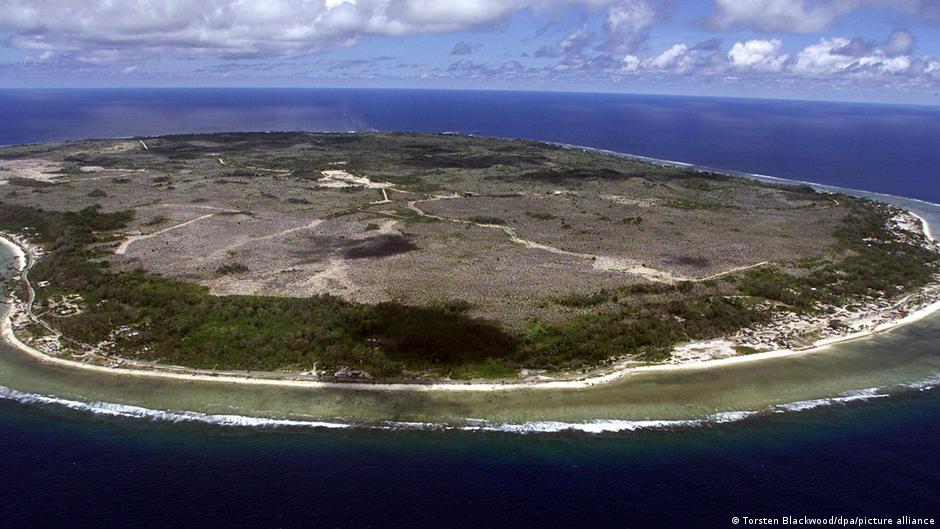
"The Nauruan parliament on Tuesday passed a constitutional amendment to rename the country “Naoero,” New Zealand broadcaster RNZ reported, as the government looks to shed what it sees as a relic from the tiny nation’s colonial past. The referendum is required to validate the constitutional change. President David Adeang first tabled the proposal in January."
"Nauru’s native tongue is “Dorerin Naoero,” which a majority of its almost 10,000 citizens speak alongside English. The government said that the island came to be called Nauru because “foreign tongues” distorted the native language. “Nauru emerged because Naoero could not be properly pronounced by foreign tongues, and was changed not by our choice, but for convenience,” the government said in a statement."
"The change in name would “more faithfully honor” the nation’s heritage, language and identity Adeang said on Tuesday night. Nauru is the world’s smallest island republic, measuring just 20 square kilometers (7.7 square miles). From the late 1880s up until World War I, Nauru was claimed by Germany as a protectorate."
"The south pacific island was then captured by Australian troops and was jointly administered by Australia, the United Kingdom and New Zealand before it gained independence in 1968. Colonizing powers tapped Nauru’s unusually pure phosphate deposits to use as fertilizer. Continued phosphate mining after independence created an economic boom but the deposits have since dried up, leaving the center of the island barren and uninhabitable."
Nauru’s parliament passed a constitutional amendment to rename the country “Naoero,” and a referendum will be held to validate the change. The government seeks to move away from a name viewed as a relic of the colonial past. Nauru’s native language includes “Dorerin Naoero,” spoken by most of its nearly 10,000 citizens alongside English. The government says the name “Nauru” arose because “foreign tongues” distorted the native term and was altered for convenience rather than by local choice. President David Adeang said the change would more faithfully honor the nation’s heritage, language, and identity. Nauru’s colonial history includes German control, later joint administration by Australia, the United Kingdom, and New Zealand, and independence in 1968.
Read at www.dw.com
Unable to calculate read time
Collection
[
|
...
]