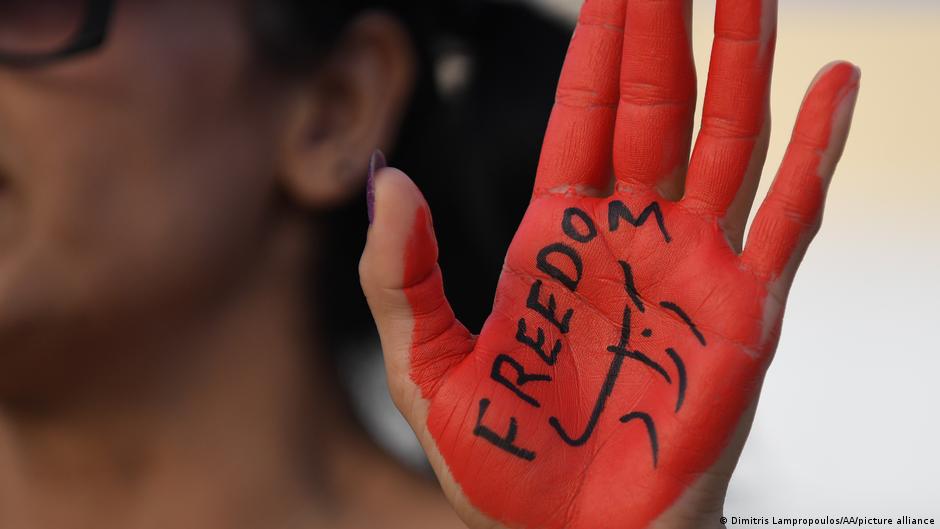
"Iran has been witnessing a fresh wave of mass protests across the country in recent weeks. While the demonstrations were triggered by rising public anger over the skyrocketing prices of basic goods, they also reflect the growing disenchantment among ever-larger sections of society with the Islamic Republic's political system. Activists say over 2,000 people have been arrested during the ongoing protests."
"The IRGC, one of the most powerful organizations in Iran, is a branch of the Iranian armed forces that answers directly to the Supreme Leader, Ayatollah Ali Khamenei. Created after the 1979 revolution, its task is to defend the Islamic regime. The IRGC and Iranian police have plenty of experience in brutally suppressing mass anti-government demonstrations, including in recent times."
"In the summer of 1999, the Iranian government shuttered the reform-oriented newspaper Salam. The move prompted students to hold peaceful protests in the capital Tehran. On the night of July 8, however, security forces stormed a student dormitory, killing at least one student. The operation sparked nationwide protests that lasted several days. Basij militias then launched a violent crackdown against the demonstrators. At least four more people were killed, some students disappeared without a trace, and between 1,200 and 1,400 people were arrested."
Mass protests have erupted across Iran in response to skyrocketing prices of basic goods and broader political disenchantment. Activists report over 2,000 arrests and at least 34 demonstrator deaths, according to HRANA. Many fear the theocratic regime will deploy police and the Basij, a volunteer paramilitary controlled by the IRGC, to violently suppress demonstrations. The IRGC answers directly to the Supreme Leader and was created after the 1979 revolution to defend the Islamic regime. The IRGC and police have a record of brutal suppression, as illustrated by violent crackdowns on past student protests in 1999.
Read at www.dw.com
Unable to calculate read time
Collection
[
|
...
]