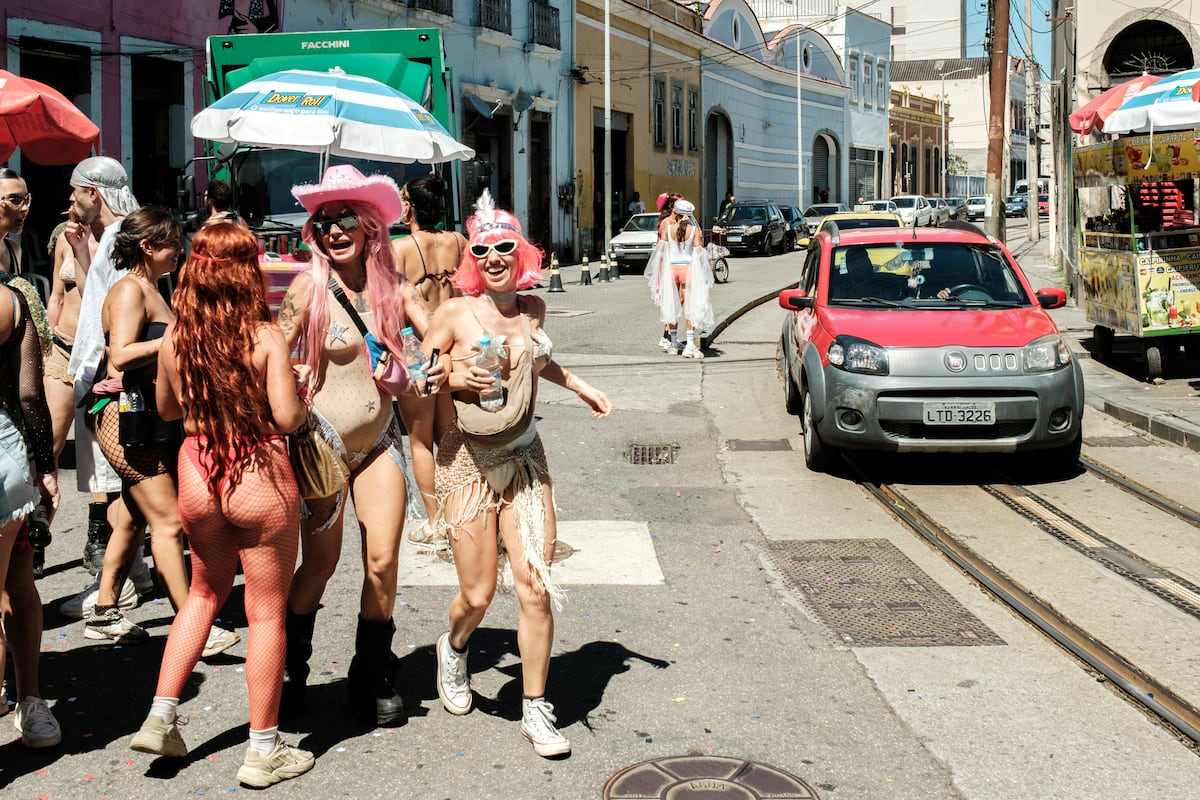
"Each rehearsal brings together some 3,000 members and thousands more neighbors and spontaneous spectators. It's all free, out in the street, and with the tacit approval of the traffic officers. And it happens almost every day of the week for about three monthssomething unthinkable in many cities. When cars disappear for a few hours, spaces for community life flourish: families dancing, children running around, impromptu barbecues, and a sense of shared space that is invaluable in a city marked by inequality and sorely lacking in pedestrian areas."
"These are the two main cultural expressions of the city and they move the masses, to the point that they force urban changes and help revitalize run-down areas. From the beginning of the year until the peak of the festival (this year it's from February 13th to 18), Rio will host more than 460 parades of blocos authorized by the city. These parades are expected to draw more than eight million people, residents and tourists alike."
Since November, samba school rehearsals close streets across many Rio neighborhoods, bringing together about 3,000 members plus thousands of neighbors and spectators. Rehearsals are free, held outdoors with tacit traffic-officer approval, and occur nearly daily for about three months. When cars disappear for a few hours, families dance, children play, and communal activities like impromptu barbecues emerge, creating shared pedestrian space in a city with stark inequality. In January and February, blocos—lively street parades with wind and percussion bands—join samba schools, with more than 460 authorized blocos expected to draw over eight million people. The city organizes complex logistics and deploys hundreds of traffic officers, while numerous unpermitted groups also parade.
Read at english.elpais.com
Unable to calculate read time
Collection
[
|
...
]