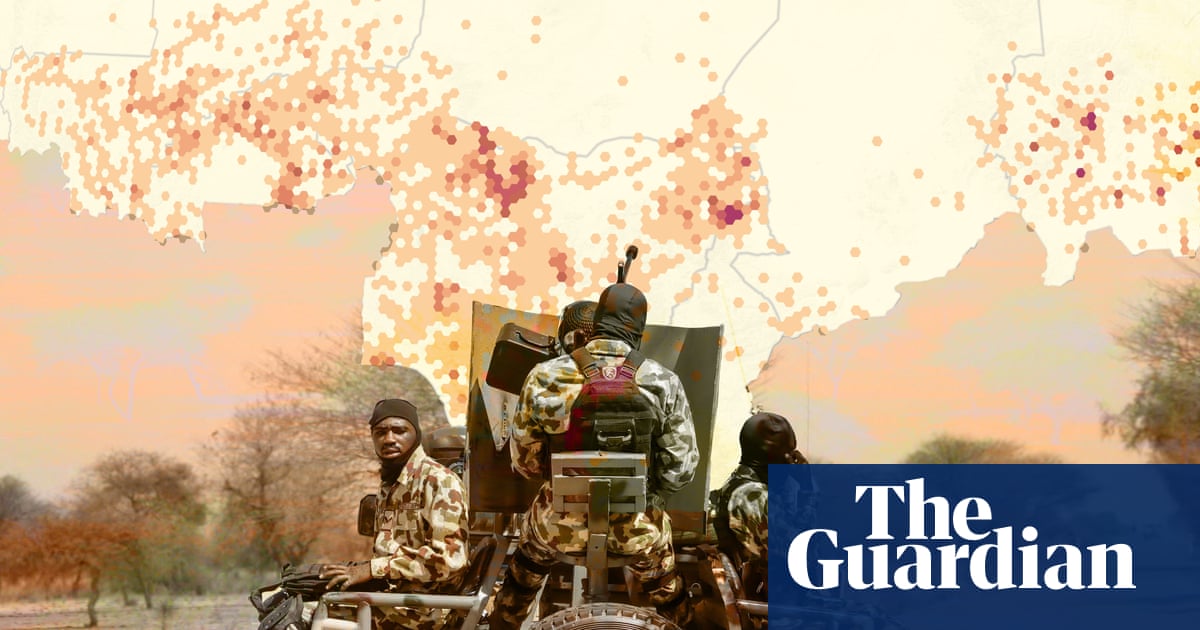
"On paper Nigeria is a federation comprising 36 states and 774 local government council areas, but in practice power is heavily centralised at the federal level. Resources trickle down to states in limited quantities and are distributed in far smaller amounts to local government councils, largely at the discretion of governors. As such, vast swathes of Nigeria consist of what academics and civil society groups call ungoverned and under-governed spaces, where non-state actors motivated either by extremist ideology or economic, political or ethnic marginalisation or a combination of all the above can move relatively freely, recruit, and plot attacks."
"The situation is exacerbated by the thinly stretched nature of Nigeria's security apparatus. The military, at about 230,000 personnel, is one of Africa's largest, but it is fighting insurgencies on multiple fronts in the north and a secessionist movement in the south-east. The police force of around 370,000 officers translates to one officer per every 600 citizens, which is far below the UN-recommended ratio of one per 450."
"Indeed, in many communities outside the big cities and towns, the only government presence is an abandoned police post, dilapidated primary healthcare centre or barely functioning primary school. On Saturday, the US and Nigeria said a joint operation had killed Abu-Bilal al-Minuki, the second in command of Islamic State globally, in Nigeria's north-east. The US also targeted extremist militants in the north-western state of Sokoto late last year, and in February about 100 US soldiers arrived in the country to help advise its mil"
Insecurity in Nigeria has worsened after earlier improvements, with terrorism-related deaths rising. General elections approaching have increased scrutiny of the crisis. A primary long-term driver is a governance vacuum across much of the country, where power is heavily centralized at the federal level and resources reach states and local governments in limited, discretionary ways. Many areas function as ungoverned or under-governed spaces, allowing extremist and other marginalization-driven non-state actors to move, recruit, and plan attacks. Nigeria’s security apparatus is thinly stretched, with the military engaged on multiple fronts and police coverage far below UN recommendations, leaving many communities with minimal government presence.
Read at www.theguardian.com
Unable to calculate read time
Collection
[
|
...
]