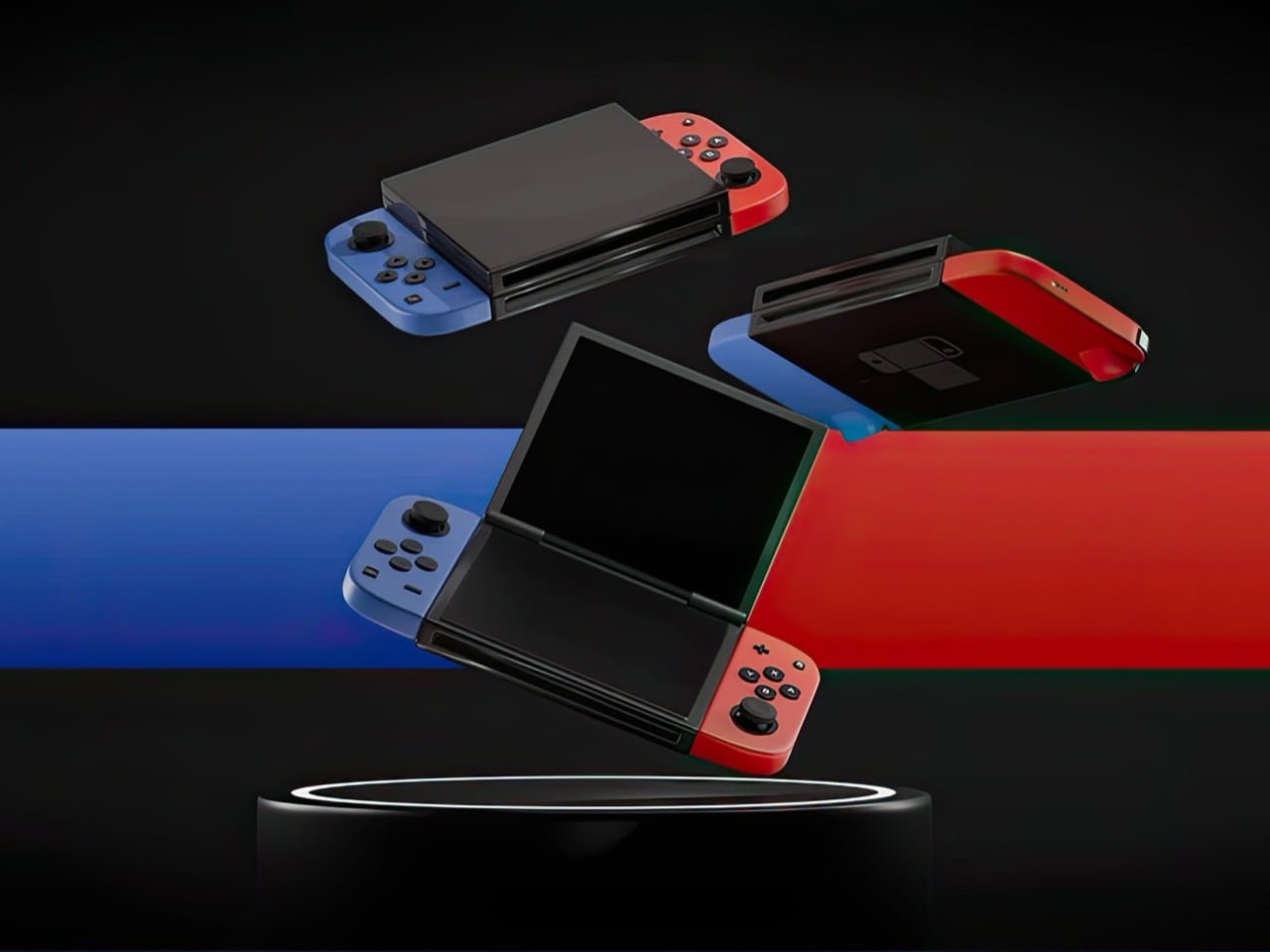
"The concept arrives as a series of beautifully lit 3D renders: a folding Nintendo Switch with dual screens, a hinge running through the center of the body, and Joy-Cons in the familiar blue-red split attached to either end. Closed, it looks like a sleek, pocket-ready device with a tighter footprint than the original Switch. Open, it recalls something older and warmer, the quiet satisfaction of flipping a DS open on a long car ride, except now the screens are large, the controllers are proper, and the whole thing feels built for today."
"The Nintendo DS sat at 154.02 million lifetime units for years, the gold standard for Nintendo hardware, until the Switch finally crept past it in early 2026 with 155.37 million. Two hardware generations, both cultural touchstones, separated by fewer than two million units across a combined history of roughly three decades. The closeness of that race matters. The DS built those numbers on a genuine design idea, a spatial logic where two screens gave developers room for two distinct kinds of information at once."
Nintendo chose to refine the original Switch formula rather than explore dual-screen possibilities for Switch 2. Designer Juan Manuel Guerrero created concept renders of an alternative folding Switch with dual screens and a center hinge, resembling a modernized DS. The device features large screens, proper controllers, and a compact closed form factor. The concept explores whether the Switch era abandoned valuable design principles from the DS, which sold 154.02 million units before being surpassed by Switch's 155.37 million units in 2026. Both hardware generations represent cultural touchstones separated by fewer than two million units across three decades, suggesting the DS's dual-screen spatial logic for distinct information types remains relevant.
#nintendo-switch-2 #dual-screen-design-concept #nintendo-ds-legacy #handheld-gaming-hardware #product-design-philosophy
Read at Yanko Design - Modern Industrial Design News
Unable to calculate read time
Collection
[
|
...
]