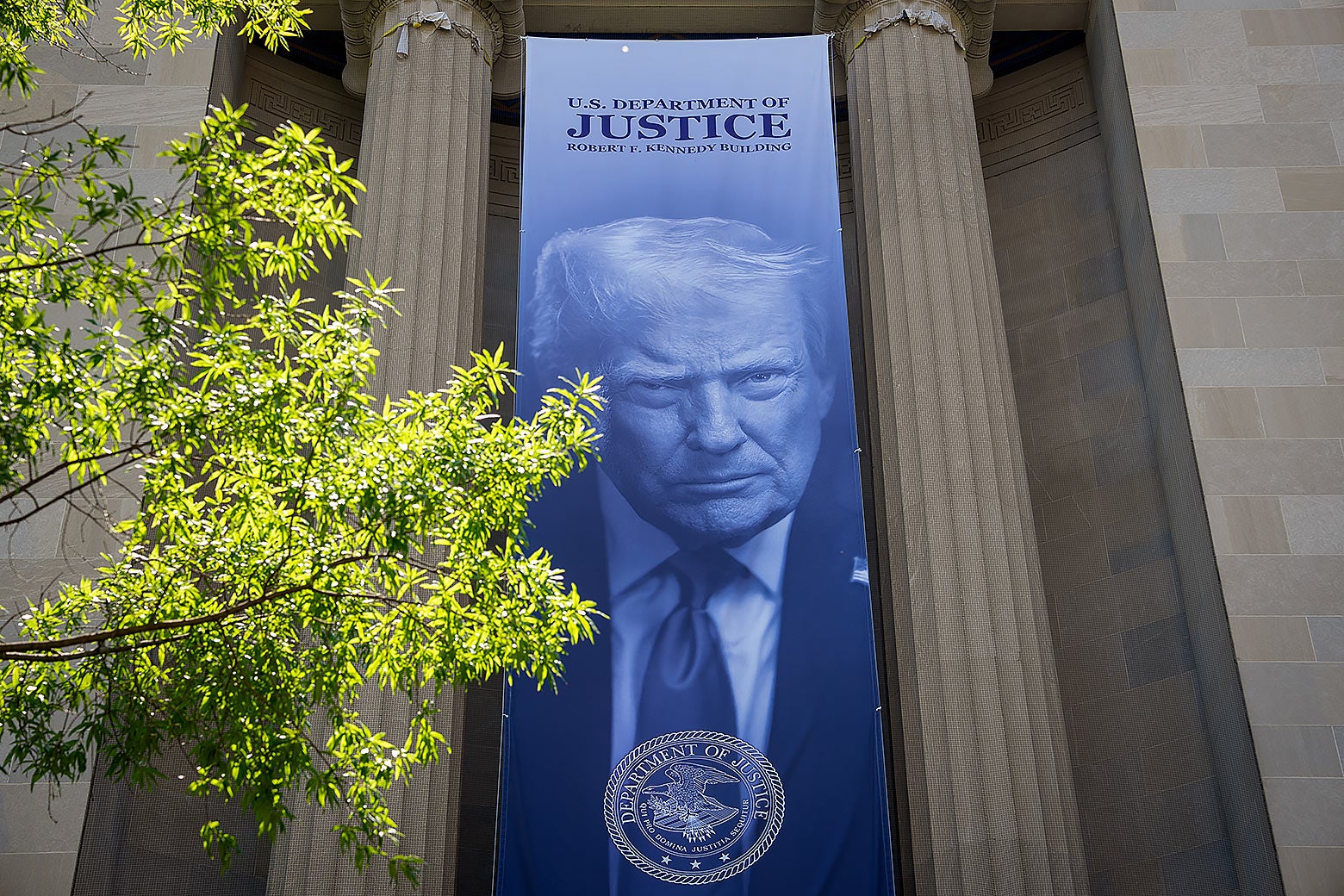
A Justice Department anti-weaponization fund totaling about $1.8 billion is described as enabling corrupt self-dealing and leverage tied to Trump. The fund is framed as a mechanism to avoid weaponization claims while directing money in ways that benefit Trump. Trump’s low popularity is presented alongside his ability to pursue primary election revenge against Republican critics. Federal actions are described as obstructing efforts to hold ICE agents involved in shootings accountable, including cases connected to Minneapolis. Hennepin County prosecutors are portrayed as pushing to prosecute ICE agents, testing limits of federal power and navigating prior misconduct allegations. The material also references broader political consequences for the Republican Party and Trump’s strategic bets.
"The Justice Department creates an unusual $1.8 billion 'anti-weaponization fund' tied to Trump settlement dynamics, expanding coverage to include tax audits and other matters. The framing centers on self-dealing and corrupt incentives, portraying the fund as a way to convert legal disputes into leverage rather than addressing wrongdoing. The scale and structure of the fund are presented as extraordinary, with critics arguing it functions as a slush mechanism that benefits Trump while undermining accountability and fairness."
"Trump can exact primary election revenge on Republican critics even when his own popularity is low. The material connects this ability to political strategy and party dynamics, describing a paradox where actions that harm the broader party can still strengthen Trump’s position. Allies are said to question what the revenge tour cost, while analysis emphasizes how Trump’s influence persists through targeted electoral pressure and mobilization against internal opponents."
"Federal government obstruction is described as limiting attempts to hold ICE agents involved in shootings accountable. Hennepin County’s efforts to prosecute ICE agents are portrayed as testing the limits of federal power, especially in the context of a Minneapolis crackdown and a charged shooting of an immigrant. The material also references how an ICE agent’s web of lies was unwound, indicating challenges in establishing facts and overcoming institutional barriers to prosecution."
"Trump completed a revenge tour, and allies wonder what it cost. The material links the revenge effort to broader party strain, describing how Trump’s actions can weigh down the Republican Party while still producing electoral outcomes favorable to him. The narrative emphasizes the tension between Trump’s personal political standing and his capacity to drive primary challenges against critics, suggesting a durable mechanism of influence within party politics."
#justice-department #trump-settlement #anti-weaponization-fund #ice-accountability #primary-elections
Read at Slate Magazine
Unable to calculate read time
Collection
[
|
...
]