"In the months she has volunteered with United Community Action Network (UCAN), a grassroots network in Suffolk, Long Island, she has repeatedly encountered deserted bicycles where Immigration and Customs Enforcement (ICE) agents had just ripped someone away from their home and family. In a community where immigrants contribute much of the labor but live on the margins of the economy, the bikes-mostly used by day laborers to get to and from the corners and lots where they solicit short-term manual-labor jobs-are reminders of the families left in limbo after an ICE abduction."
"In contrast to the dramatic, slickly produced videos of ICE raids the White House has publicized, UCAN's assistance is usually quiet and banal. Volunteers drive to sites where day laborers seek jobs like landscaping or construction and park for a few hours, just to be there in case ICE agents show up. They also coordinate a neighborhood watch for ICE vehicles ( which are often unmarked), pass out know-your-rights materials, and hand out food at day-laborer gathering sites."
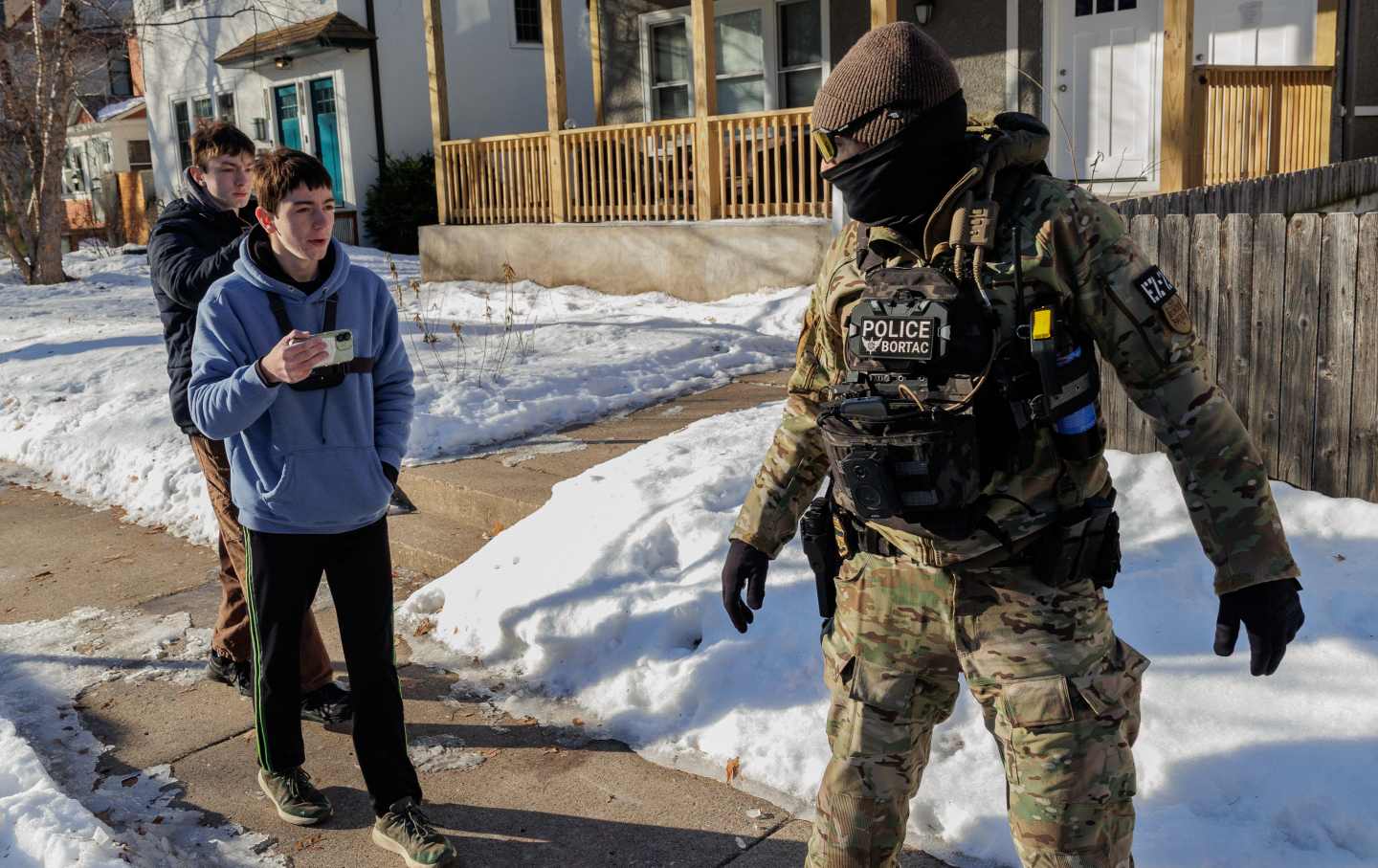
"The most important equipment UCAN volunteers carry is the camera on their phones. They do not seek to disrupt arrests or interfere physically-that is not the kind of legal risk they want to take on-rather, they aim to document and ensure that ICE knows they are being filmed. Sometimes, she said, ICE vehicles drive away when they see community members recording them."
Abandoned bicycles mark sudden ICE arrests, leaving families emotionally and economically adrift. Volunteers with United Community Action Network organize an "Adopt a Day Labor Corner" program to return possessions, provide food, and offer marginal comfort to affected families. Volunteers maintain visible presence near day-labor sites, coordinate neighborhood watches for often-unmarked ICE vehicles, distribute know-your-rights materials, and document interactions with phone cameras. Volunteers avoid physical interference with arrests to limit legal risk, instead using filming to deter or record ICE actions; sometimes ICE vehicles withdraw when filmed.
Read at The Nation
Unable to calculate read time
Collection
[
|
...
]