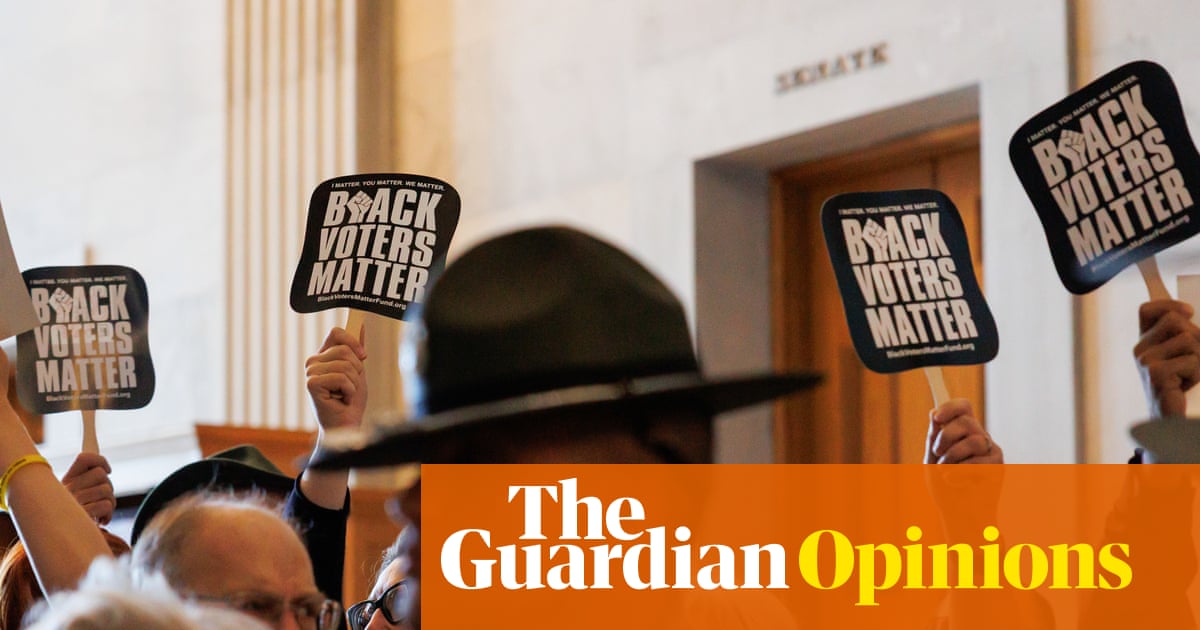
"Memphis is the latest warning. Tennessee's largest majority-Black city can vote, organize, turn out, remember and resist and still be cut into pieces by politicians who fear what that city might do with power. This week, Republicans carved up the Memphis-centered congressional district, dividing its only majority-Black district into three Republican-leaning seats while weakening voter-notice requirements in the process."
"Gerrymandering, at its most brutal, does more than help one party win. It teaches a community that even overwhelming local political will can be made irrelevant by a map. The United States may be celebrating 250 years since the Declaration of Independence, but anything resembling a multiracial democracy here is barely older than the Voting Rights Act."
"The effectively erstwhile Voting Rights Act of 1965 (VRA) was enormously consequential, addressing ballot access, voter registration and the brute mechanics of disfranchisement. It addressed racial vote dilution. It was born from the knowledge that the US, left to itself, would not protect Black political power. It was also incomplete. Racism remains a shapeshifter, and the old, now-disempowered VRA was not built to combat all of its forms."
"It was certainly not built for our full modern machinery of electoral mapmaking: the data analyst, the algorithm, the partisan alibi, the lawmaker who knows how to make racial harm speak the language of party politics. So when the six supreme court conservatives issued the Louisiana v Callais ruling weakening the VRA section that, for decades, helped prevent states from d"
Maps can show location and direction, but electoral maps can also determine who is allowed to matter. Gerrymandering can cut communities into pieces, turning local political will into irrelevance through district design. Memphis, a majority-Black city, can vote, organize, and resist while still being weakened by congressional redistricting that divides its only majority-Black district into Republican-leaning seats. The process also reduces voter-notice requirements. The Voting Rights Act of 1965 addressed ballot access, registration, disfranchisement, and racial vote dilution, reflecting the expectation that Black political power would not be protected without federal action. Later rulings weakened key protections, leaving modern mapmaking tools and new forms of racism less effectively constrained.
Read at www.theguardian.com
Unable to calculate read time
Collection
[
|
...
]