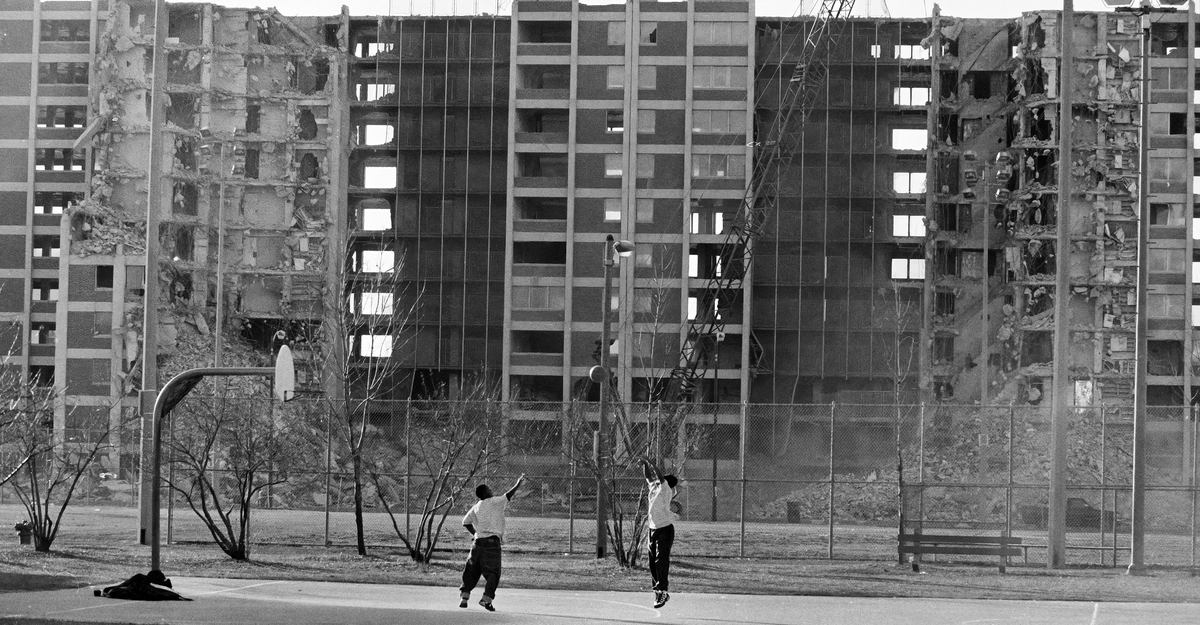
"One popular strain of urban-policy thinking opposes gentrification-the arrival of affluent people into poor neighborhoods-and argues that poverty should be rectified by ever greater expenditure on public housing. The opposite might be true: Government spending can help, but it can also hurt, as badly designed public-housing projects have done. So long as gentrification brings rich and poor together, and offers the latter greater opportunity to take part in a healthy economy, it looks less like a villainous process and more like a heroic one."
"To make way for the development, the old slums-in which roughly a quarter of residents were Black-had been cleared away. But the 604 new units were for white tenants only until 1968, when civil-rights laws forced integration. Like the ramshackle shacks it replaced, Techwood fell into disrepair. By the 1990s, Techwood had resegregated, becoming almost exclusively Black, and turned into a byword in Atlanta for urban decline. Gates and windows lay shattered; residents complained of squalid living conditions; drug trafficking and gang violence"
One urban-policy view opposes gentrification and calls for greater public-housing spending to remedy poverty. Government spending can help but can also harm when housing projects are badly designed. Gentrification that mixes affluent and poor residents can expand opportunities for the poor to participate in a healthy economy. Techwood Homes in downtown Atlanta illustrates both aspirations and failures of American housing policy. Opened in 1935 after slum clearance, Techwood excluded Black residents for decades, later deteriorated and resegregated by the 1990s amid squalor, crime, and gang violence. In the 1990s a federal program funded demolition and rebuilding. The site now bears a commemorative plaque and few original buildings remain.
Read at The Atlantic
Unable to calculate read time
Collection
[
|
...
]