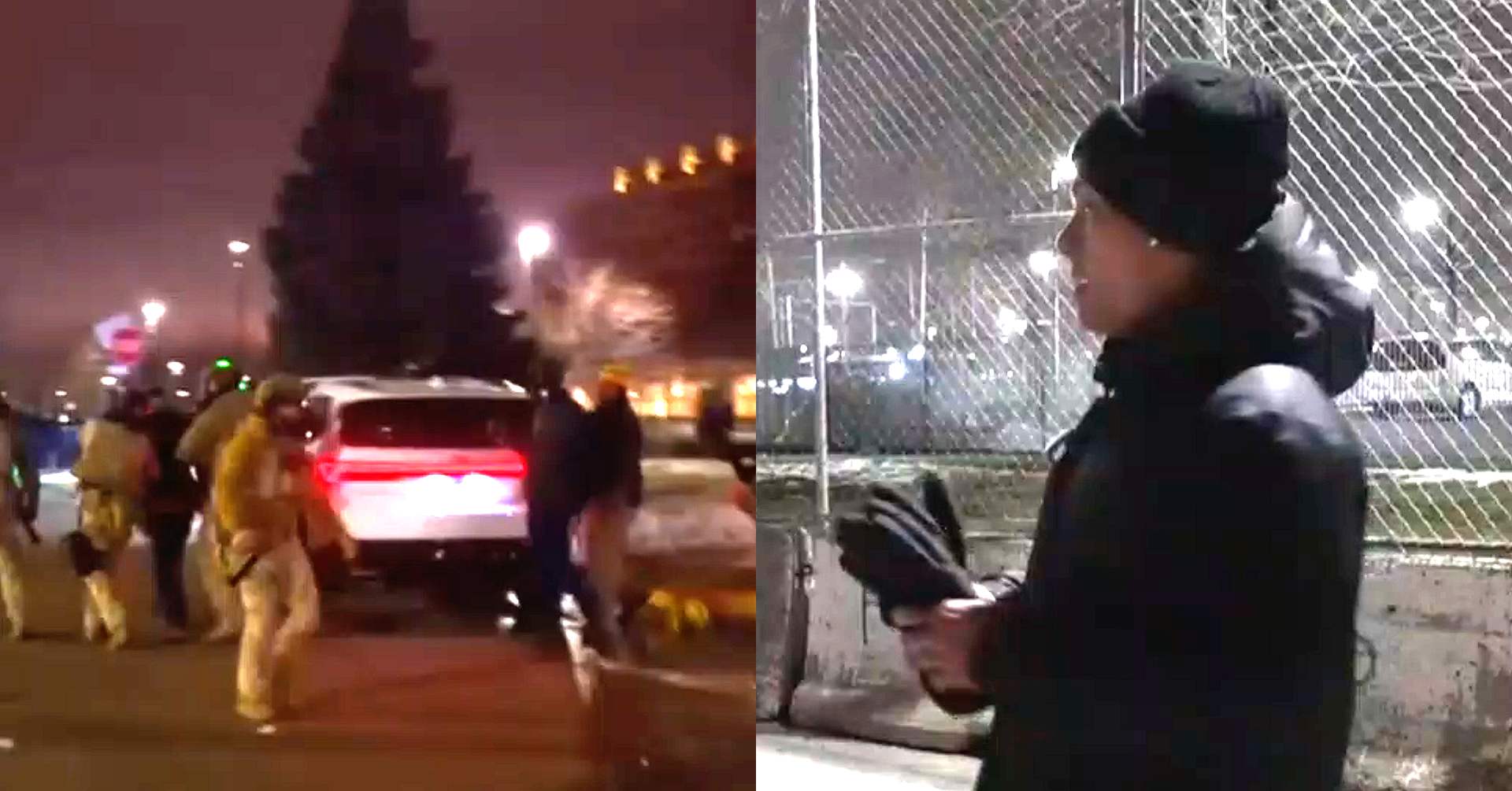
"Now I mean, we're watching right here. Leonel (ph) Leonel (ph), my photographer, is having a little bit of a hard time seeing. But we're going to try to get here. We're here. You can see federal law enforcement now approaching a group of protesters here. We don't know exactly why. (CONSTANT PROTESTER WHISLTE SOUNDS) But these are these are these I mean, SWAT here, they're in, you know, might as well looks like, you know, military fatigue."
"They moved out. They pushed the people back and that was it. They went back inside. Then after that, there were some more intense moments. But certainly, this is the most aggressive we have seen them today. I mean, they came from every side, they threw those percussion grenades, and then they just started firing tear gas, and that's when we all started trying to disperse and clear out."
"But what has been happening here, Laura, through the night, and I have to say, having covered so many of these now, actually, the law enforcement here was very patient with the protesters. I watched as car after car with law enforcement officials go in, come out, dozens of cars, and they would the protesters would kick the cars, they would throw things at cars, and the law enforcement did nothing, they did nothing."
Minneapolis became an epicenter for anti-ICE protests following the killing of Renee Good by ICE agent Jonathan Ross. A live television report was repeatedly interrupted by a screaming protester whose profane insult to ICE agents rang out on air. Federal law enforcement in dark uniforms, including Customs and Border Patrol and SWAT-like units, advanced on protesters, using percussion grenades and tear gas to push people back. Earlier in the night law enforcement showed restraint as protesters kicked and threw things at vehicles without immediate response. The situation escalated when federal units returned more aggressively and news crews and photographers tried to disperse.
Read at www.mediaite.com
Unable to calculate read time
Collection
[
|
...
]