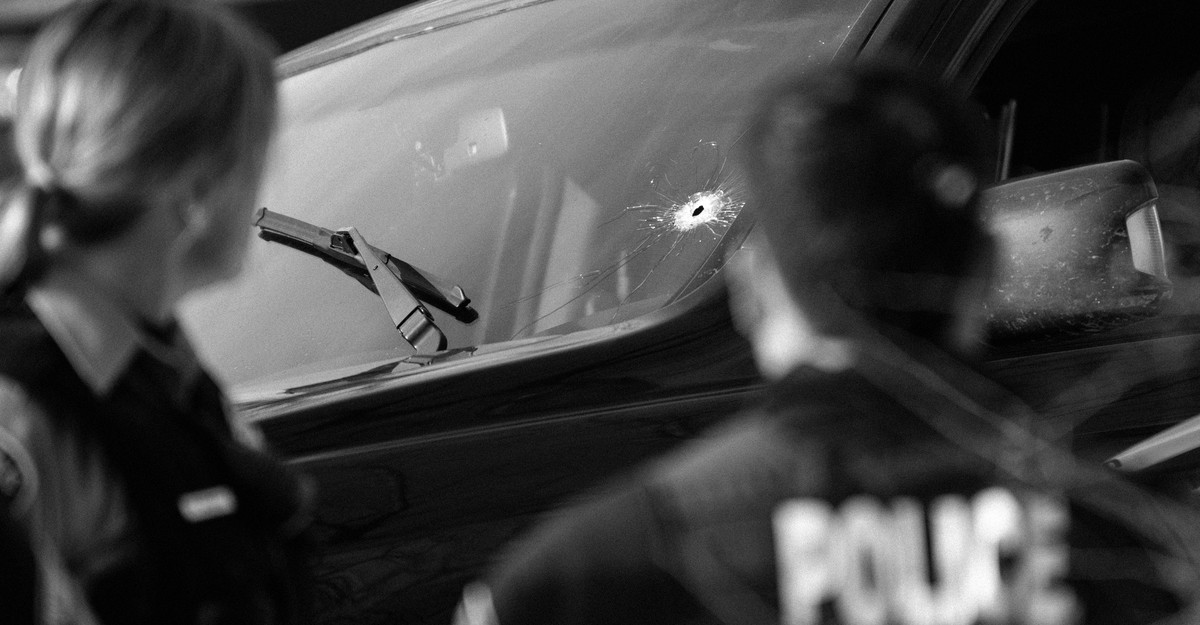
"After an ICE agent shot and killed Renee Good in Minneapolis last week, forensic examinations of videos of the incident emerged within hours. These meticulous reconstructions were useful for debunking the lies told by Trump-administration officials in the immediate aftermath of the killing, and they show the power of technology, in an age when nearly everyone has a camera in their pocket, to convey a complicated moment."
"But at the core of the tragedy is a larger truth: None of this needed to happen. A series of choices by the administration led to this point-the use of ICE and Border Patrol to menace Democratic-led states and cities; White House pressure on the Department of Homeland Security to make high quotas, which has resulted in shortened training and rushed missions; and the president's inclination to inflame tensions, all of which created the conditions for the moment that's now been replayed millions of times."
"Under Supreme Court precedent, an officer may shoot at someone fleeing if he reasonably believes that his life or the lives of others are in danger. Prosecutors are often slow to charge officers, because they or juries are hesitant to second-guess officers' determinations. Ross was also reportedly dragged by a car in June during an attempted arrest, which may have made him more likely to assume the worst about a driver."
After an ICE agent shot and killed Renee Good in Minneapolis, forensic video reconstructions appeared within hours and helped debunk inaccurate official claims. Ubiquitous cellphone and surveillance cameras enabled frame-by-frame analysis. Investigators and amateurs examined what officer Jonathan Ross might have believed about Good's actions and vehicle direction. Administration choices contributed: deploying ICE and Border Patrol into Democratic jurisdictions, pressuring DHS for high quotas that shortened training and rushed missions, and presidential rhetoric that inflamed tensions. Under Supreme Court precedent, officers may use deadly force against fleeing suspects when danger is reasonably believed. Ross's prior being dragged by a car may have shaped his perceptions. Many policing experts question Ross's tactics and raise moral concerns despite possible legal justification.
Read at The Atlantic
Unable to calculate read time
Collection
[
|
...
]