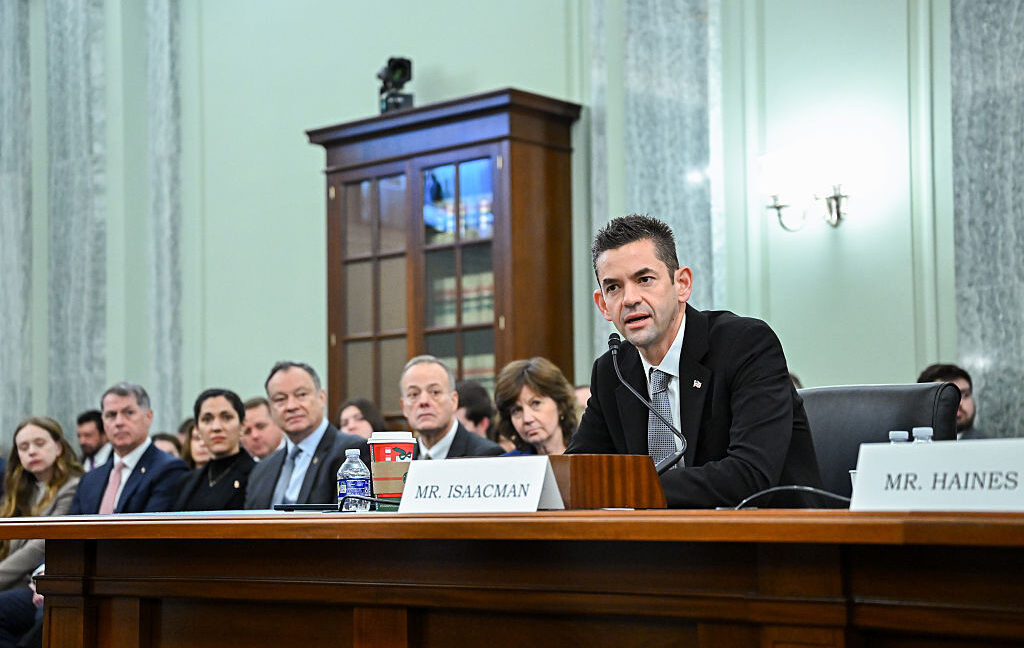
"We are in a great competition with a rival that has the will and means to challenge American exceptionalism across multiple domains, including in the high ground of space. This is not the time for delay, but for action, because if we fall behind-if we make a mistake-we may never catch up, and the consequences could shift the balance of power here on Earth."
"There appeared to be no showstoppers during the hearing, in which Isaacman reiterated his commitment to the space agency's Artemis Program and defended his draft plan for NASA, "Project Athena," which calls for an assessment of how NASA should adapt to meet the modern space age. During his testimony, Isaacman expressed urgency as NASA faces a growing threat from China to its supremacy in spaceflight."
"Isaacman appeared before this Senate committee eight months ago, after his original nomination by President Trump to lead the space agency. That hearing went reasonably well, and he was days away from being confirmed by about two-thirds of the Senate when the president pulled his nomination for political reasons. But Isaacman's time was not done, and throughout the summer and fall, his supporters pressed his case, leading to Trump's re-nomination in early November."
Jared Isaacman returned to a Senate confirmation hearing as a nominee for NASA administrator and reiterated commitment to the Artemis Program. He defended a draft plan called Project Athena that calls for assessing how NASA should adapt to the modern space age. Isaacman stressed urgency, warning that China poses a growing threat to American supremacy in spaceflight and arguing that leadership is required as lunar astronaut launches approach in months. He cautioned that falling behind could shift the balance of power on Earth. Isaacman previously faced an earlier hearing and a pulled nomination before being re-nominated amid political disputes.
Read at Ars Technica
Unable to calculate read time
Collection
[
|
...
]