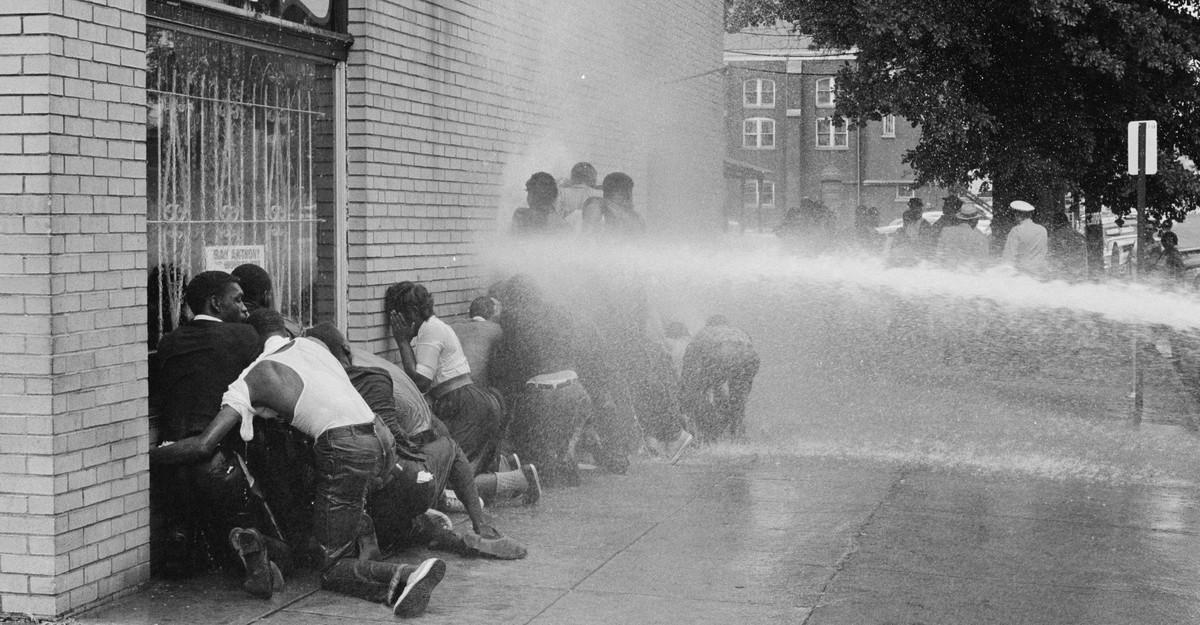
"The unarmed, nonviolent citizens who have been following ICE agents, blowing whistles to alert people to their presence, even heckling and mocking them, are not just trying to impede their work. They are aiming, as well, to illustrate a contrast, evoke a reaction that will reveal a moral truth, and tell a story they can capture on their phone:"
"on one side, an aggressive, violent, extrajudicial (and masked) paramilitary group exercising brute force against anyone who gets in their way, and on the other, people who are simply attempting to be decent neighbors. Good and her fellow "rapid responders" achieved this contrast-at the cost of her life."
"But this is not the way the activists see it, and after Good's killing, it's not the way the majority of the country sees it either. A CNN poll conducted after the shooting found that 51 percent of Americans believe that "ICE enforcement actions were making cities less safe rather than safer." And the number of people who feel that Trump's immigration-enforcement efforts go too far has grown, increasing from 45 percent last February to 52 percent in the new poll."
Unarmed, nonviolent neighborhood-watch activists have followed ICE agents, blown whistles, heckled, and filmed encounters to highlight contrasts between armed enforcement and peaceful civilians. Those activists aim to provoke reactions that reveal moral judgments and produce compelling video evidence. Critics frame these tactics as reckless obstruction that endangers agents, but the confrontations have a long history as a deliberate strategy. The killing of Renee Nicole Good crystallized the contrast and galvanized public sentiment. Polling after the shooting showed 51 percent of Americans saw ICE actions as making cities less safe and rising concern that enforcement efforts go too far.
Read at The Atlantic
Unable to calculate read time
Collection
[
|
...
]