"This happened when Jimmy Carter, a former Sunday-school teacher, was elected following Watergate, and when the born-again George W. Bush's slim victory looked like a repudiation of Bill Clinton's sex-scandal-marred presidency. To speak in the register of faith-not a particular sect or even God, but a grounding belief in a higher order-is to reach beyond partisanship, to try to return to basic moral precepts. In calmer times, a leader expounding from such heights risks sounding preachy and self-righteous."
"Here is the regular guy who loves shooting hoops, who is hopeless with a hammer, who loves a self-deprecating story about walking into a glass wall or almost falling off a ladder, and whose wife, Lori, is always, always right. He is, in short, pretty boring by almost any measure, and his book can lapse into the gobbledygook of clichés that fill such memoirs-Shapiro is able, for example, "to make a choice and then execute it" when "all eyes were watching.""
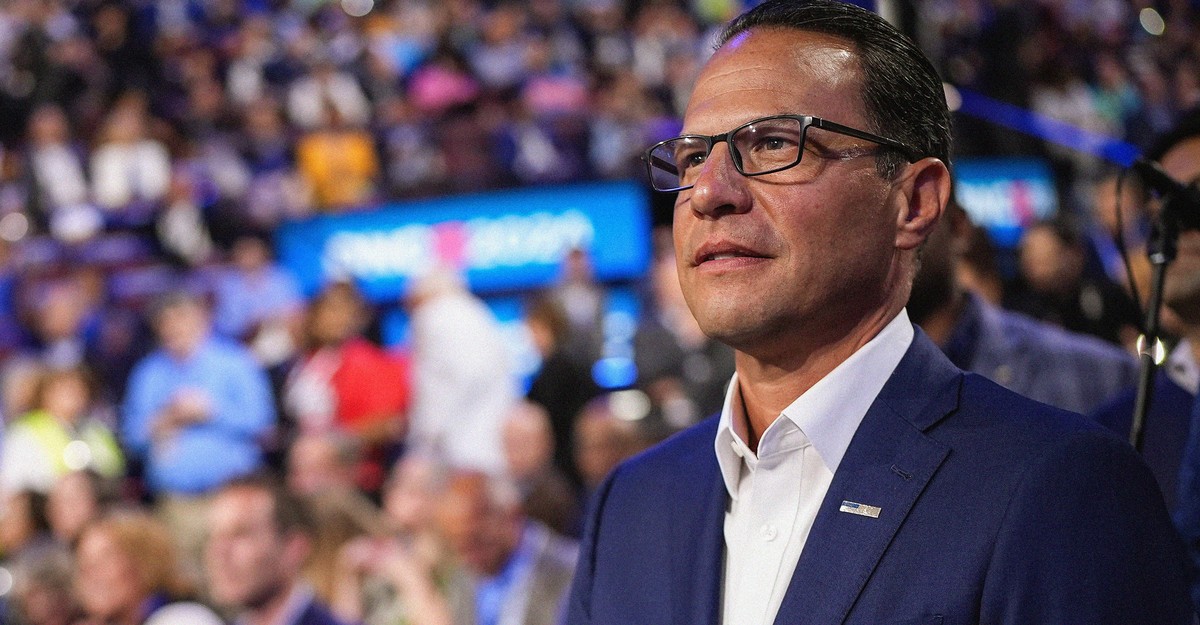
Pennsylvania Governor Josh Shapiro emphasizes faith—specifically Judaism—as a central guide and moral grounding that can rise above partisan divisions. He presents himself as an ordinary, self-deprecating family man with relatable anecdotes and everyday flaws. The faith language appears frequently and is positioned as a response to national exhaustion, echoing historical instances when voters sought leaders of faith. The personal narrative sometimes lapses into cliché, but the prominence of religious conviction remains striking. Political calculations have previously treated his Jewish identity as a potential liability, complicating the choice to foreground faith in public life.
Read at The Atlantic
Unable to calculate read time
Collection
[
|
...
]