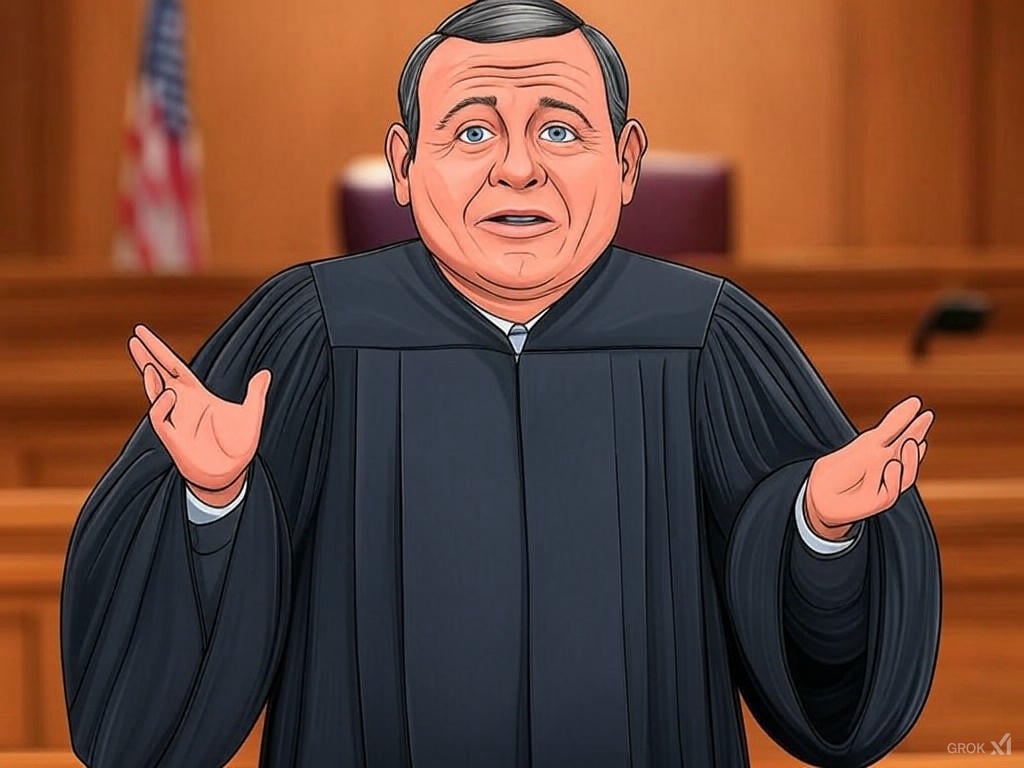
"Three years ago, Chief Justice John Roberts looked at Alabama's congressional maps and decided they were too racist. Roberts wouldn't use those words, of course, but that was the impact. Allen v. Milligan required Alabama to draw a second district where Black voters would not have their voting rights diluted out of existence by white majorities. At the time, America's most gullible voices cited the decision as proof that John Roberts remained the consummate "balls and strikes" justice, the architect of Shelby County really was willing to call voting rights cases both ways! We took a different view: John Roberts had decided that minority voting rights were weak enough for his taste and he didn't need to burn any institutional capital on a fight over one representative when the nationwide map looked promising for the GOP."
"Apparently, voting rights aren't weak enough for Roberts anymore. Yesterday, in an unsigned, unexplained decision in Allen v. Caster - which, despite the rotating party names, is the same dispute - the Supreme Court vacated a district court injunction that held Alabama's racist 2023 map at bay. Per the order, another shadow docket special, the case was remanded "for further consideration in light of Louisiana v. Callais." Roberts (and Kavanaugh, for that matter) had balked at the 2023 maps before, but now have no problem opening the door to impose the racist maps... even though absentee voting has already started."
"What changed between 2023 and today? Why has the Chief decided Alabama's maps might magically have shed their racism? Roberts - who spent last week scolding the public via sound bite for having the temerity to suggest that the Supreme Court's conservative majority are just "political actors" - isn't going to like the answer. Because the answer is "politics." In 2023, Roberts could let a a majority-minority district in Alabama slide because Republicans had a healthy path to a congressional majority."
Alabama’s congressional maps were previously found too racist, requiring a second district to prevent dilution of Black voting rights by white majorities. A later Supreme Court action vacated an injunction that had kept Alabama’s 2023 map from taking effect. The case was remanded for further consideration in light of Louisiana v. Callais. The change is framed as a shift in the Court’s willingness to intervene in voting rights disputes. The timing is emphasized because absentee voting had already started when the injunction was lifted. The explanation offered is that political calculations changed between 2023 and the present, affecting how the Court treats minority voting rights.
Read at Above the Law
Unable to calculate read time
Collection
[
|
...
]