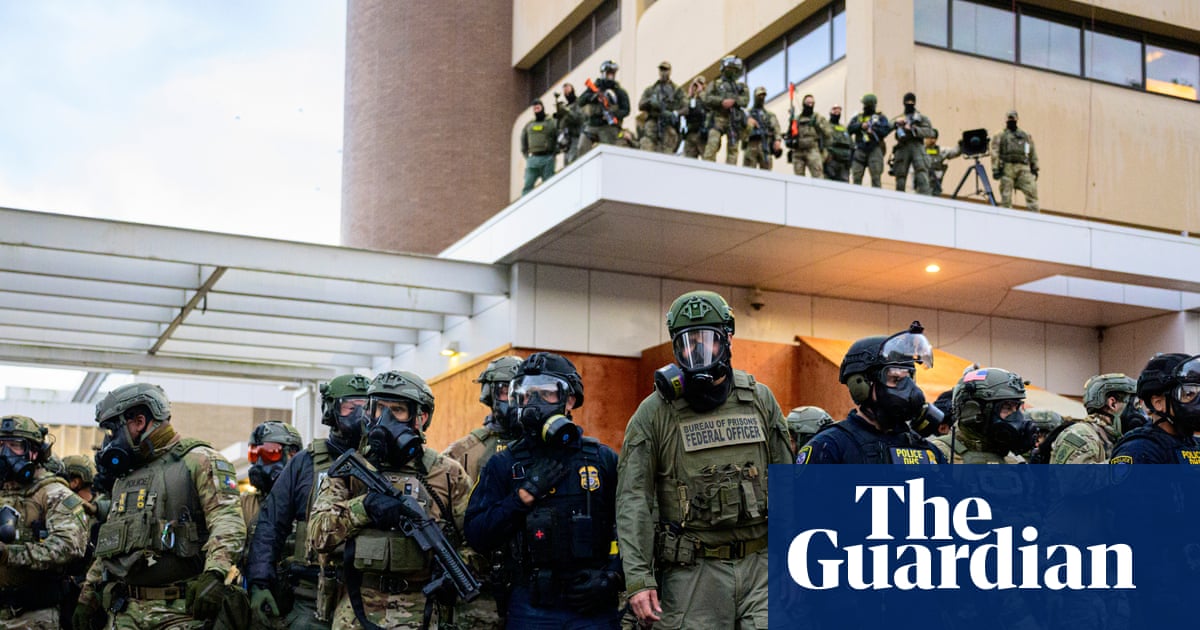
"Details about Immigration and Customs Enforcement (ICE) officers' surveillance tools and arrest goals in the state have come to light in a federal lawsuit that compelled officers to answer questions under oath, offering a rare window into opaque, internal strategies that are generally kept secret and have been driving mass detentions and chaotic raids."
"Testimony in a December hearing in the case provided a remarkable acknowledgment by an ICE officer of how daily target arrest numbers played out at the local level, and appeared to contradict the Department of Homeland Security (DHS) officials' repeated claims that officers didn't have quotas."
"In the hearing, an ICE agent identified as JB testified that his team was given a verbal order to target eight arrests a day. JB's team was made up of nine to 12 officers and was tied to the DHS's so-called Operation Black Rose, which launched in Portland last fall and yielded more than 1,200 arrests through mid-December."
Immigration and Customs Enforcement officers in Oregon employed a surveillance application called Elite to identify neighborhoods and individuals for targeting while operating under daily arrest quotas, according to testimony in a federal lawsuit. An ICE agent testified that his team received verbal orders to meet eight daily arrests, suggesting approximately 50 arrests daily across Oregon. This practice contradicts repeated claims by Department of Homeland Security officials that no quotas existed. The class-action suit filed by Innovation Law Lab challenged ICE's warrantless detention practices, alleging racial profiling and unconstitutional arrests. A federal judge ruled in favor of plaintiffs, broadly halting warrantless arrests in Oregon. Operation Black Rose, launched in Portland, resulted in over 1,200 arrests through mid-December.
#ice-enforcement-practices #arrest-quotas #immigration-enforcement #warrantless-detention #civil-rights-litigation
Read at www.theguardian.com
Unable to calculate read time
Collection
[
|
...
]