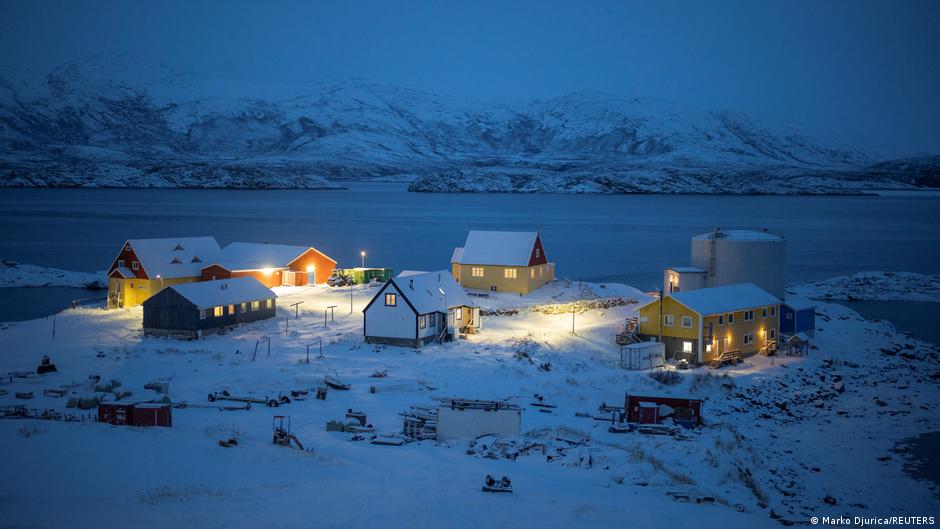
"It also echoed a longstanding pattern by colonial powers to apply their own ideas of land ownership to places that were already inhabited, often overlooking established local systems. Greenland's Inuit hold land to be shared collectively, rather than privately owned, an idea that fundamentally conflicts with Trump's desire to buy or otherwise acquire the country. Historically, in many Indigenous societies, people saw themselves as stewards of the land, managing it through seasonal hunting and harvesting, safeguarding water sources and maintaining ancestral sites."
"A 2023 study in the journal of Australian Historical Studies shows that in the 18th century, British officials used "uninhabited" to mean a land without a sovereign or "civilized" government, not a land without people. This meant that communities could be living in, fishing, farming or naming places and could have been doing so for millennia and still not count as "inhabitants." This influenced how states defined and justified control over land in different regions."
President Trump's characterization of Greenland as 'a piece of ice' reflects a colonial pattern of treating inhabited lands as available for acquisition. Indigenous Greenlanders, mainly Inuit, view land as a collective resource managed through seasonal hunting, harvesting, water protection and care for ancestral sites. European empires treated land as private property that could be claimed, bought or transferred between states and labeled landscapes that did not fit European use as 'unused,' 'wild' or 'uninhabited.' An 18th-century British practice treated lands without a recognized sovereign or 'civilized' government as uninhabited, enabling states to justify control despite long-standing Indigenous occupation.
Read at www.dw.com
Unable to calculate read time
Collection
[
|
...
]