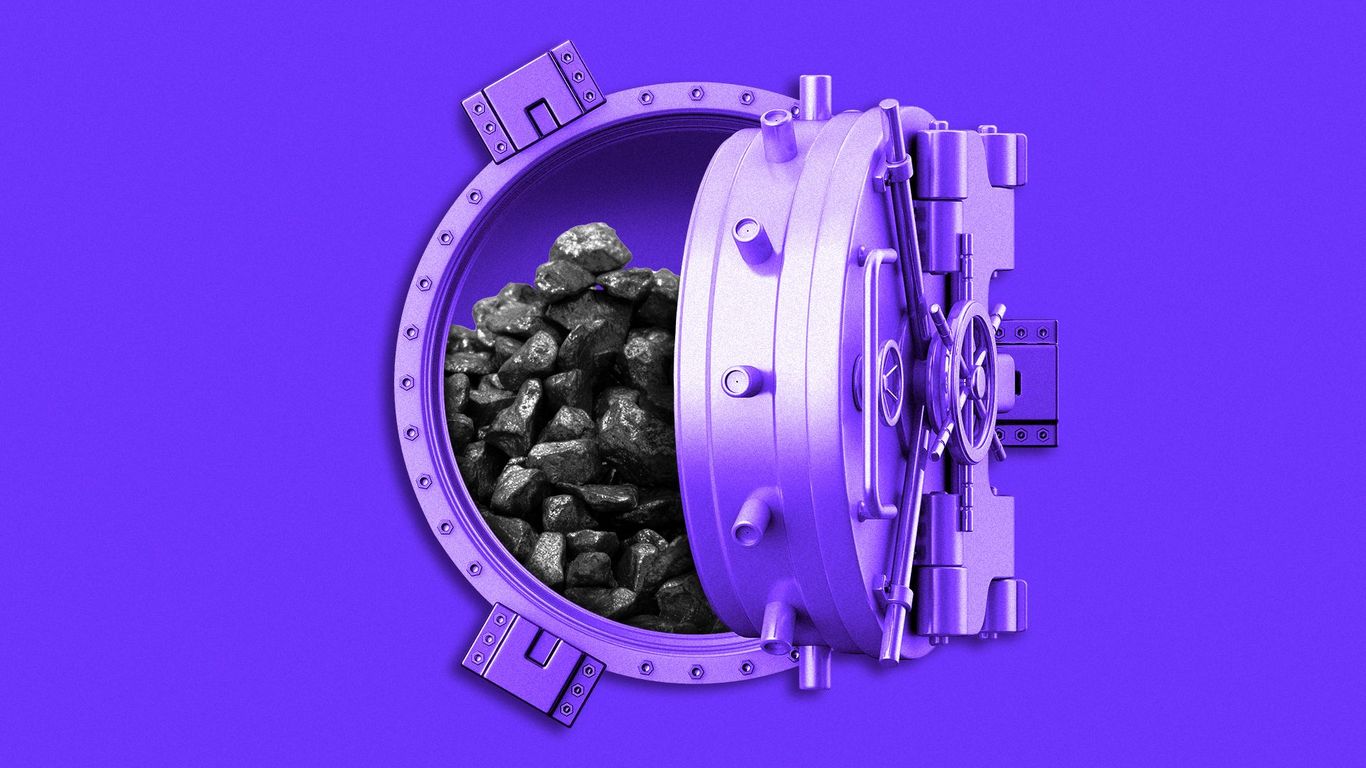
"Now Congress wants to join the minerals rush by helping to secure - and stabilize - the domestic market for rare-earth and critical materials. Most of the world's supply is controlled by China, leaving the U.S. vulnerable to price swings and supply-chain disruptions for minerals needed to make advanced semiconductor chips and EV batteries. The goal is to create something akin to the Strategic Petroleum Reserve, which was established in 1975 in response to the Arab oil embargo."
"The legislation would create a clearinghouse for critical minerals, and resemble a hybrid between the Strategic Petroleum Reserve and the Federal Reserve. Like the Fed, the SRR would be overseen by a seven-member board, appointed by the president and confirmed by the Senate. Like the petroleum reserve - for which millions of barrels are stored in underground salt caverns - the SRR would establish storage facilities to warehouse supplies of key materials."
""Creating this reserve is a much-needed, aggressive step to protect our national and economic security," Young told Axios in a statement. "China's global dominance of critical minerals supply chains gives it significant leverage and leaves the U.S. vulnerable to economic coercion," Shaheen said in a statement. "This bipartisan legislation is a historic investment in making the U.S. economy more resilient and supporting good-paying jobs in key sectors like aerospace, autos and technology," she added."
Sens. Jeanne Shaheen (D-N.H.) and Todd Young (R-Ind.), along with Reps. John Moolenaar (R-Mich.) and Rob Wittman (R-Va.), will introduce the SECURE Minerals Act. The bill would create a clearinghouse for critical minerals and a Strategic Reserve for Rare Earths (SRR) that combines features of the Strategic Petroleum Reserve and the Federal Reserve. The SRR would be overseen by a seven-member presidentially appointed, Senate-confirmed board and would establish storage facilities to warehouse key materials. The measure aims to reduce U.S. vulnerability to China's dominance of mineral supply chains, stabilize prices, and support domestic jobs in aerospace, autos, and technology.
Read at Axios
Unable to calculate read time
Collection
[
|
...
]