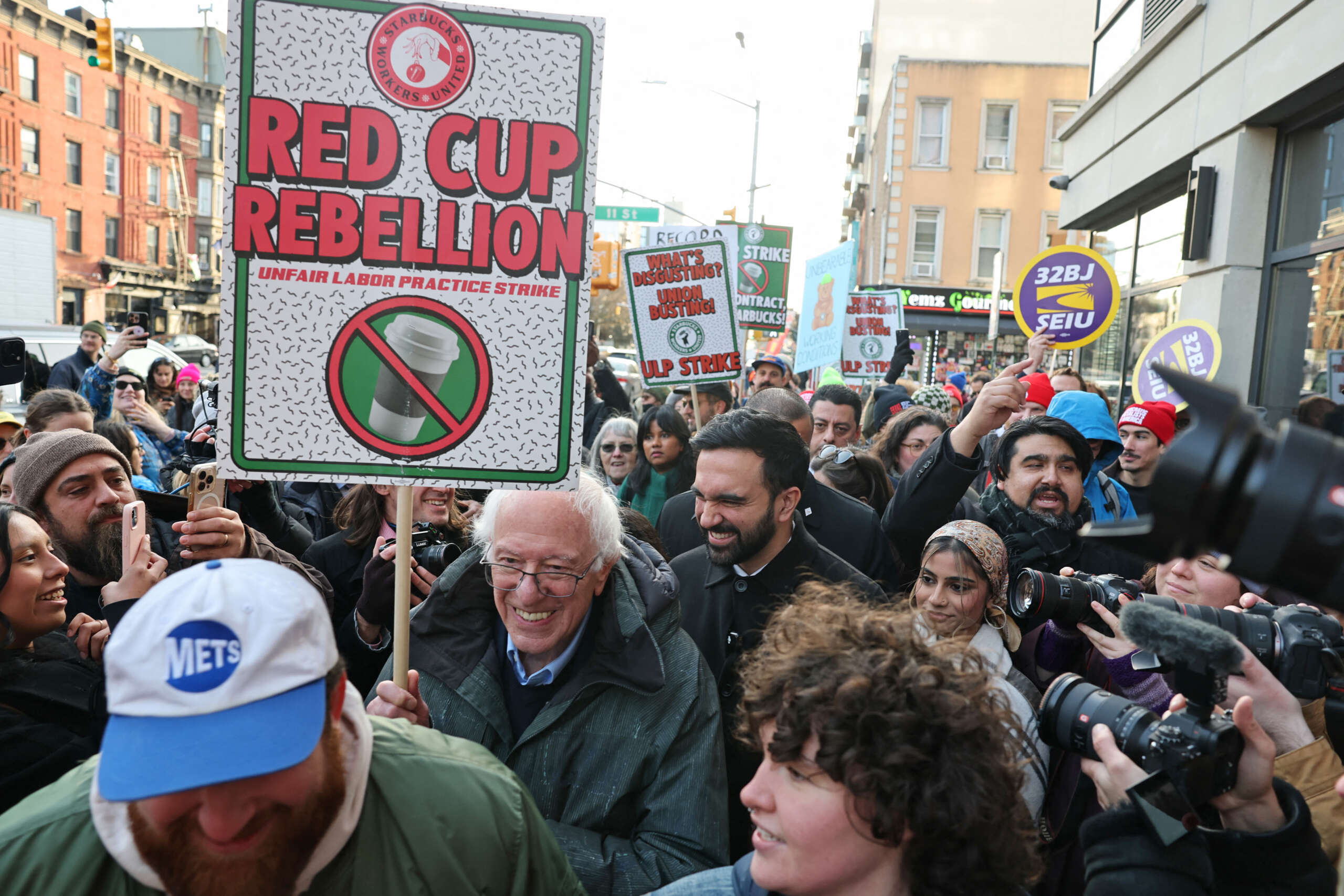
"President Donald Trump launched a war against workers as soon as he reclaimed power in January 2025. Now, nearly a year into his second administration, it's possible to take stock of the year's notable victories and the challenges looming in 2026. Some of the administration's immediate moves included rescinding a Biden-era executive order that raised the minimum wage for federal workers, rolling back laws prohibiting workplace discrimination, pulling out of an international agreement that would have imposed a minimum tax on corporations,"
"Some of Trump's most vicious moves targeted immigrant workers, many of whom have been terrorized by the unrelenting barrage of ICE raids throughout their communities and workplaces. "The administration's worksite immigration enforcement actions are targeting underpaid immigrant workers from predominantly Indigenous, Latine, and Black communities who are already at high risk of exploitation by employers," Marisa Díaz, the Immigrant Worker Justice Program director at the National Employment Law Project, told Truthout. "These attacks push vulnerable workers further into the shadows, reward exploitative employers who profit on violating workers' rights, and make workplaces less safe for all. We call for an end to these raids and stand with all who are organizing for the dignity and safety of all workers.""
President Donald Trump rescinded a Biden-era executive order that raised the federal minimum wage for federal workers and reversed protections against workplace discrimination. The administration withdrew from an international corporate minimum tax agreement and eliminated dozens of workplace safety rules. Immigrant workers have faced increased ICE raids that have terrorized communities and workplaces. Enforcement actions target underpaid workers from Indigenous, Latine, and Black communities, increasing exploitation and unsafe conditions. An Economic Policy Institute report projects that the deportation agenda could eliminate six million jobs. Many Trump appointees with industry ties are poised to shape labor policy further in 2026.
Read at Truthout
Unable to calculate read time
Collection
[
|
...
]