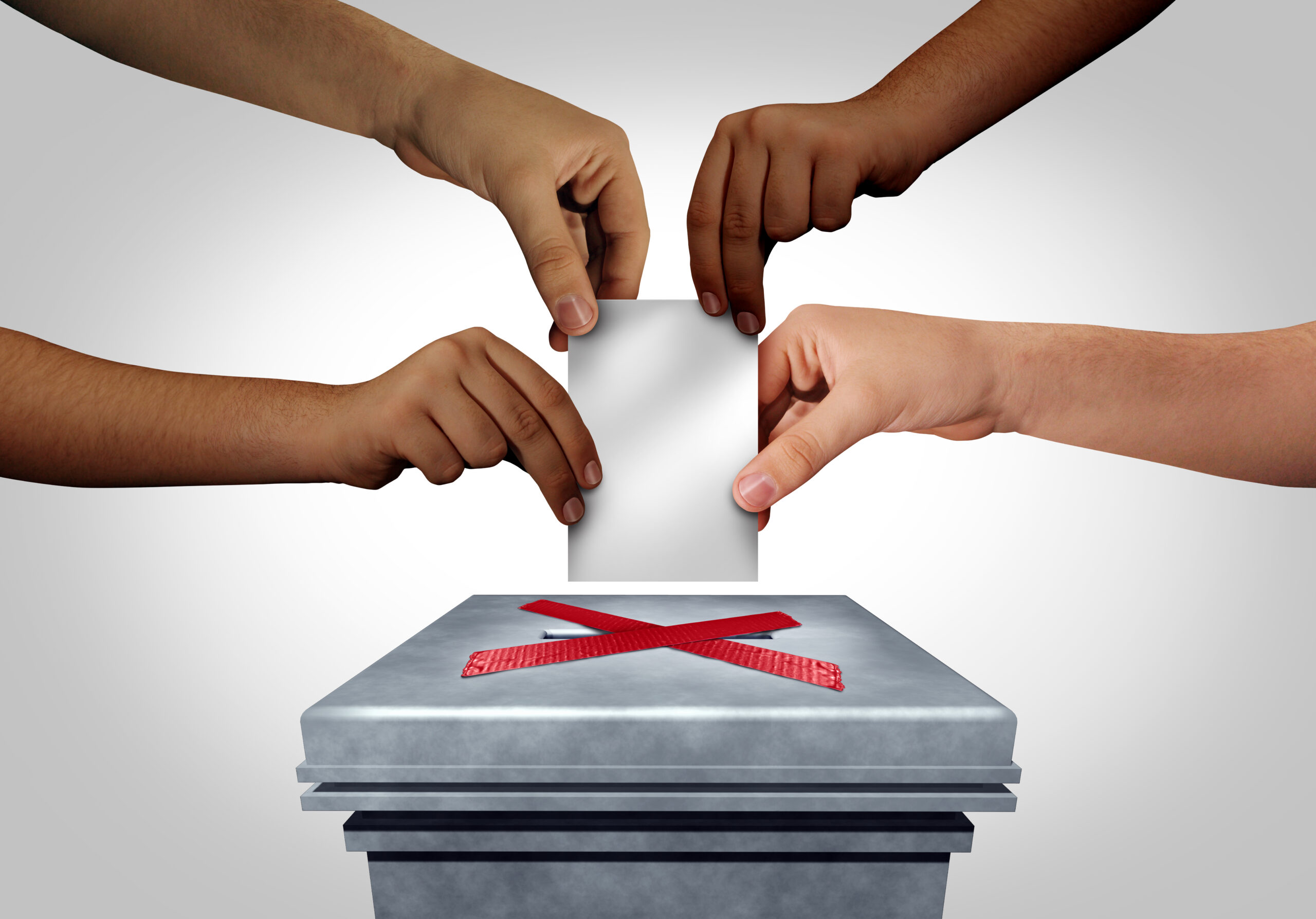
"The DOJ's Civil Rights Division demanded extensive voter data and sued 23 states, along with the District of Columbia, for refusing to hand it over. The government's theory is that allowing ineligible voters to cast ballots disenfranchises eligible voters by diluting the value of their ballots. And the only solution to this nonexistent problem is for states to hand over their complete voter rolls, let the federal government scrutinize the data, and tell them which voters to delete."
"The lawsuits cite the National Voter Registration Act, which orders states to make "a reasonable effort to remove the names of ineligible voters from the official lists of eligible voters" and "make available for public inspection ... all records concerning the implementation of programs conducted for the purpose of ensuring the accuracy and currency of official lists of eligible voters." The feds read this as requiring disclosure of "the current electronic copy of California's computerized statewide voter registration list,""
Federal courts rejected the Justice Department's attempts twice to compel states to surrender full voter registration data. The DOJ's Civil Rights Division demanded extensive voter data and sued 23 states and the District of Columbia for refusing to provide unredacted rolls. The DOJ asserted that ineligible voters dilute eligible voters' ballots and sought to build a nationwide database maintained by the federal government. Most states provided redacted lists withholding drivers license and social security numbers under state privacy laws. The DOJ relied on the National Voter Registration Act and the Civil Rights Act of 1960 to demand disclosure of complete electronic statewide voter registration lists and all contained fields.
Read at Above the Law
Unable to calculate read time
Collection
[
|
...
]