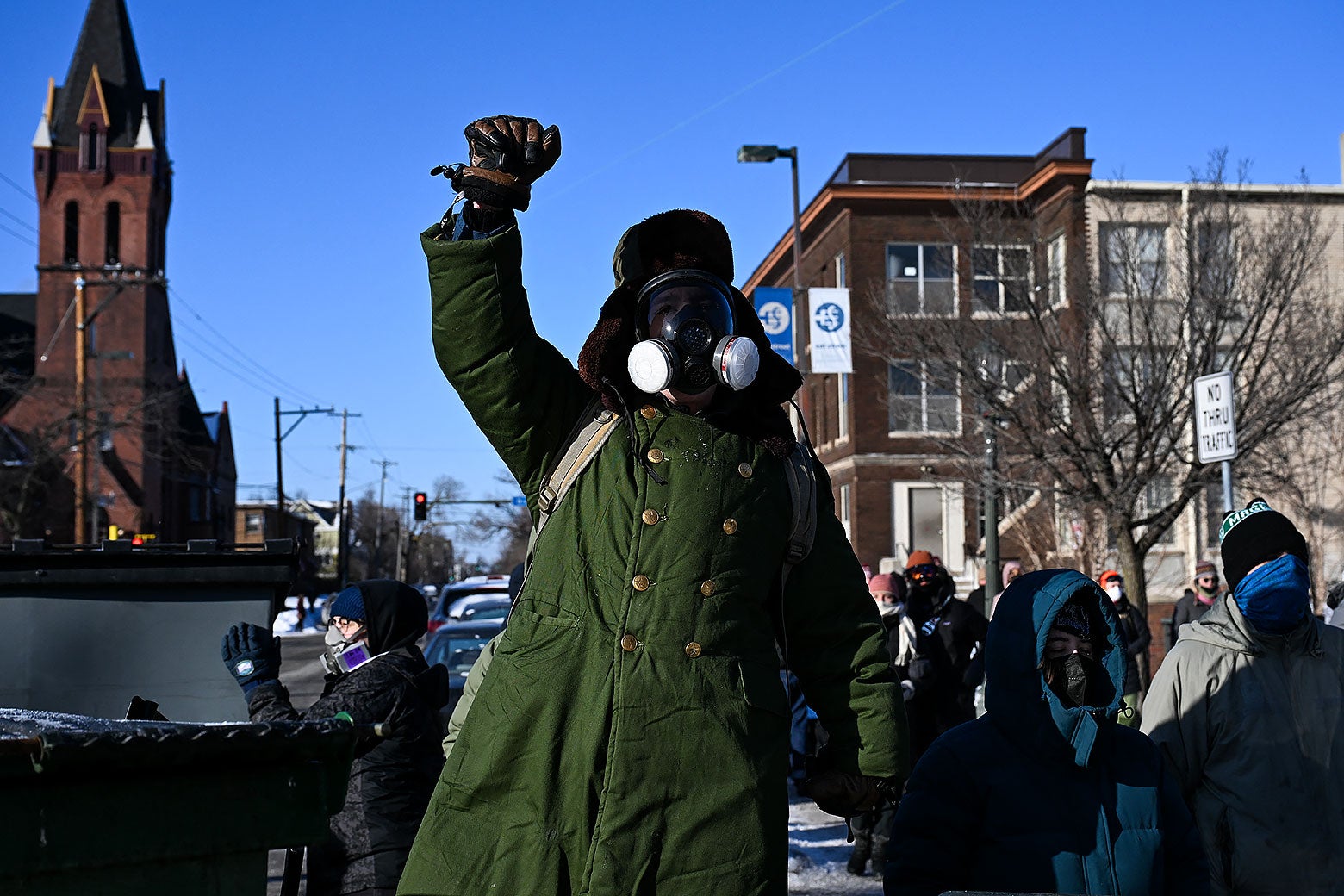
"Immigration and Customs Enforcement moves fast in Minneapolis, the way you have to when an entire city is against you. Volunteers call in license plates to volunteers who check those plates against databases created by other volunteers. Once identified, these agents have minutes at best before residents with whistles and horns and furious loud voices gather to alert their neighbors to the threat in their midst."
"I am standing with two Minneapolis residents who go by Tim and Star, looking out at the Say Their Names memorial. The art installation consists of over 100 tombstones, each with identical black fists and names I remember from 2020. Philandro Castile. Ahmaud Arbery. And, of course, George Floyd, who took his final breath two blocks south of here. Minneapolis is no stranger to tragedy, or to the white-hot spotlight of international media attention, or to banding together in the face of a crisis."
Minneapolis residents maintain an informal network that monitors Immigration and Customs Enforcement movements and alerts neighbors. Volunteers call in license plates to other volunteers who cross-check them against community-created databases for quick identification. Once agents are identified, residents mobilize with whistles, horns, and loud voices to warn people within minutes. Staying in one place increases the likelihood of seeing ICE during daily routines. The city draws on lessons from the 2020 George Floyd protests, and memorials such as the Say Their Names installation reinforce collective memory and motivation for rapid, decentralized action. Many volunteers operate without formal organizational affiliation.
Read at Slate Magazine
Unable to calculate read time
Collection
[
|
...
]