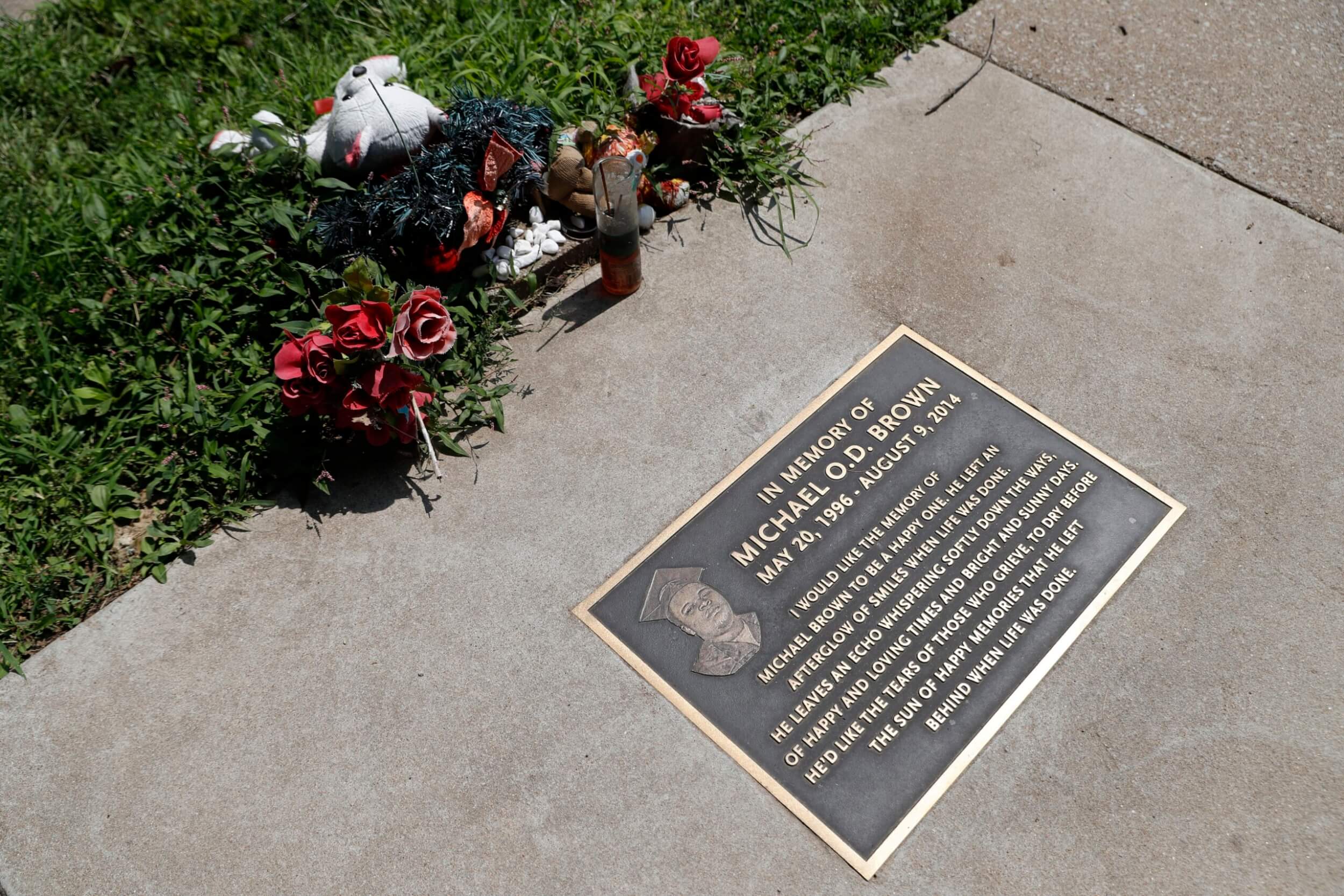
"In the summer of 2014, a police officer shot and killed Michael Brown in Ferguson, Missouri, an inner-ring suburb of St. Louis. As journalists began getting arrested, Poynter sent me back to the city - where I'd spent five years reporting - to cover what was happening. For a few days, I worked with a borrowed gas mask, a notebook, a backpack, my phone and a lot of goodwill from the journalists working there."
"Ferguson was really the launchpad of the rapid dissemination of a news story as it developed and grew live on Twitter. While the visuals we see today are similar, the landscape is entirely different. Ferguson is surrounded by dozens of municipalities, many with their own tiny police departments. When the first "Code 1000" was heard on police scanners, dispatched to help overwhelmed Ferguson police, officers from all of those departments came out in force to quell disturbances."
In the summer of 2014, a police officer shot and killed Michael Brown in Ferguson, Missouri. Journalists covering the unrest faced arrests and documented events with limited equipment and borrowed protective gear. Events in Minneapolis differ and are shaped by journalists who covered George Floyd's 2020 death. Former Ferguson journalists reported on their current roles and reflections. Robert Cohen worked as a photojournalist for the St. Louis Post-Dispatch, contributed to Pulitzer-winning coverage, and left the paper in 2024. Ferguson catalyzed rapid, live news dissemination on Twitter and exposed a patchwork of small municipal police departments that converged during unrest.
Read at Poynter
Unable to calculate read time
Collection
[
|
...
]