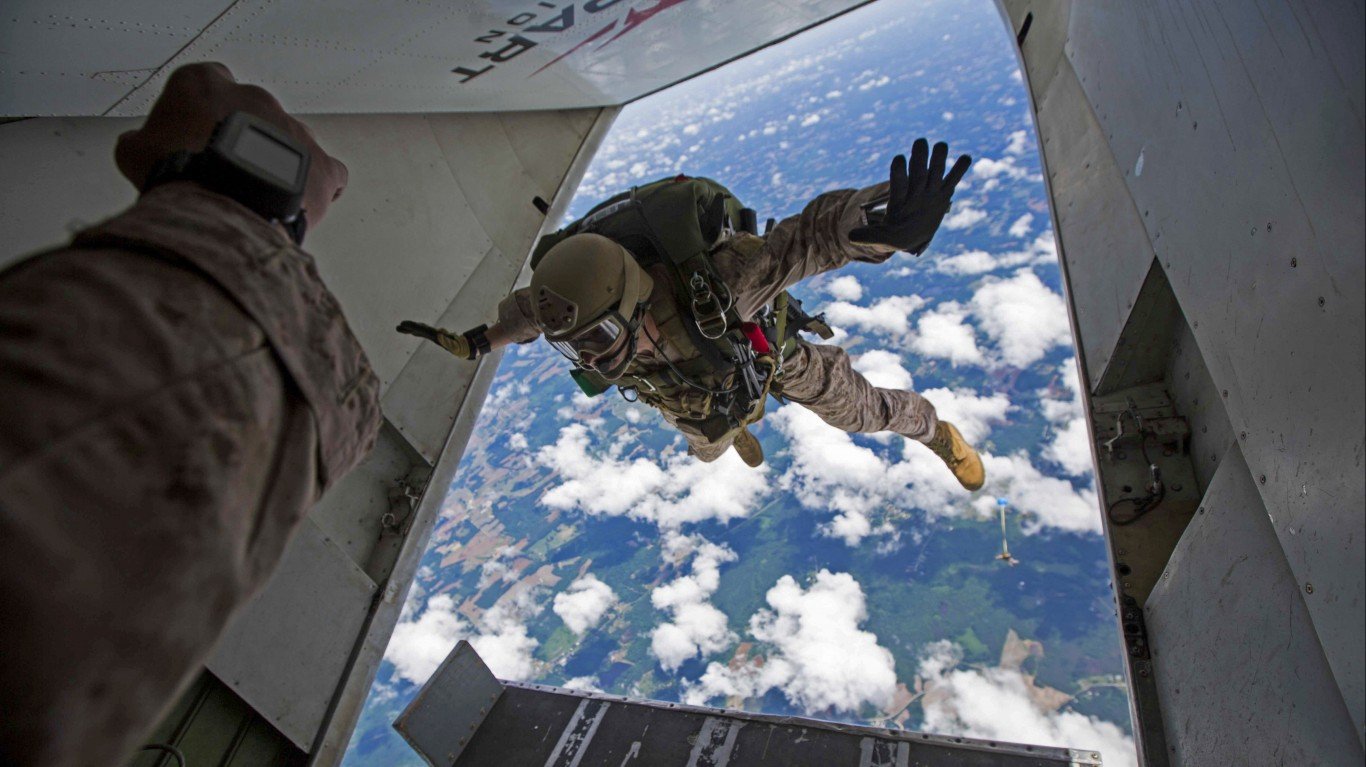
"Paratroopers hold a unique place in modern warfare, combining elite infantry skills with the ability to deploy directly into contested territory from the air. Trained to jump from aircraft at low or high altitude, paratroopers are designed to seize key terrain, disrupt enemy defenses, and establish footholds where traditional ground forces cannot arrive quickly. Units like the 82nd Airborne Division emphasize speed, discipline, and adaptability, operating with lighter equipment while still maintaining significant combat power."
"In today's military, paratroopers remain a strategic response force rather than a relic of the past. While large-scale airborne assaults are rare, the capability itself carries deterrent value, because the U.S. can project combat power almost anywhere on short notice. Paratroopers regularly serve as the first conventional troops on the ground during crises, reinforcing allies, securing airfields, and stabilizing volatile regions before heavier forces arrive."
"Airborne units are typically the first American forces to reach a crisis zone, which means their equipment must prepare them for immediate contact the moment they land. Today's paratroopers jump with a loadout that combines firepower, communication tools, protective gear, and mission-sustaining essentials. Here, 24/7 Wall St. is taking a closer look at the modern paratrooper's loadout."
Airborne units typically arrive first in crisis zones and carry loadouts that enable immediate contact upon landing. Paratrooper gear blends firepower, communications, protective equipment, and mission-sustaining supplies to support isolated operations. Paratroopers deploy into contested territory to seize terrain, disrupt defenses, and establish footholds where ground forces cannot arrive quickly. Units emphasize speed, discipline, and adaptability, using lighter equipment while retaining combat power. Training stresses rapid assembly after landing, decentralized command, and fighting in isolation. The airborne capability serves as a strategic response force and deterrent, often securing airfields and stabilizing volatile regions before heavier forces arrive.
Read at 24/7 Wall St.
Unable to calculate read time
Collection
[
|
...
]