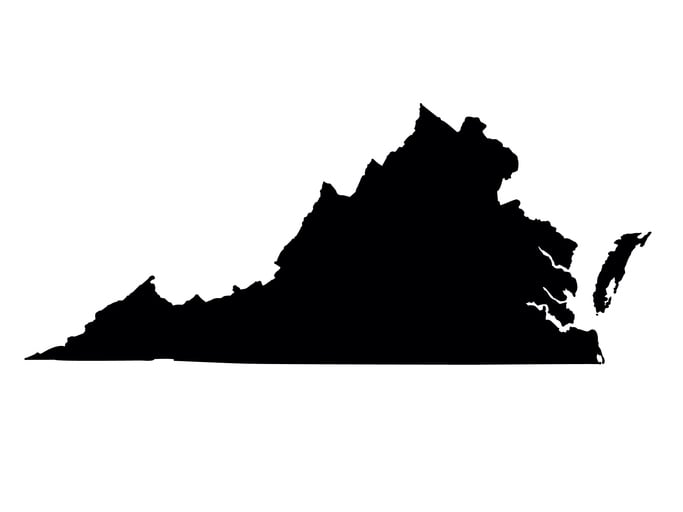
"Mere days after the United States Supreme Court declared that the Voting Rights Act cannot be invoked to bar racially discriminatory gerrymandering as long as state legislators make a halfway plausible claim that the new districts were drawn for purely political purposes, the Virginia Supreme Court overturned a statewide election to approve purely political maps."
"Tennessee, Alabama, South Carolina... all actively redrawing their maps behind closed doors to strip Black voters of meaningful suffrage. Virginia sent their maps to the electorate, and after it passed, the state supreme court scrambled to rewrite the rules to erase the whole election."
"From Madison's era to the present, political parties of every stripe have offered if-by-whiskey arguments supporting partisan gerrymandering. Since that time until today, these arguments have been criticized by thoughtful jurists and legal scholars. "[P]artisangerrymanders," Justice Kagan has observed, "deprive[] citizens of the most fundamental of their constitutional rights: the rights to participate equally in the political process, to join with others to advance political beliefs, and to choose their political representatives." Rucho v. Common Cause, 588 U.S. 684, 721-22 (2019) (Kagan, J., joined by Ginsburg, Breyer, and Sotomayor, JJ., dissenting)."
"Note that Kagan was "dissenting" there. As in "she lost." In reality, Rucho held - and Callais removed all doubt - that this is the opposite of the law of the land. Justice D. Arthur Kelsey does not mention Callais at all in this opinion."
The Supreme Court’s ruling limited the use of the Voting Rights Act against racially discriminatory gerrymandering when state legislators can plausibly claim districts were drawn for political purposes. Virginia then sent its district maps to voters, and the election was approved. After passage, the Virginia Supreme Court overturned the statewide election and moved to rewrite rules to erase the election. The text contrasts Virginia with other states that redraw maps behind closed doors to reduce Black voters’ meaningful suffrage. It cites Justice Kagan’s view that partisan gerrymandering deprives citizens of equal participation, collective political advancement, and the ability to choose representatives. It also asserts that later rulings removed doubt about the controlling legal position.
#voting-rights-act #gerrymandering #partisan-redistricting #supreme-court-rulings #state-election-law
Read at Above the Law
Unable to calculate read time
Collection
[
|
...
]