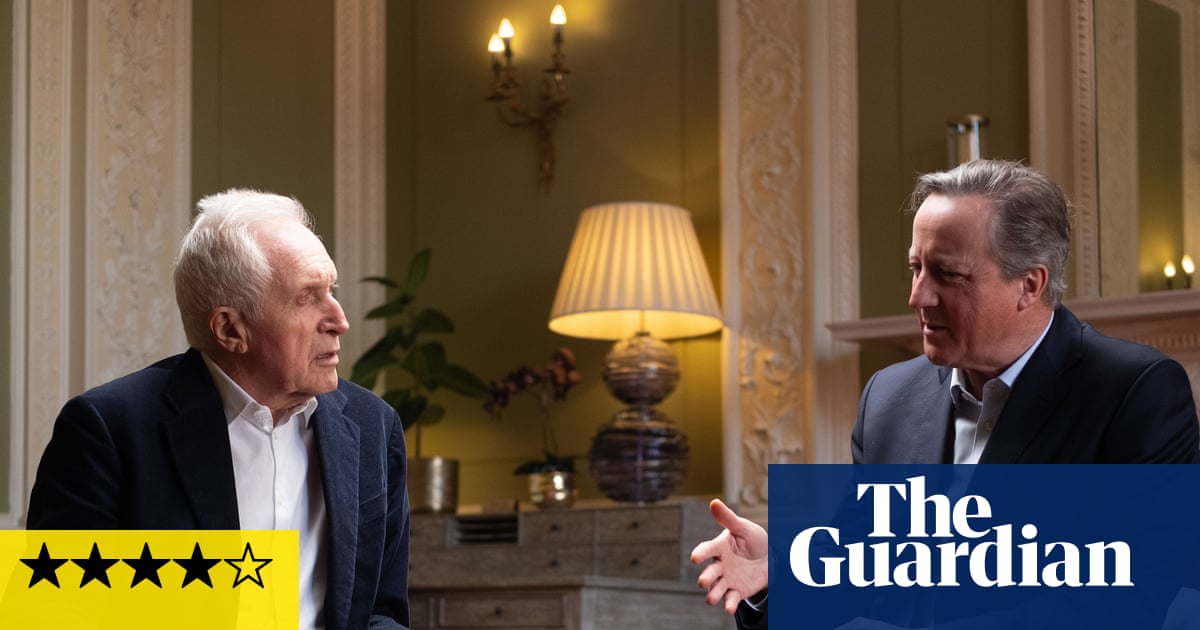
"Settling down in front of David Dimbleby's new three-parter, and looking at that confrontational title, you wonder why the question it asks is not debated more often. Dimbleby himself has trailed the series by worrying aloud that during his stint as a BBC staffer he was part of an organisation that didn't challenge the monarchy robustly enough. But retirement means the shackles he wore when he was the corporation's top politics presenter have been loosened."
"Much of the hour is spent trying to ascertain whether King Charles influences government policy by advocating for his own beliefs. He certainly has politicians' ear: the prime minister takes a weekly trip to Buckingham Palace for an in-person chat, while nobody interviewed here denies that letters from the king he is a notoriously prolific epistolarian are routinely placed at the top of the relevant minister's pile. David Cameron says he appreciated going to see Queen Elizabeth every week when he was PM, it being a chance to clarify his thoughts by rehearsing them in front of a well-briefed listener who could be relied on not to blab to the media. It was therapeutic."
"But is the monarch's access to top politicians democratic? Here is where the inherent absurdity of a monarchy taints any serious analysis of it. Dimbleby presses the point with several interviewees: why should the king's opinions hold sway, when nobody voted for him? But this is an institution that celebrates the installation of a new boss by re-running an ancient ceremony where they wear a jewelled velvet hat. Nobody is pretending it makes sense. Pinning down its internal inconsistencies can feel like chasing round in a tight circle."
King Charles maintains regular private access to senior politicians and writes frequent letters to ministers, which are routinely prioritized by officials. Prime ministers continue to visit Buckingham Palace weekly for private conversations that help them clarify and rehearse policy positions. Such access gives unvoted opinions a channel to influence government policy and raises questions about democratic accountability. The monarchy upholds ancient ceremonial practices, including jeweled coronation regalia, that underscore symbolic authority despite apparent absurdity. These tensions between private influence and archaic symbolism create internal inconsistencies that complicate serious analysis while generating public interest.
Read at www.theguardian.com
Unable to calculate read time
Collection
[
|
...
]