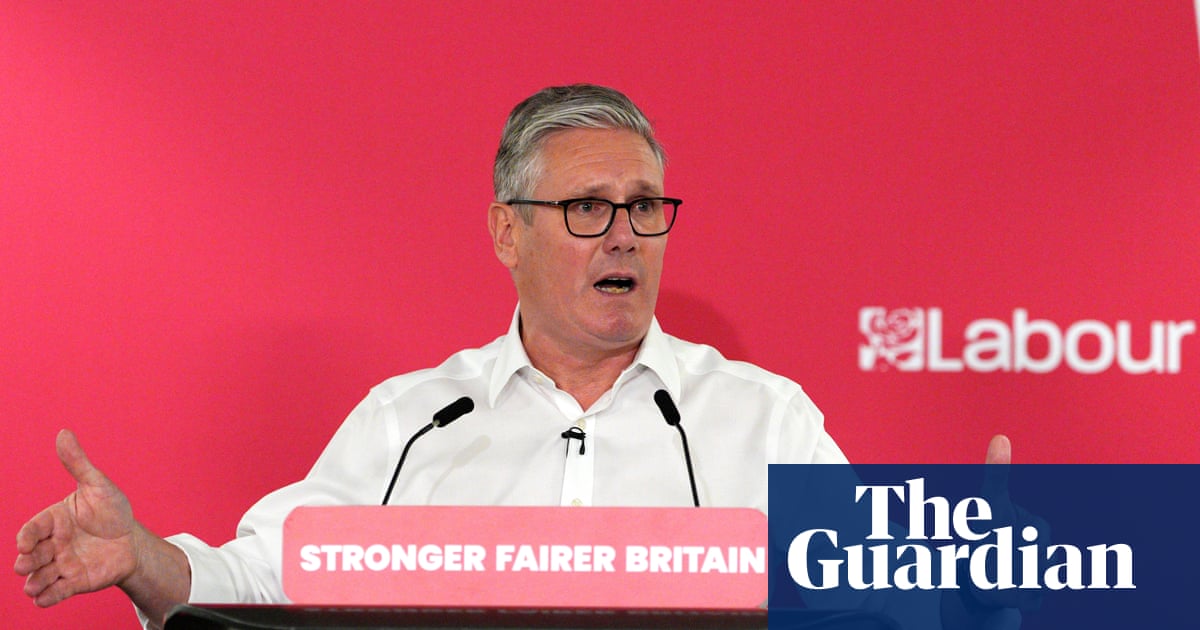
"The yield, effectively the interest rate, on the benchmark 10-year UK government bonds (known as gilts) rose eight basis points (or 0.08 of a percentage point) to 5% on Monday. The yield on 30-year gilts rose 9.3 basis points to 5.67%, edging closer to the 28-year high of 5.78% last week when uncertainty about Starmer's future as prime minister was intensifying."
"In his speech, Starmer said he would fight any leadership challenge and would not walk away from his responsibilities after Labour's drubbing in local elections in England and parliamentary contests in Scotland and Wales last week. Borrowing costs fell on Friday as the results of the elections emerged with signs that Labour had not suffered as badly as first feared. Those falls, however, were more than erased by Monday's rises."
"Susannah Streeter, the chief investment strategist at Wealth Club, a non-advisory investment service, said the speech had not done the trick of calming bond markets. There is still a sense of jitters playing out as concerns about political instability collide with inflationary fears prompted by the ongoing conflict in the Middle East, she said."
"Bond yields move in the opposite direction to bond prices because investors want to pay less and get a bigger reward for the risk of holding them. Higher yields increase the cost of borrowing for the government and eat away at the headroom that the chancellor, Rachel Reeves, has built up against her fiscal rules. The chief UK economist at Deutsche Bank, Sanjay Raja, estimated last week that more than half of the 24bn margin for error Reeves created by raising taxes in last autumn's budget may already have been wiped out by higher gilt yields and the prospect of weaker economic growth."
The cost of UK government borrowing increased as investor concerns persisted despite a political speech. The yield on 10-year gilts rose eight basis points to 5%, while the yield on 30-year gilts rose 9.3 basis points to 5.67%, nearing a recent 28-year high. The speech included commitments to resist leadership challenges and remain in responsibilities after recent election setbacks. Borrowing costs had fallen after election results suggested Labour performed better than feared, but the gains were reversed by Monday’s rise. Higher yields reduce bond prices, raise government borrowing costs, and erode fiscal headroom built under the chancellor’s rules. Estimates suggest a large portion of the margin for error may already be lost due to higher yields and weaker growth prospects.
Read at www.theguardian.com
Unable to calculate read time
Collection
[
|
...
]