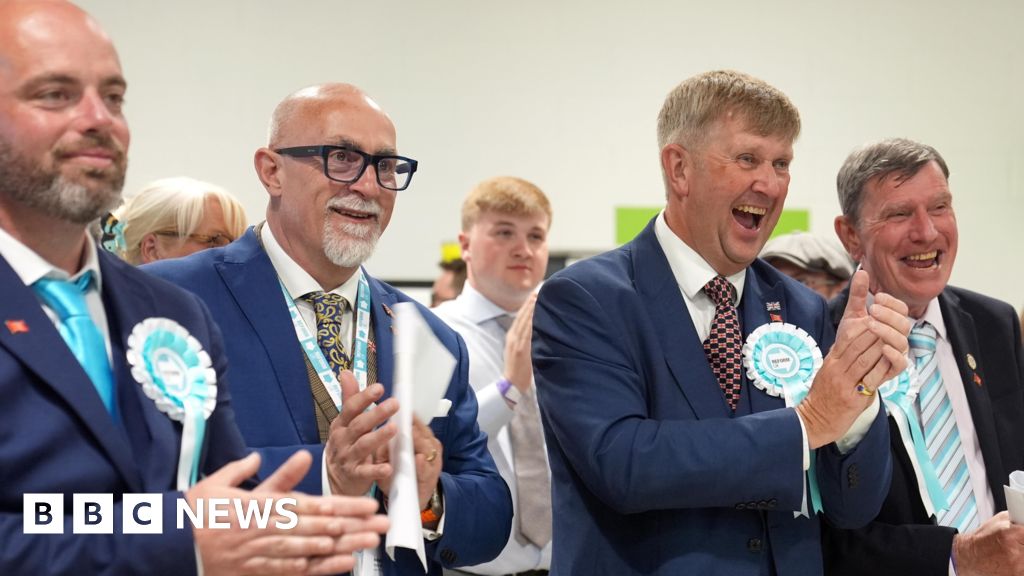
"“With Labour I think you get nowhere,” Linda told BBC Radio 4's Today programme. “They're not the working class now,” Bernard added. Like thousands of voters from Sunderland to Swansea, Bernard and Linda have turned to Reform UK with devastating consequences for the main two parties. In Wales, where Labour have dominated for a century, the party now has just nine of 96 Senedd seats. From having virtually no presence, Reform has 34 Senedd seats, and in Scotland, Reform UK gained 17 MSPs."
"“What Labour and Reform agree on is that national factors were critical. Both parties found voters on the doorsteps who disliked the government and detested the prime minister. Reform's tactic of framing the polls as a referendum on Sir Keir Starmer certainly paid off, drowning out any positive local messages Labour tried to sell. Anger about small boat crossings also played a part.”"
"“But is this as simple as a rejection of the current PM or something deeper? Even if what is happening at Westminster played its part, there were some distinctive local factors at play. Incumbency is proving difficult for governments, but it also poses problems for councils. Labour believed its local authorities were beginning to deliver positive change after the damage austerity caused in the region.”"
"“But people have experienced 15 years of local services being cut while council tax rises. The North East has some of the highest rates in the country. With the exception of Hartlepool, the Labour councils in the region added almost another 5% to bills again this year. Labour councils could turn their”"
Bernard and Linda described turning to Reform UK, saying Labour no longer represents working-class people and that Labour offers little progress. Reform’s rise has produced major seat losses for Labour in Wales and Scotland, and strong gains in north-east England. National factors were central, with voters expressing dislike of the government and detesting the prime minister. Reform’s framing of elections as a referendum on Sir Keir Starmer helped drown out Labour’s local messages. Anger about small boat crossings also contributed. Local conditions further shaped outcomes, including long-term cuts to local services, rising council tax, and high bill increases in the North East, creating additional pressure on Labour councils.
Read at www.bbc.com
Unable to calculate read time
Collection
[
|
...
]