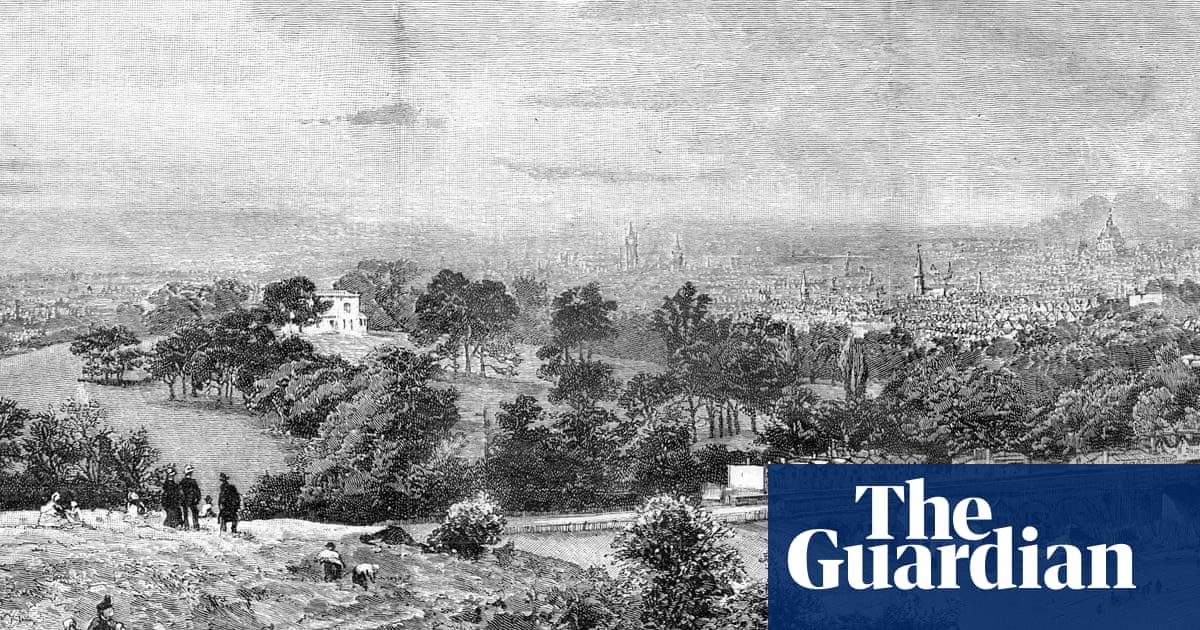
"The road along which we drove to-day from Herne Hill to Gipsy Hill looked at first sight no different from many another road in south-east London. Solid Victorian houses flanked it on either side and here and there a plane tree leaned over it, slightly forbidding in its gaunt bareness. And then, near the southern end of it we caught sight of its name Croxted Road."
"One imagined them, having made the crossing of the Thames, riding down through Lambeth to Herne Hill, where the herons from which it presumably took its name would be fishing in the vanished river Effra; then on along Croxted Road and up Gipsy Hill, later to become notorious as the haunt of the Norwood Gipsies, by whom Mrs Pepys and George III had their fortunes told, to the great Northwood, only a fragment of which in now standing Dulwich Wood,"
The road from Herne Hill to Gipsy Hill appears as a typical south-east London street with solid Victorian houses and occasional bare plane trees. The road bears the name Croxted Road, historically Crokestrete, which served as a winding lane for pilgrims traveling from London to Canterbury. Pilgrims likely crossed the Thames, rode through Lambeth to Herne Hill where herons fished in the vanished river Effra, then continued along Croxted Road and up Gipsy Hill toward the Northwood and Dulwich Wood on Sydenham Hill. Wildlife such as sparrow-hawks and turtle-doves still frequents the woodlands beside the way.
Read at www.theguardian.com
Unable to calculate read time
Collection
[
|
...
]