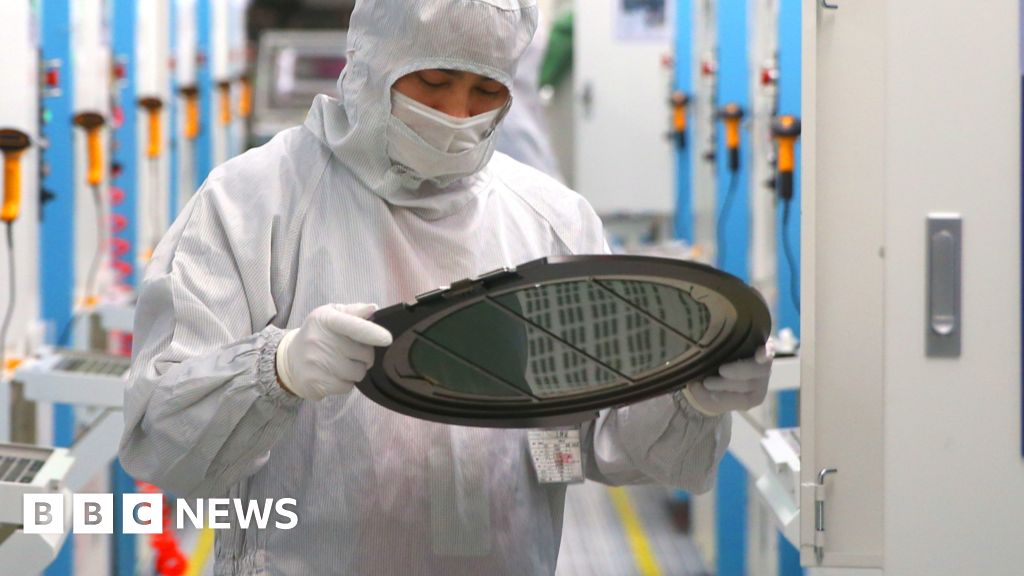
""Essentially, we provide the electronics that carry traffic across telecom networks," he says. That requires special chips designed for telecoms tasks. "Telecom chips are fundamentally different from consumer or smartphone chips. They handle massive volumes of data coming simultaneously from hundreds of thousands of users. "These networks cannot go down. Reliability, redundancy and fail-safe operation are critical - the chip architecture has to support that," Roy says."
"Tejas designs many of those chips in India, a country well known for its expertise in designing computer chips (also known as semiconductors). It's estimated that 20% of the world's semiconductor engineers are in India. "Almost every major global chip company has its largest or second-largest design centre in India, working on cutting-edge products," says Amitesh Kumar Sinha, Joint Secretary of India's Ministry of Electronics and Information Technology."
"The weakness of that system was exposed during Covid, when the supply of chips dried up and companies in all sorts of industries had to scale back production. "The pandemic made it clear that semiconductor manufacturing is too concentrated globally, and that concentration carries serious risk," Roy says. That spurred India to develop its own semiconductor industry. "Covid showed us how fragile global supply chains can be. If one part of the world shuts down, electronics manufacturing everywhere is disrupted," says Sinha."
Tejas Networks relies on specialized telecom chips that must handle massive simultaneous data flows and guarantee reliability, redundancy and fail-safe operation. The company designs many of those chips in India, leveraging a large pool of semiconductor engineers; roughly 20% of the world's semiconductor engineers are in India and major global chip firms maintain significant design centres there. India lacks domestic semiconductor manufacturers, so designs are fabricated overseas. The Covid pandemic revealed the risks of concentrated global chip production, disrupted industries worldwide and prompted initiatives to develop indigenous semiconductor manufacturing to strengthen supply-chain resilience.
Read at www.bbc.com
Unable to calculate read time
Collection
[
|
...
]