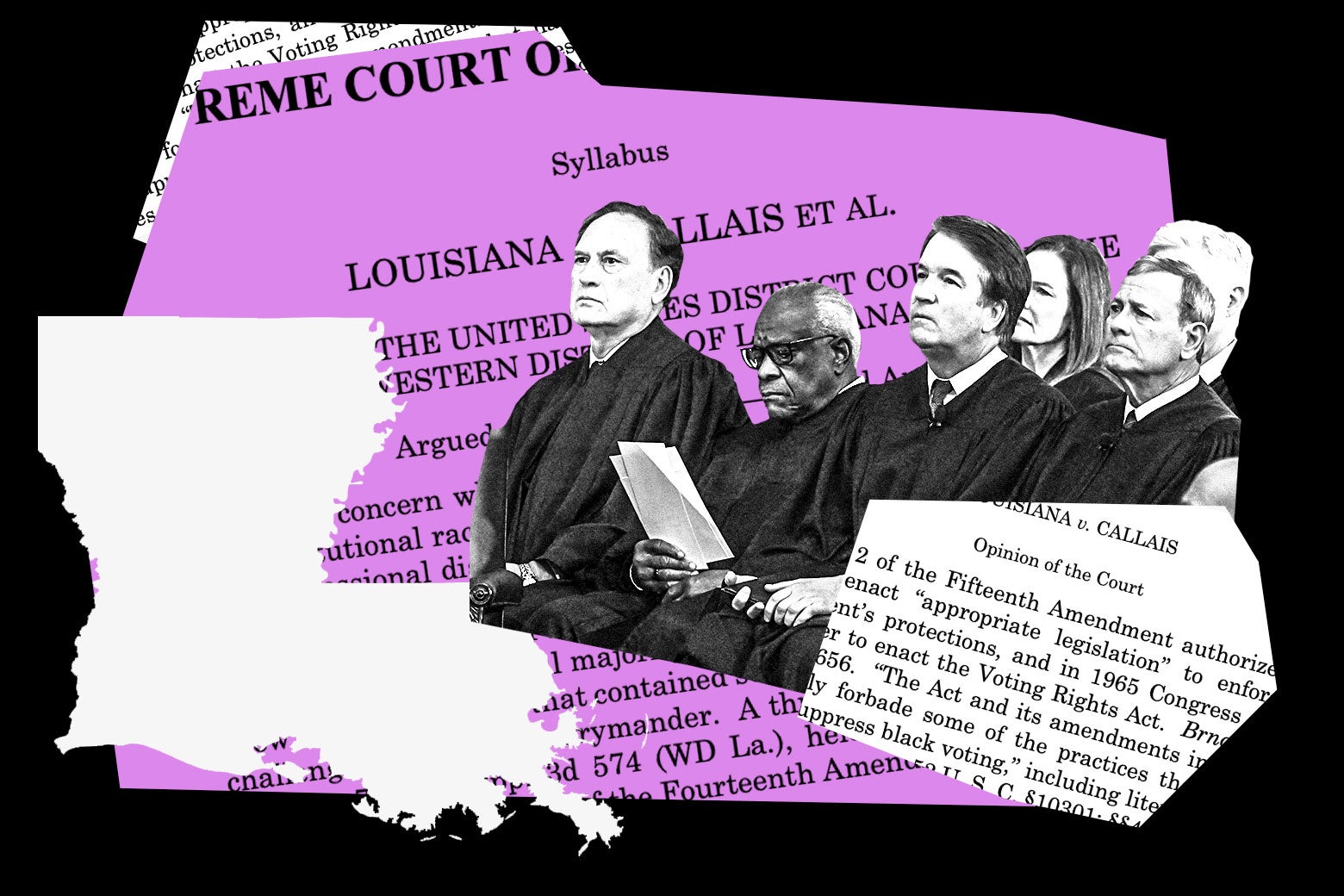
"Louisiana is soaked in what was done to Black people to make the state exist, and there is no honest way to talk about this case without starting there. Louisiana, like every other Southern state, built its wealth and political order through a system that treated human life as something to be violated and exploited and then insisted on calling that arrangement natural. The violence that enforced Black subjugation was not hidden in the way people now prefer to imagine. It was visible, repeated, justified, and graphic."
"The modern version of Section 2 of the Voting Rights Act that the court struck down last week was written for a world in which discrimination rarely announces itself cleanly, a world in which it can be diffuse, embedded, cumulative, and still devastating in its effects. Congress knew that. By its terms, the statute asks courts to look at patterns, outcomes, and how race and politics actually operate together to decide whether the voting process is equally open in any meaningful sense."
"Yet the majority treats Louisiana's mapmaking choices that offend Section 2 as if they arrived unmarked by history. The rest follows from that shift. The statute is pulled back toward an intent requirement-despite the clear commands"
Louisiana’s political and economic order was built through violence used to subjugate Black people, and those methods persisted after enslavement ended in new forms such as controlled participation, managed politics, defended rules, and legislative maps. The Voting Rights Act’s modern Section 2 was designed for discrimination that is diffuse, embedded, cumulative, and still devastating, requiring courts to examine patterns, outcomes, and how race and politics operate together to determine whether voting is equally open. In Louisiana v. Callais, the Court treated mapmaking choices as if they were unmarked by history. The ruling shifts the statute toward an intent requirement, despite the statute’s clear commands.
Read at Slate Magazine
Unable to calculate read time
Collection
[
|
...
]