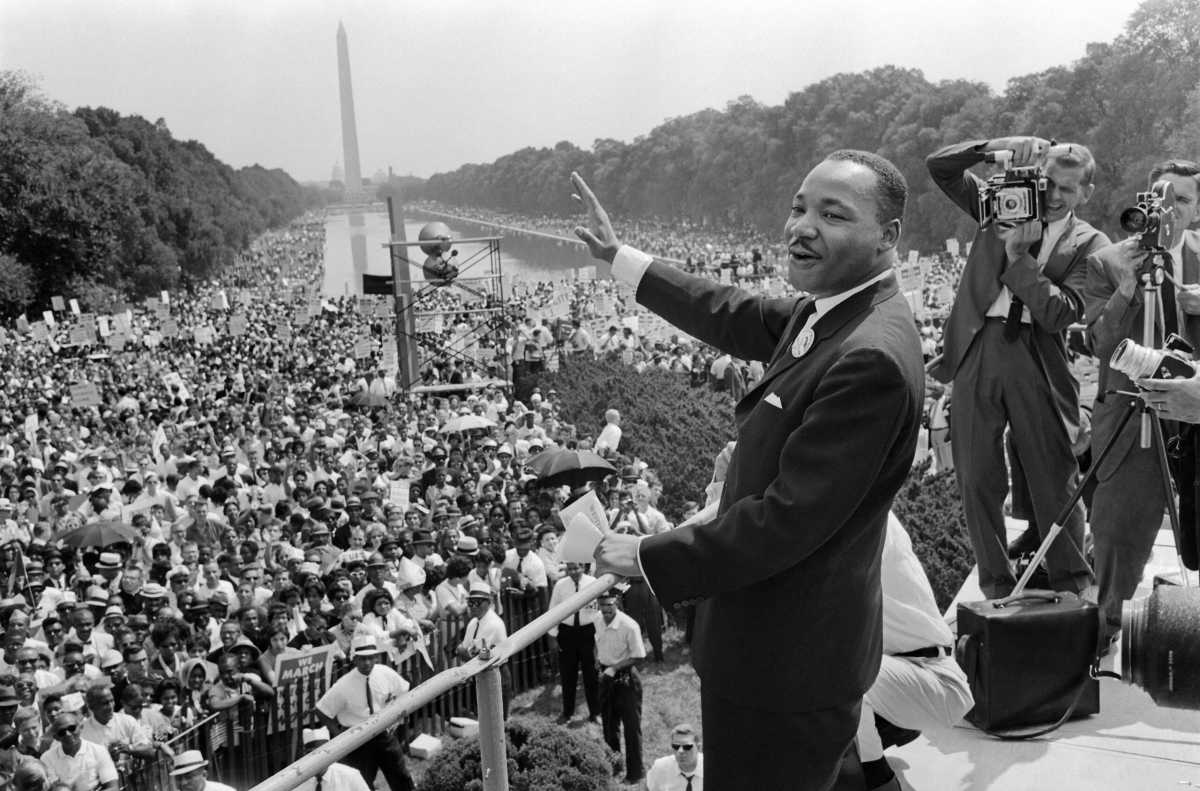
"His words were unequivocal: Peace for Israel means security, and we must stand with all of our might to protect its right to exist, its territorial integrity. He went on to describe Israel as one of the great outposts of democracy in the world. But King's support for Israel was not political posturing. It flowed directly from his understanding of oppression and liberation. He recognized what it meant for a people to be denied sovereignty, safety, and dignity."
"He also warned against moral double standards. He understood how political language can be used to deny a people's legitimacy while claiming the mantle of justice. Just as he confronted coded racism directed at Black Americans, he profoundly recognized the danger of rhetoric that singled out Jews by denying their collective right to self-determination. The whole world must see that Israel must exist and has a right to exist and is one of the great outposts of democracy in the world."
"But King's support for Israel was not political posturing. It flowed directly from his understanding of oppression and liberation. He recognized what it meant for a people to be denied sovereignty, safety, and dignity. He saw in the Jewish people's return to Israel a moral parallel to the Black struggle and pursuit for equality. King also warned against moral double standards."
In March 1968 at the Rabbinical Assembly in New York, Martin Luther King Jr. stated that peace for Israel requires security and protection of its right to exist and territorial integrity. He described Israel as an important outpost of democracy and emphasized that his support was rooted in an understanding of oppression and liberation. He recognized the denial of sovereignty, safety, and dignity experienced by the Jewish people and saw a moral parallel to the Black struggle for equality. He warned against moral double standards and political language that denies a people's legitimacy or collective right to self-determination.
Read at www.amny.com
Unable to calculate read time
Collection
[
|
...
]