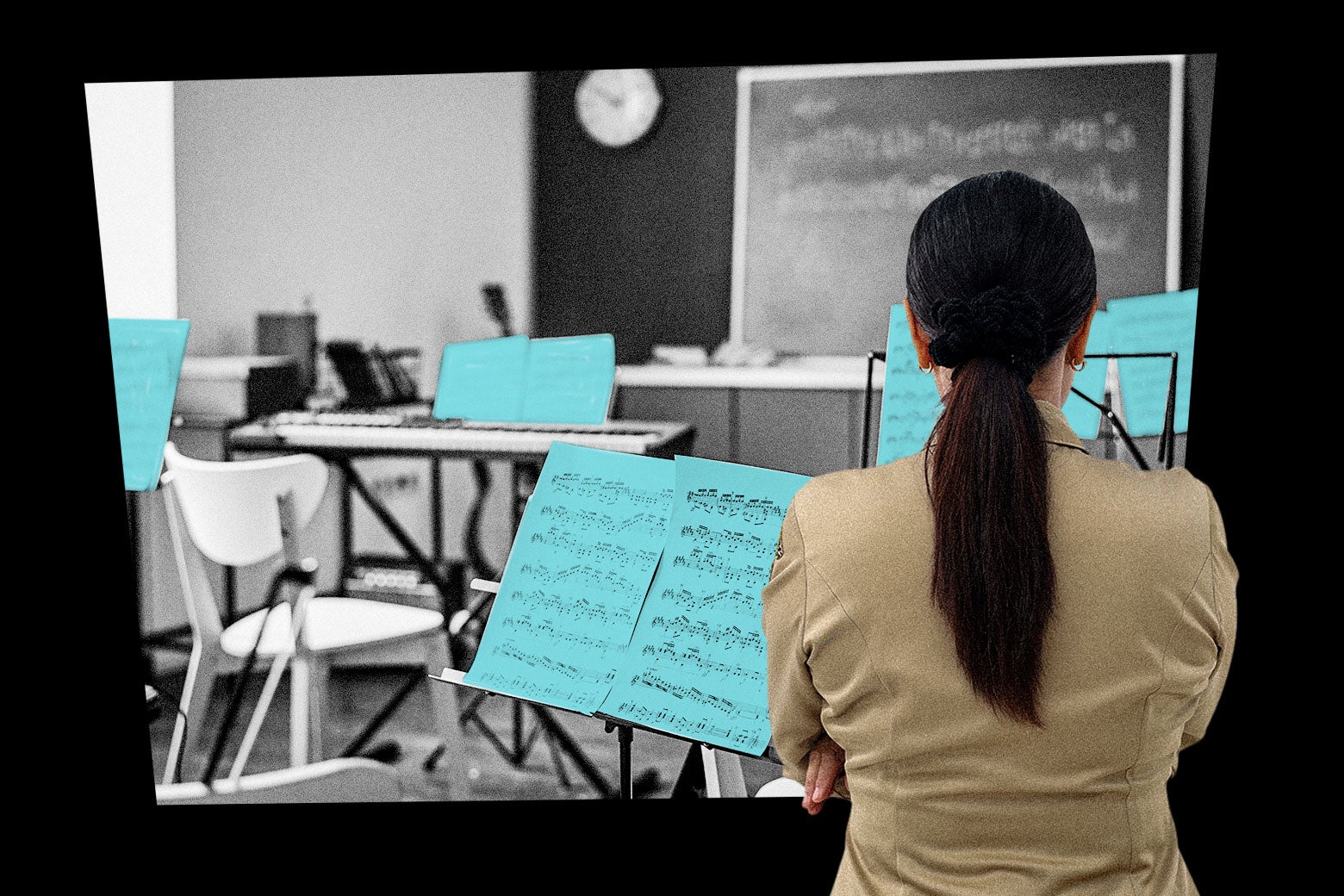
"I say I teach music, but I think what I really teach is empathy, perseverance, and how to exist in diverse spaces with sometimes more than 40 kids all equally goofy and immature. Even the baddest students want to be seen as good. They want to feel like they can contribute something, anything, to the space, even if that thing is becoming the class clown or leading some sort of resistance by refusing to sit in their assigned seats."
"On Friday, Jan. 9, about half of our Spanish-speaking students and a quarter of our Somalian students called in absent to school. This was the Friday after the murder of Renee Good by an Immigration and Customs Enforcement agent, and before Kristi Noem sent in hundreds more. By my calculations, that is more than 3,000 students calling in absent from our school district. Three thousand school-aged children literally hiding in their homes."
"This past fall, many of us were starting to feel the effects of the pandemic loosen its grips on our students. Every conversation about student behavior or performance inevitably ended with calculating what grade they would have been in when the pandemic started. My sixth graders were in kindergarten, and most of their first grade year would have been online or hybrid."
Many students experienced pandemic disruptions; sixth graders were in kindergarten when the pandemic began, and most of their first-grade year was online or hybrid. Classroom instruction centers on empathy, perseverance, and existing in diverse spaces with more than 40 students, where behaviors often reflect a desire to belong. Immigration enforcement activity, including the killing of Renee Good by an ICE agent and subsequent deployments, generated fear that led to mass absences. On Jan. 9, roughly half of Spanish-speaking and a quarter of Somalian students were absent, totaling over 3,000 district students hiding at home. Enforcement-driven racial suspicion undermines safety, learning, and emotional well-being.
Read at Slate Magazine
Unable to calculate read time
Collection
[
|
...
]