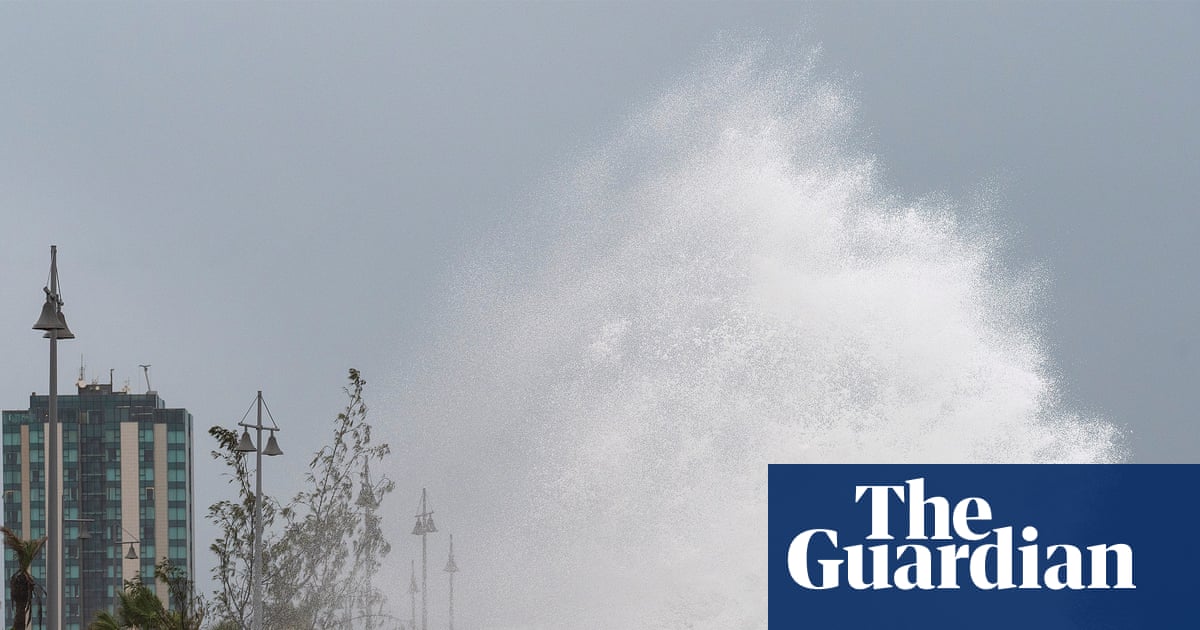
"Storm Regina, named by the Portuguese weather service, barrelled through the archipelago. The storm swept eastwards towards Africa on Tuesday and Wednesday after bringing strong gusts of up to 64mph to the island of Lanzarote. Wave heights of 5-6 metres were widely reported, while some peaked above 6 metres along northern coasts in the Canary island chain."
"The winter of 2025/26 will be remembered as somewhat of a rollercoaster across much of the US, with stark spatial and temporal contrasts. Multiple intrusions of Arctic air engulfed large parts of the country, bringing record snowfall and weeks of sub-zero temperatures to many states, most notably in Rhode Island, which recorded nearly 38 inches (96cm) in 48 hours in last month's blizzard."
"A temperature of 41C (106F) was recorded in Falcon, Texas, earlier this week, preliminarily breaking the record for the warmest temperature ever recorded in the US during the meteorological winter months of December, January and February. Despite multiple arctic outbreaks in the eastern half of the country throughout the winter, record warmth in the west led to the season being the second warmest winter on record when averaged across the nation."
Storm Regina impacted the Canary Islands with powerful winds reaching 64mph on Lanzarote and significant wave heights of 5-6 metres, prompting yellow warnings for rough seas. Snow fell above 1,500 metres in Tenerife, closing mountain roads. The US winter of 2025/26 exhibited dramatic temperature extremes: Arctic air brought record snowfall to eastern states, including nearly 38 inches in Rhode Island within 48 hours, while warm air from Mexico pushed temperatures to 41°C in Texas, preliminarily breaking the winter heat record. Despite eastern cold snaps, western record warmth resulted in the second warmest winter nationally. Southern states like Florida experienced severe drought conditions. Forecast models indicate El Niño development later in the year.
Read at www.theguardian.com
Unable to calculate read time
Collection
[
|
...
]